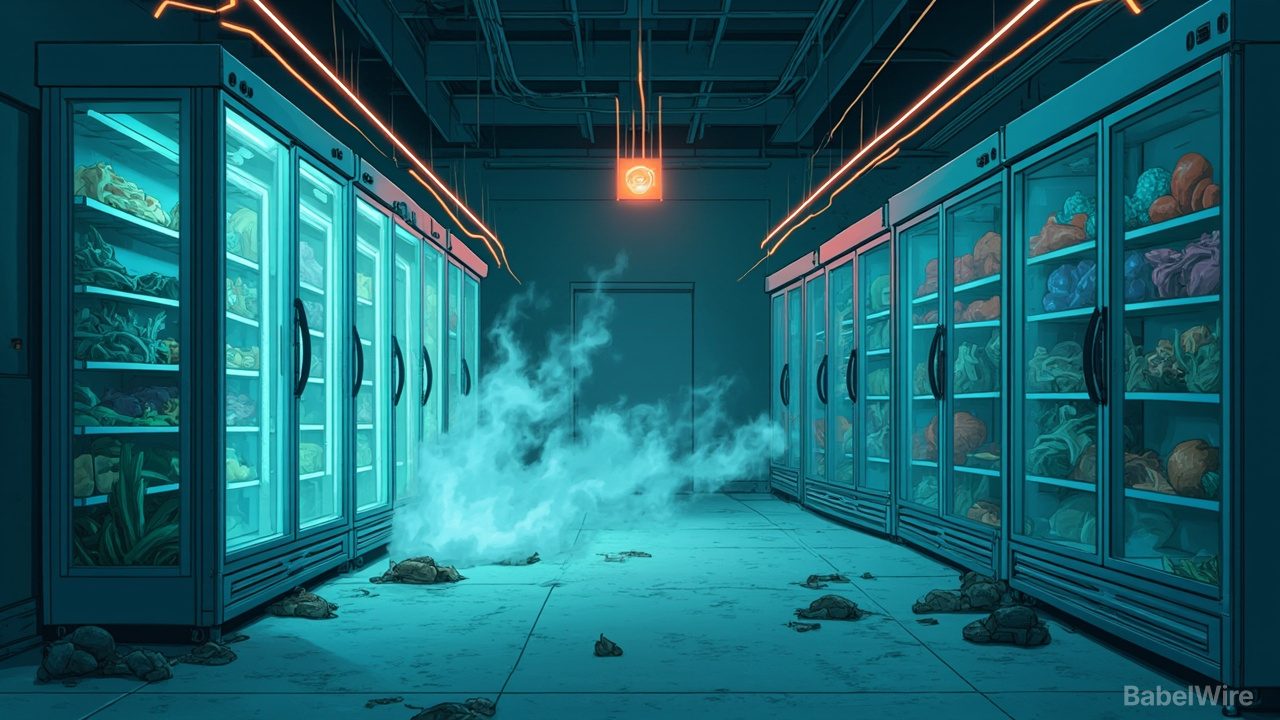
Attackers reached the connected refrigeration systems of French supermarkets and ruined hundreds of food products, heise online reported. The incident is a reminder that the attack surface of a modern retailer is not limited to its checkout software and customer database — it extends to the machinery that keeps food cold.
Commercial refrigeration is no longer a dumb compressor with a thermostat. Chillers and freezers in supermarkets and warehouses are wired into monitoring and building-management systems so operators can track temperatures, energy use and faults remotely. Those links are convenient, and they are also a way in. Once an intruder has a foothold in a building network, cooling plant can be disrupted the same way any other node can.
The consequences go beyond spoiled stock. Refrigeration protects a cold chain, and a cold chain that fails can turn a commercial loss into a public-health question, with regulatory requirements for temperature logging and food-safety procedures coming into play as soon as goods are compromised.
The specific attacker, method and retailer were not the point of the report, and the pattern is what matters: operational technology — the industrial and building systems that run physical processes — is now routinely connected to ordinary IT networks, but it is rarely secured like them. Some cooling equipment still runs on old protocols that were never designed to be reachable from outside, let alone to be patched on a schedule.
The familiar mitigations remain the right ones. Segment operational networks from corporate IT, force authentication on remote-management links, keep firmware current, monitor for unexpected control traffic, and treat every connected device in a building as a security asset with an owner — not as plumbing.