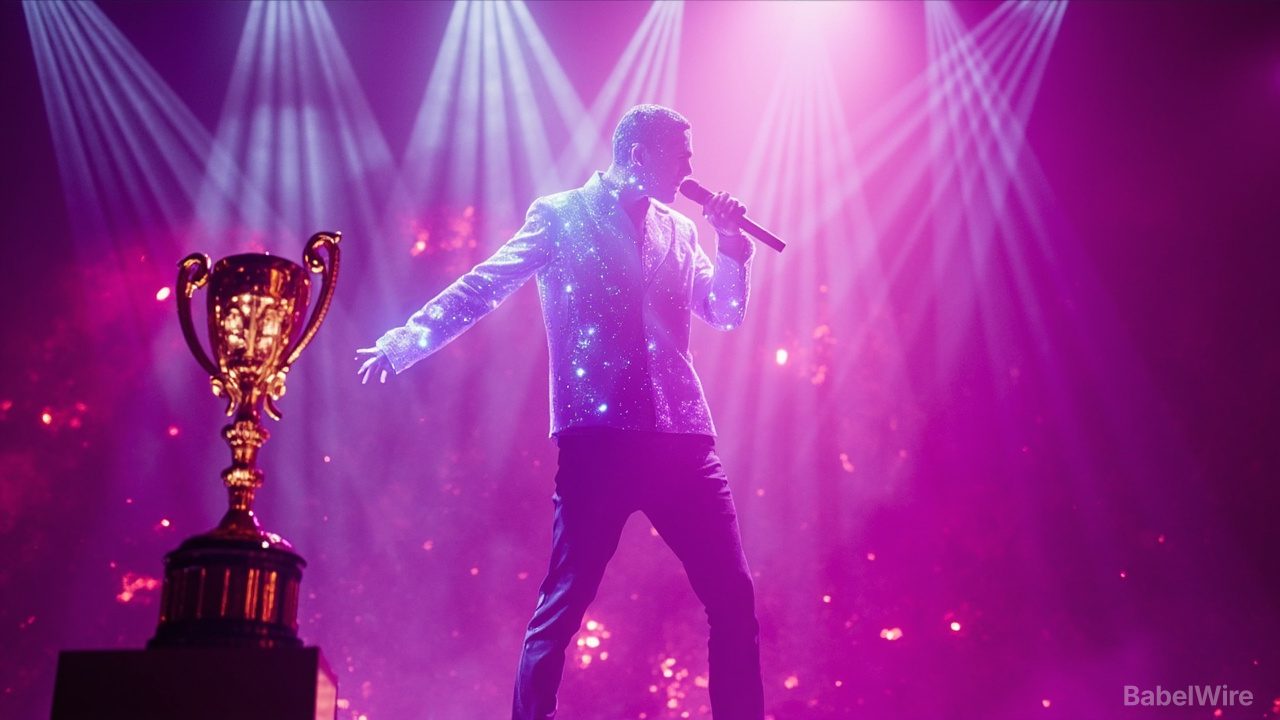
AI music got its own red carpet on Friday, as the first US AI Music Awards ceremony celebrated people who created songs at least partly with artificial intelligence — a field that has drawn millions of streams, chart placements, criticism and lawsuits alike.
At the event in downtown Los Angeles, the night's top awards of AI artist, song and album of the year went to Xania Monet, an AI-generated avatar behind 'How Was I Supposed to Know?' Billboard said the R&B track was the first by an AI-based act to earn a spot on one of its radio charts. Monet was created by Telisha 'Nikki' Jones, who said she wrote all the lyrics and then set them to music with the help of AI.
'I just feel like AI music is a new thing that people just have to get used to,' Jones said on the red carpet. 'I don't see it going anywhere anytime soon.'
Winners are chosen by members of the Sonic Intelligence Academy, a company that created AI music charts and tools to identify songs made with AI. Presenters and winners argued that AI-created music should be treated as a new genre requiring real artistry — and hours of prompting. 'In a world where everybody calls AI fake, the human behind it is real,' said producer Drake Murphy, presenting the award for best AI hip-hop song.
The ceremony took place against a backdrop of legal conflict. Record labels have sued AI companies including Anthropic and OpenAI, arguing they used copyrighted works illegally to train their models; the Elvis Presley estate has also filed suit. The companies have pointed to the 'fair use' doctrine in US copyright law. Musicians, meanwhile, worry that AI-generated music crowds out human artists and takes work from producers, singers, engineers and songwriters.
Many nominees said they had stories to tell but lacked all the skills needed to put them to music, and hoped the awards would show there are humans behind AI music. 'A lot of things we do behind the scenes is hard work, contrary to popular belief,' said nominee J. Frequency. 'Art is art, and I think this is just another expression of that.' AI's presence in music-making dates back to the 1950s, but recent advances in generative AI have turned digital avatars into would-be pop stars.