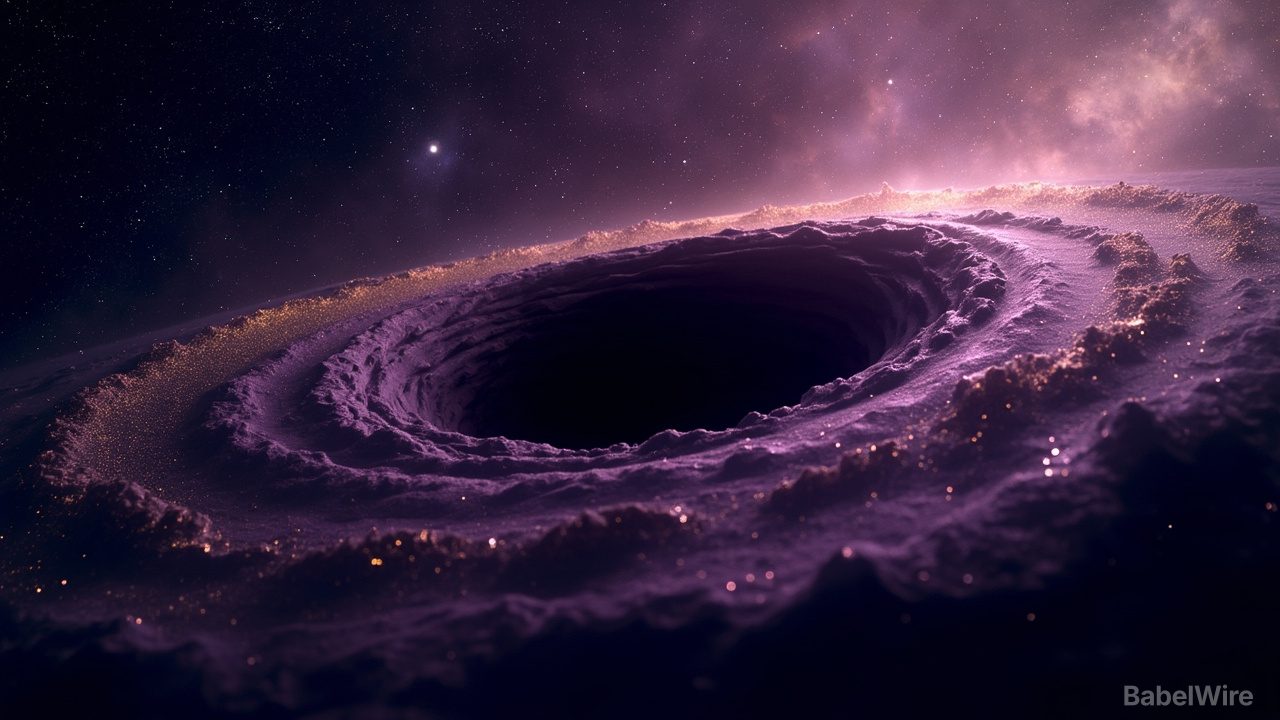
Astronomers analyzing gravitational-wave data say the most massive stars may often die without the fireworks of a supernova — quietly imploding into black holes. A new study led by researchers at Caltech and reported this week finds that observations from the LIGO–Virgo–KAGRA detectors are consistent with most merging binary black holes forming through such 'failed supernovae.'
The idea, sometimes called direct collapse, describes what happens when a dying star's core falls inward so completely that it never produces the rebound explosion that normally blows a star apart. Theory has long suggested this should happen for the heaviest stars; the problem has been that a silent collapse leaves almost nothing to see.
The team instead worked backward from the black holes themselves. By comparing the masses and spins inferred from gravitational-wave signals of merging black holes with the populations predicted by different formation channels, they conclude that a failed-supernova origin fits the data better than alternatives for a large share of the observed pairs.
Caveats are important: this is consistency with a model, not direct proof. No one has captured a star collapsing in silence and then measured the resulting black hole. The authors stress that more detections, and better constraints on black hole spins, are needed to firm up the case, and that other formation paths may still explain part of the population.