The Exploration Company (TEC), a European space startup operating across Germany, France, Luxembourg, Spain and Italy, has raised $450 million in what it describes as "the largest-ever Series C by a European space company." The round was co-led by Atomico and the EQT-managed Scaleup Europe Fund alongside Bessemer Venture Partners.
Led by Hélène Huby, a French national who spent two decades at Airbus and ArianeGroup, TEC intends to use the funding to build the foundation for a reusable European heavy-lift launcher — offering an affordable alternative to SpaceX, whose Falcon rockets are increasingly reserved for its own Starlink satellites.
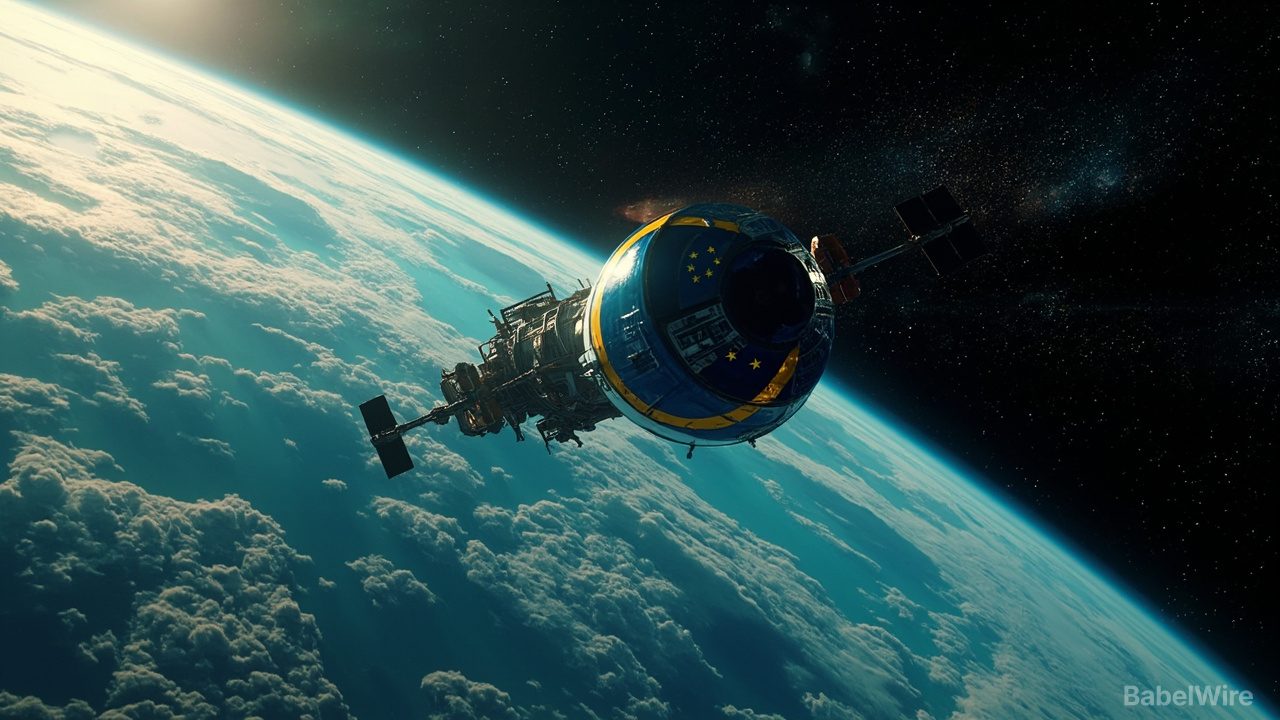
The company's most immediate focus is Nyx, a reusable capsule akin to SpaceX's Dragon and capable of carrying cargo, then people. TEC intends to get Nyx to dock with the soon-to-be-retired International Space Station and return safely to Earth by November 2028. According to Atomico, "10 Nyx missions are booked," with "more than $2 billion in contracts and commitments" from institutional partners including the European Space Agency and NASA.
The timing is strategic: the round was disclosed on the eve of the International Space Summit in Paris, where French president Macron and European Commission president Ursula von der Leyen both praised TEC's achievement. The company also plans to develop Storm, a rocket engine using full-flow stage combustion — "the most difficult, but also the most efficient engine cycle in the world," Huby told journalists. "It is the first time ever in Europe that a company develops such a rocket engine."
TEC's ambitions place it alongside Germany's Isar Aerospace, which recently crossed the milestone of launching its first rocket. But Huby said TEC intends to build a much larger vehicle: "In the next five to 10 years, half of our broadband communication could come from space, data centers could be in space — and if this is the case, we need massive rockets and cadence."
The transatlantic investor base — with Bessemer joining European funds — underscores the global appetite for SpaceX alternatives as low-Earth-orbit launches become strategically critical.
Sources: TechCrunch, Reuters, Ars Technica