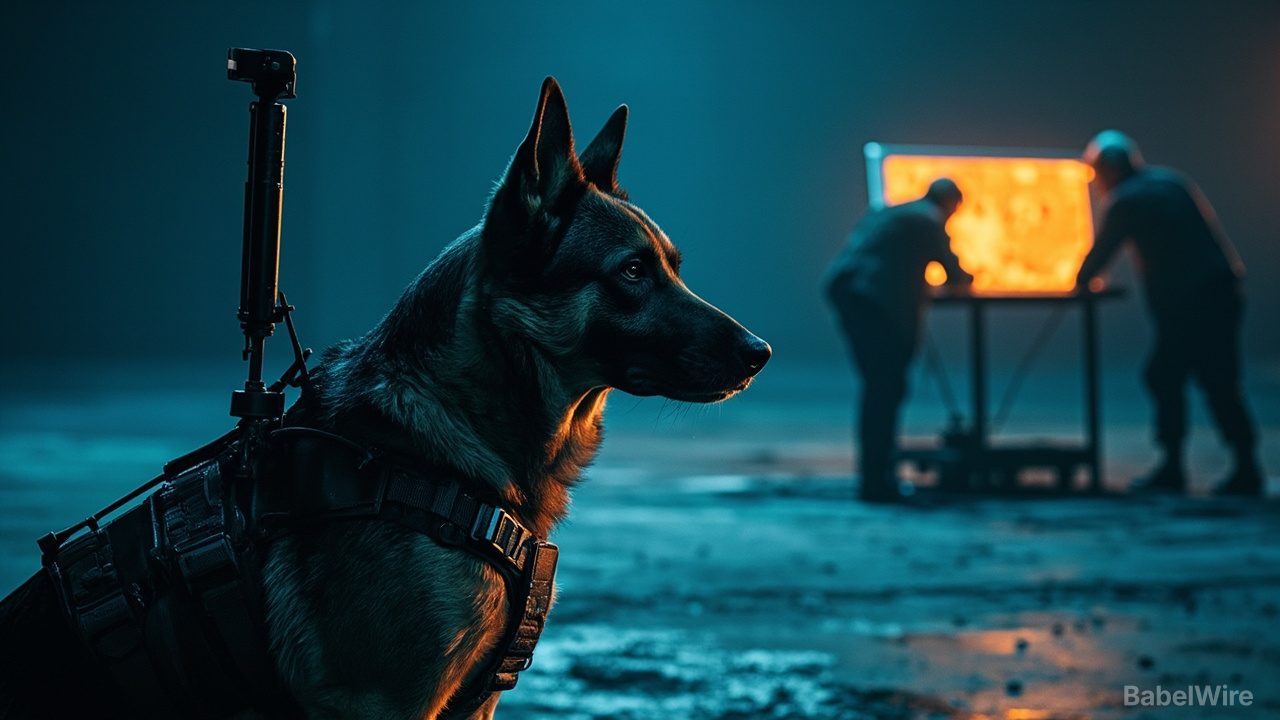
Two reports published on the same day put engineered canines at the center of the defense-tech conversation.
TechCrunch reports that Ben Lamm has raised $200 million for Warhound, a company set on engineering war dogs and arming them with gear from Anduril. The framing behind the round treats the dog less as a companion than as a configurable platform for the modern battlefield.
Wired, meanwhile, reports that Palmer Luckey has made a genetically modified military dog startup, adding a biological-engineering angle to a field that has so far been dominated by robotics and software.
The two stories landing together is not a coincidence. Anduril, the defense firm Luckey founded and leads, builds the sensors, radios and autonomy hardware a wired-up working dog would carry, while Lamm's venture points at the animal itself as the object to engineer. Between them, the two cover both halves of what a next-generation military working dog could mean.
The genetic-modification piece is the part with no precedent. Legislatures in the United States and Europe have barely begun writing rules for engineering animals for military use, and the ethical argument over modifying a domestic species for combat has not yet had a serious public airing. A $200 million raise suggests investors assume that debate will happen eventually — and that moving first is cheaper than waiting for it.
Details on investors, valuation, timelines and the specific modifications in play have not been published beyond the original reports; they sit in the TechCrunch and Wired pieces.