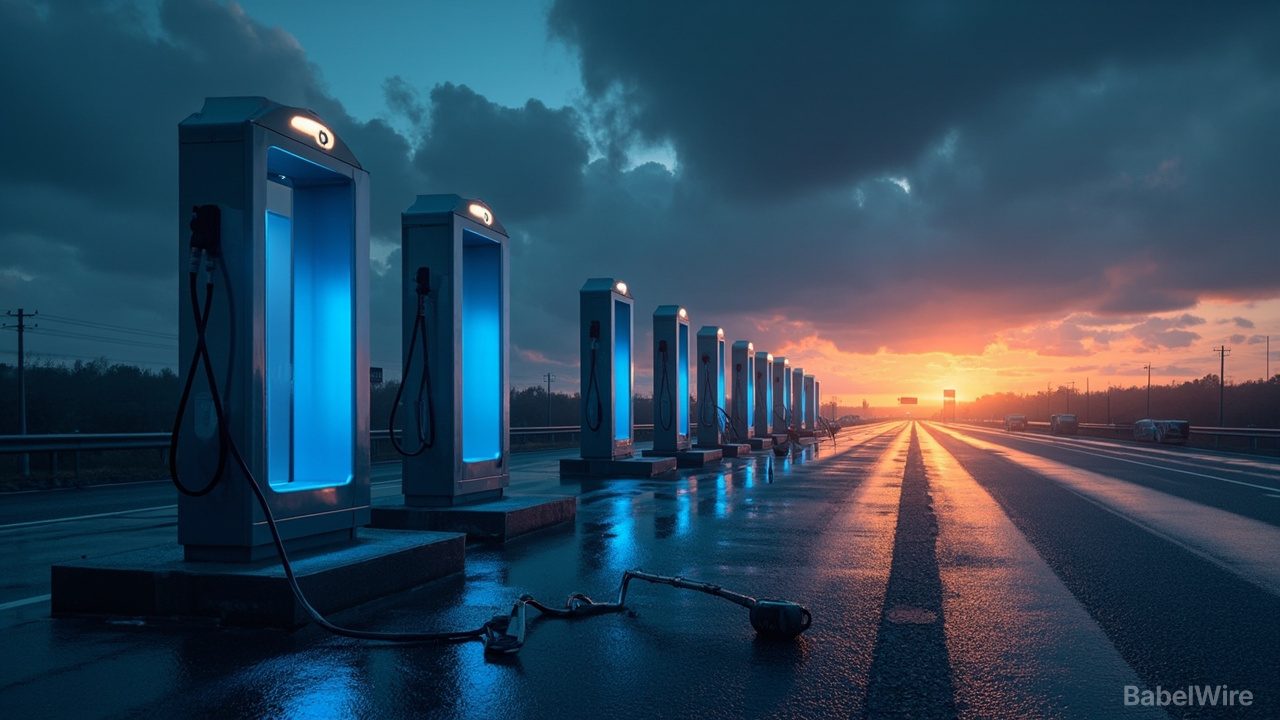
Mercedes-Benz is handing over its European fast-charging network. The buyer is the French charging provider Electra — 47 locations with 374 fast-charging points change hands, 31 of them in Germany and six in Austria. The transaction is part of a new partnership and takes effect immediately.
For Electra it is a jump: in Germany, where the company only launched in May 2025, the network grows from 50 to 81 charging parks by its own count — an increase of more than 60 per cent. Across Europe Electra says it operates more than 800 locations with around 5,000 charging points in ten countries; by 2030 that is meant to become 15,000 fast-charging points. In Germany alone Electra plans to invest €200 million next year.
For Mercedes customers little changes — and yet a fair amount does. The familiar locations stay, the experience stays, but the discounted rates and features such as reserving a charging point, previously reserved for Mercedes' own parks, now apply at Electra too. Through the MB.CHARGE Public service, Mercedes drivers get preferential roaming rates at more than 800 Electra locations, over 5,000 charging points across ten European countries. That makes Electra, alongside Ionity — in which Mercedes holds a stake — the second “Premium Partner” in the brand's charging service.
The deal is documented financially as well. Neither side names a purchase price, but Mercedes-Benz's quarterly report shows the European network was last valued at €99 million, including €73 million of fixed assets, offset by €21 million in liabilities. The board of management decided to sell in July 2026; the purchase agreement was signed on 3 August, and only now has it become public.
With that, a strategy that began ambitiously ends. The Mercedes-Benz Charging Network launched in 2023; a year ago the company said the network was growing continuously and would be expanded to up to eight more countries within a year. By the end of the decade Mercedes wanted to operate more than 10,000 fast-charging points worldwide. New European sites were to use the HYC1000 system from South Tyrolean manufacturer Alpitronic from 2026; the first of those units, at Hamburg-Wandsbek and the 24-Autohof in Wörrstadt, now pass into Electra's network.
In Europe, Mercedes will no longer pursue that strategy directly. Its own fast-charging stations will remain in China and the US for the time being. Instead of operating infrastructure, the group is betting on access through partners and discounted roaming — a pattern spreading across the industry, because running charging hubs is capital-intensive and only pays at scale. Electra's German chief Paul Tonini puts it plainly: the costs are simply too high for the revenue generated, which is why the market is consolidating around larger providers.
The technical transition is already done. Over the weekend Electra migrated the former Mercedes sites into its backend and put a notice on the charger displays saying they now belong to Electra. In charging apps the locations already appear as Electra points. In the coming days the terminals for ad-hoc payments will be replaced, after which the Mercedes stars come off the columns. No staff are affected; the deal covers locations and customer access only.
What it means: charging does not get cheaper for drivers, but it gets simpler, because one tariff-favoured network disappears and a larger one takes its place. For Mercedes it is an admission that running hardware is not core business. And for the market it is one more sign that Europe's charging network will not be many small networks but a few large ones — with car brands as customers rather than operators.