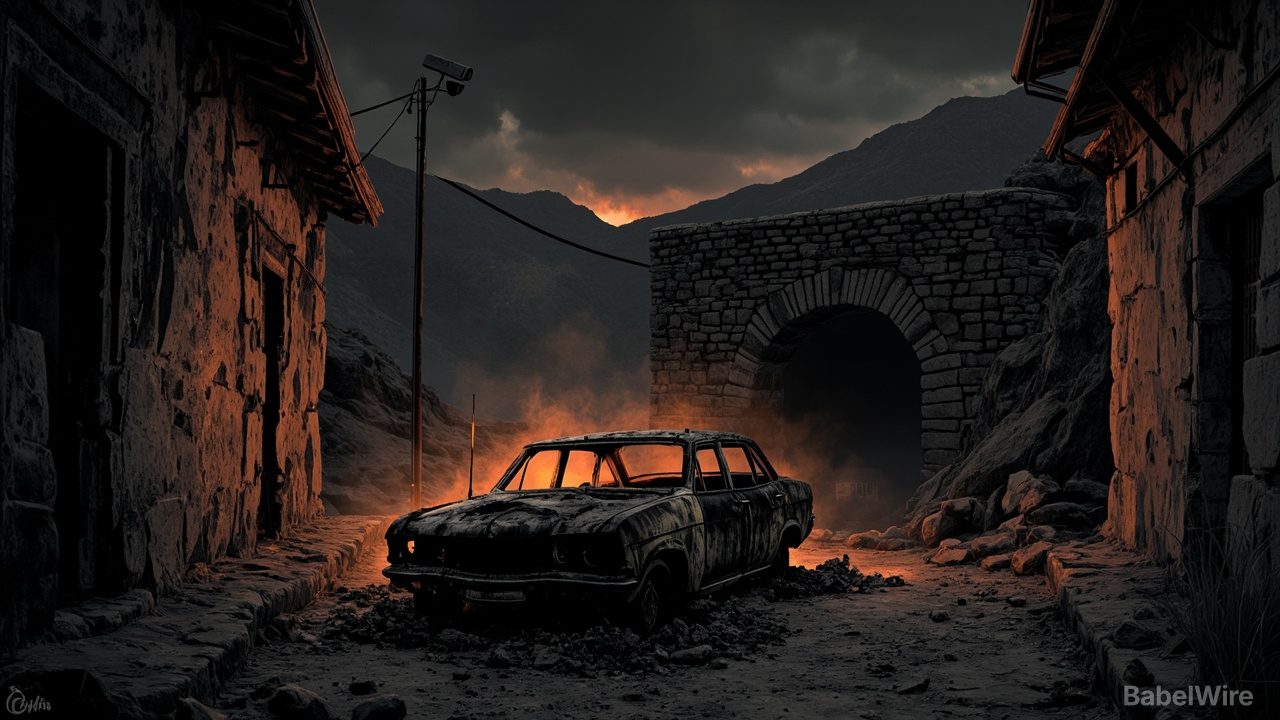
A scientist working on Italy's bid to host the Einstein Telescope — Europe's next-generation gravitational-wave observatory — had his car set ablaze in Lula, the village in Sardinia where the €2 billion facility would be built. Carlo Giunchi, a geophysicist at the National Institute of Geophysics and Volcanology, and his wife both lost their vehicles in the overnight attack on 1 August. No one was injured, and no one has claimed responsibility; local authorities are investigating it as an act of terrorism.
The arson comes three years after a bomb was left at the entrance of the former silver-and-zinc mine that researchers hope to repurpose for the observatory, followed by graffiti reading "No to Einstein Telescope" in Lula's historic center. A local campaign opposes the project, arguing that a legally protected "quiet zone" would constrain industrial development across central Sardinia; supporters counter that the telescope would generate about 36,000 jobs and €6 billion in economic value in the region.
The Einstein Telescope would detect ripples in spacetime from events roughly 10 times farther away than current observatories like LIGO and Virgo can see. Italy's candidate site in Lula is one of three under consideration — alongside the Meuse-Rhine Euroregion and Germany's Saxony state — with the European Union scheduled to select a winner in 2027.
"We were all taken aback when we heard the news," says Marco Pallavicini of the University of Genoa, who coordinates Italy's bid. "Just a few days earlier, we'd opened an information center in Lula, and everyone seemed so happy to meet us." Since the attack, authorities have installed more surveillance cameras and increased police patrols, and local residents — most of whom support the project — have raised money to help Giunchi and his wife buy new cars.