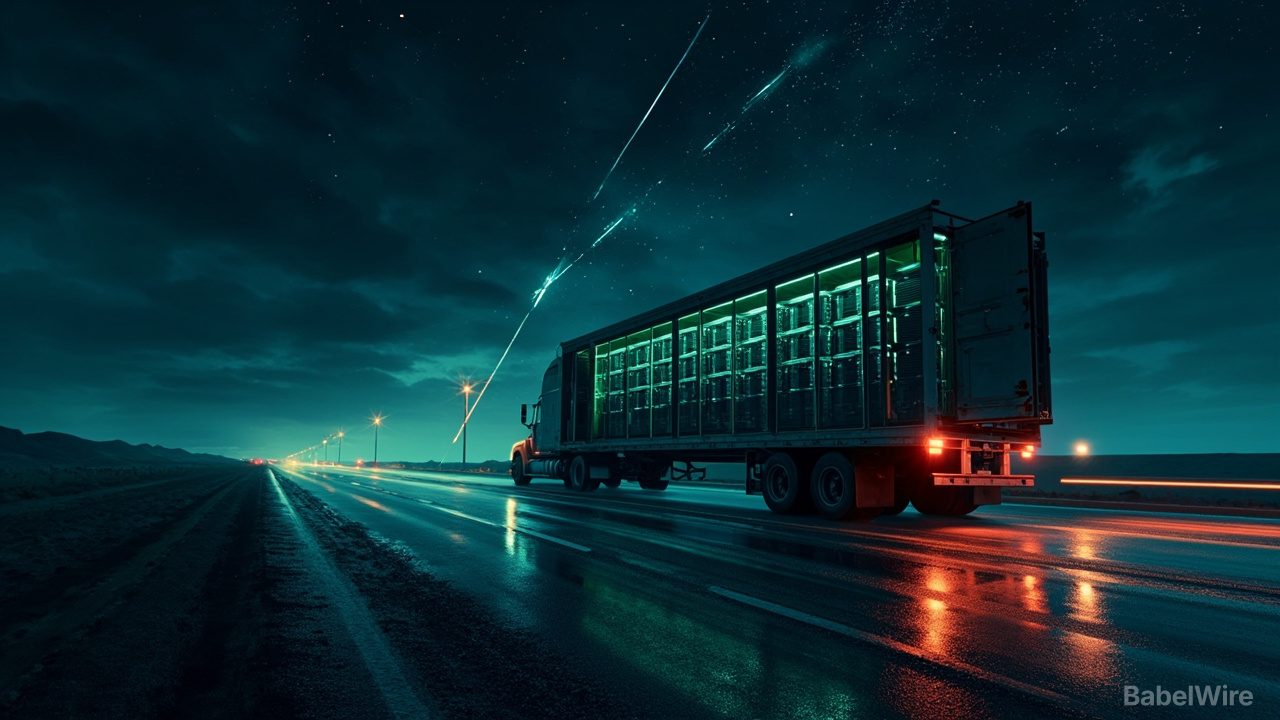
In early June, a trailer carrying about $13 million of computer server equipment headed east toward Fayetteville, Georgia, home to one of the largest data center developments in the country. It never arrived. An unmarked sedan struck the escort car, the two off-duty police officers hired to protect the load had to stop, and the trailer drove on.
Since June, thieves have made off with "more than $100 million in data center freight", according to NBC News, which spoke to "several industry leaders, consultants, and investigators" advising law enforcement. Nearly two dozen such incidents have been recorded since 2025 across California, Texas and Utah.
The theft is a software problem first
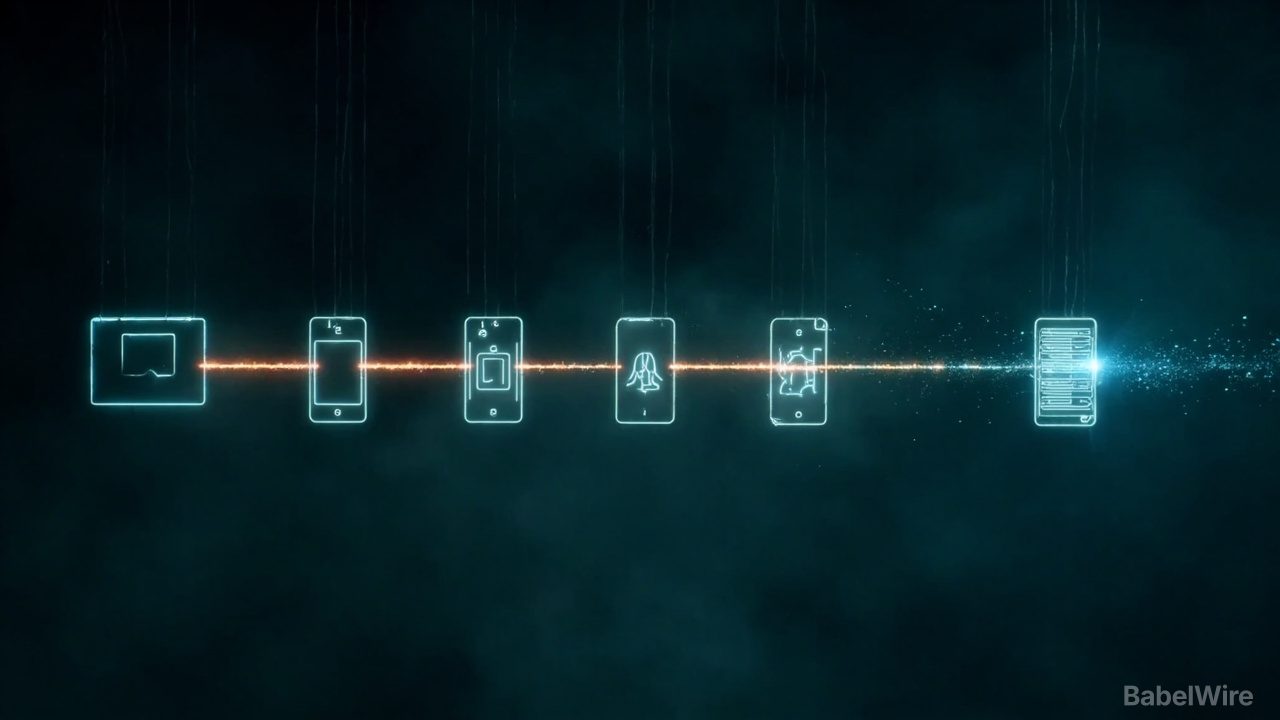
The pattern is a chain of digital steps with a truck at the end:
- take over a freight broker's account on a load board, - post a fake shipment to attract real bids, - send a malicious link to every trucking company that responds, - use the click to seize the victims' accounts and start bidding on genuine loads, - collect the cargo with an unwitting real driver, or hire accomplices on forged — increasingly AI-generated — driver's licences, - hand the goods to a driver working with the thieves.
In the second-largest case, roughly $10 million of server rack components moving from California to Texas, an SUV struck the escorts' vehicle and the trailer sped off. That cargo was also being tracked by an app. It did not help: the tracking coordinates had apparently been spoofed.
Neither of the two biggest loads was recovered.
What else was in the trailers
Illinois' Cook County Sheriff's Office estimated one recovered load at $300,000 in copper wire spools plus about $1 million in "custom-made data center modular power solutions equipment". In Los Angeles County, data center cooling equipment bound for Deepcool AI turned up among nicotine pouches, televisions, shoes, printers, speakers and skin care.
That mix is why investigators do not treat this as an AI-industry problem alone. Targets include servers, fiber-optic cable, computer memory, copper wire and bitcoin miners — goods that can be broken down and resold.
Where the cargo goes
Unlike ordinary cargo theft, data center equipment rarely surfaces on open marketplaces, NBC News reported. It is stripped for parts and sold on gray markets to tech firms seeking cheap, questionably sourced hardware. In many cases a foreign buyer is lined up before the theft happens, investigators said — particularly in regions where access to US high-end technology is restricted, such as China.
"It's like stealing pure gold bars," said Keith Lewis of Verisk CargoNet, which tracks cargo theft. "It's so much easier to steal this than to rob a bank."
The boring fix
Scott Cornell, chair of TAPA Americas, the largest nonprofit for supply-chain security standards, named the gap to NBC News: "The only way this works is if the drivers are not properly vetted."
Industry figures describe overseas rings "playing chess in the supply chain". Security firms now escort hundreds of loads a month, states have formed task forces, and lawmakers are talking to the hardest-hit industries. The volume is expected to keep rising as AI firms pour billions into data center construction.
The uncomfortable finding is that the most effective countermeasure is not an algorithm. It is a phone call to check who is driving the truck.