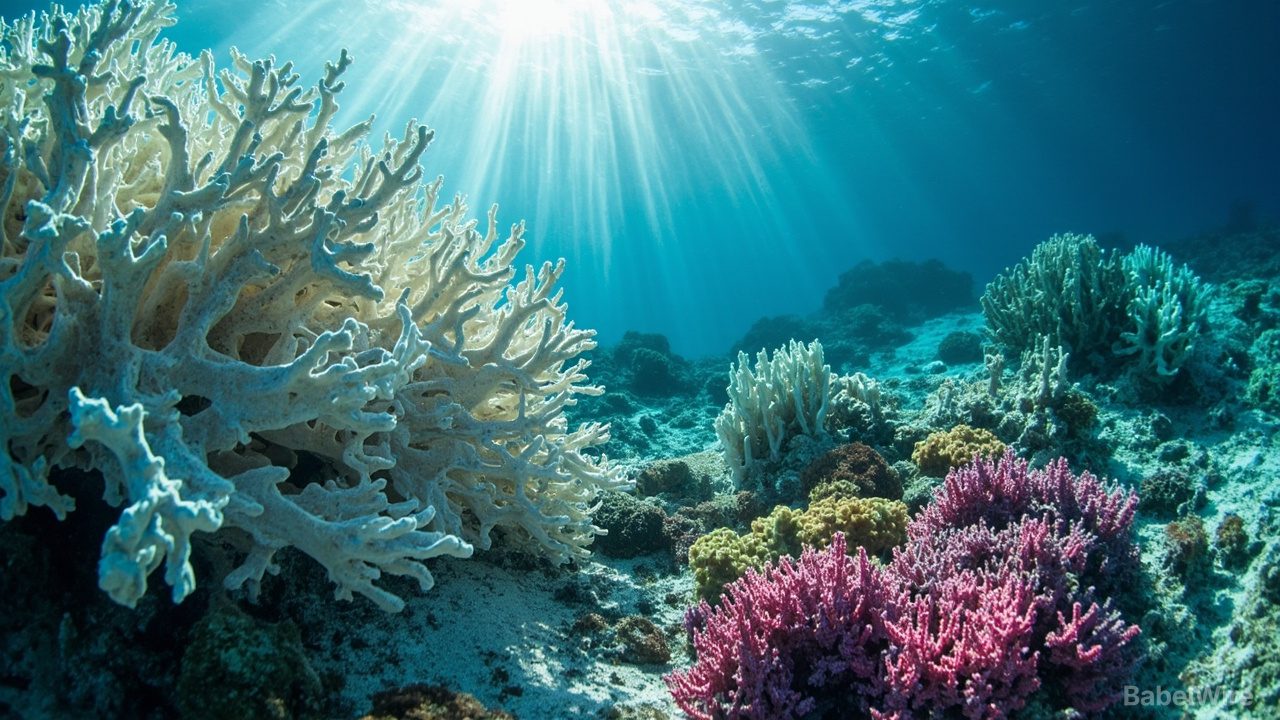
Coral reefs around the world are running out of time to recover from the increasingly frequent and intense marine heat waves driven by climate change, according to research published by the New York Times.
The findings paint a grim picture for one of Earth's most biodiverse ecosystems. Coral reefs support roughly 25% of all marine species and provide food, coastal protection, and economic livelihoods for hundreds of millions of people worldwide. Yet the intervals between devastating bleaching events are now shorter than the time reefs need to fully rebuild.
When ocean temperatures spike, corals expel the symbiotic algae that give them color and nutrition — a process known as bleaching. If temperatures return to normal quickly enough, corals can recover. But as heat waves become more frequent and prolonged, reefs face a relentless cycle of damage without adequate rest.
The research comes amid growing concern from the global coral reef science community. The 16th International Coral Reef Symposium, held in Auckland, New Zealand, in July 2026, brought together scientists who called for a major acceleration in coral assisted evolution research to help reefs cope with rapidly warming oceans.
Australia's Great Barrier Reef has shown some signs of recovery in 2026, with a late monsoon providing relief from heat stress. But experts caution that such reprieves are becoming rarer and less reliable.
The WHOI Schiller Center for Reef Solutions has recently been established to advance coral restoration science, focusing on growing resilient coral species for outplanting on degraded reefs.
Scientists warn that without dramatic reductions in greenhouse gas emissions and scaled-up intervention efforts, many of the world's coral reefs could face functional extinction within decades.