The Higgs boson is tied to the Higgs field, which gives many fundamental particles their mass. Predicted in the 1960s, it was not discovered until 2012, and researchers have been testing ever since whether it behaves exactly as the Standard Model of particle physics predicts - or shows signs of physics beyond it.
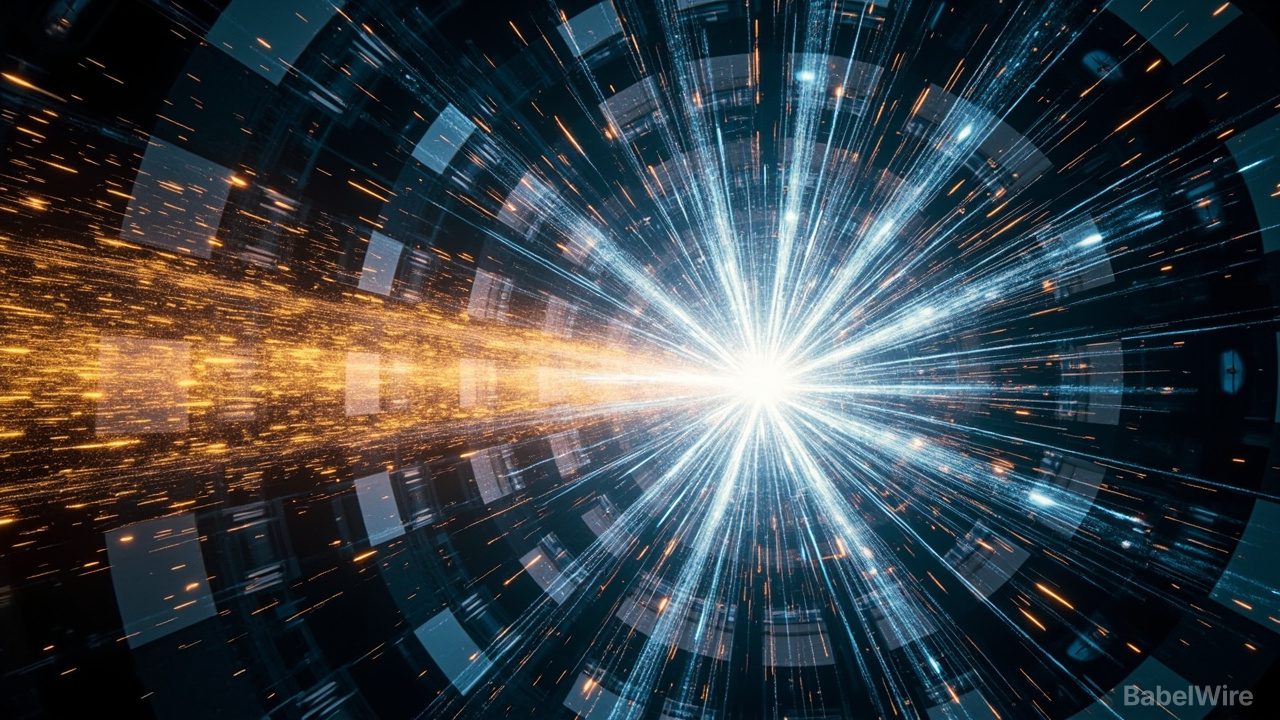
For the most comprehensive combined analysis to date, researchers pooled measurements from proton-proton collisions recorded by the CMS experiment at the Large Hadron Collider between 2016 and 2018. The dataset spans 138 fb^-1, an enormous sample, because Higgs events are rare. Many decay channels were examined, including decays into photons, bosons and leptons.
Two targeted searches were added. One looked for invisible Higgs decays, in which the Higgs would produce undetectable particles such as dark matter candidates. The other studied rare off-shell Higgs production, where the Higgs appears as a virtual state with a mass different from its physical mass.
The result: at current experimental precision, the Higgs boson behaves as the Standard Model predicts. The measured overall Higgs signal strength is 1.01 ± 0.05, where 1 represents perfect agreement with the Standard Model. There are no significant deviations in this dataset.
That is not a null result without consequence. Many theories extending the Standard Model predict that undiscovered particles or forces could subtly alter how the Higgs is produced or how it decays. Because the CMS measurements agree with the predictions, there is currently little evidence for such effects - and many proposed models of new physics are significantly constrained as a result. The study is described as the most comprehensive test of the Higgs boson using CMS data, and by narrowing the range of possible deviations it helps guide future searches for new physics at the LHC and other particle physics experiments.