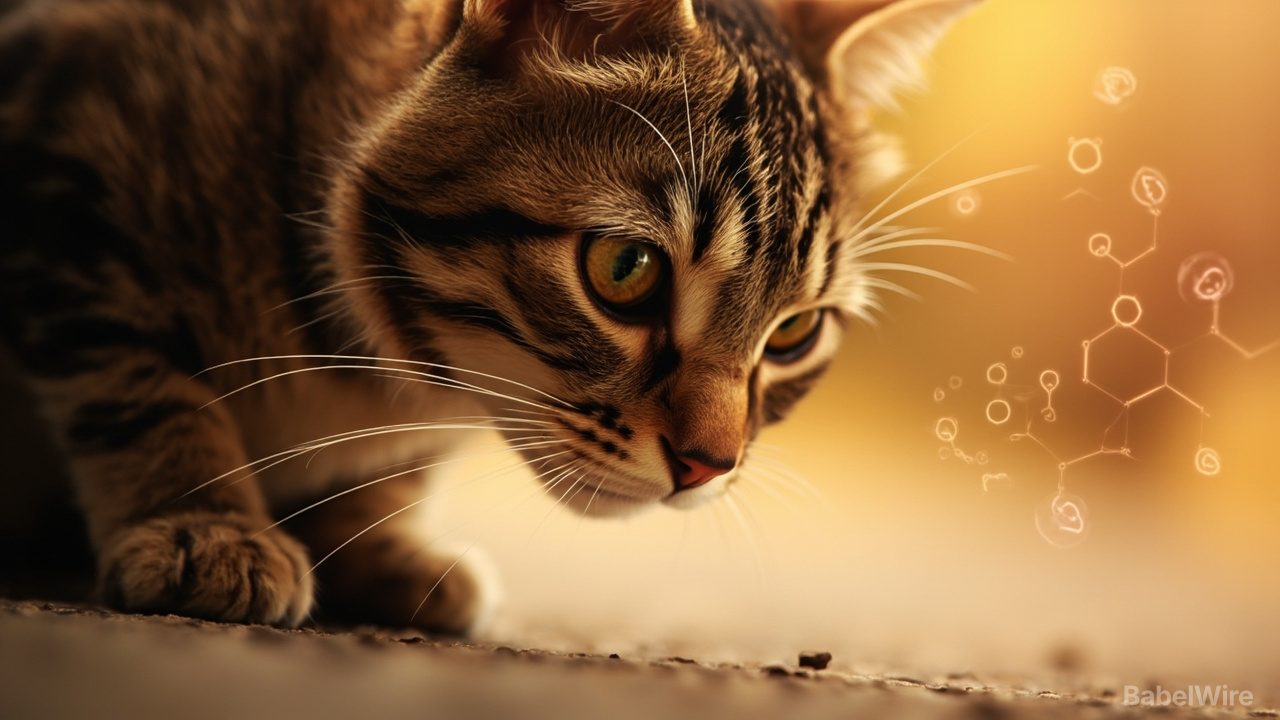
An international team led by Iwate University has identified 13 branched-chain fatty acids (BFAs) whose combinations and relative proportions differ among cats but remain stable within the same individual. The study, published in Current Biology, addresses a fundamental question in animal chemical communication: how can an odor that changes over time continue to convey stable information about individual identity?
Cats showed the flehmen response — the distinctive open-mouthed expression — more frequently toward unfamiliar urine, and sniffing increased when urine from another individual was introduced. This behavior-guided approach led researchers to a urinary lipid fraction containing unusual BFAs. The BFA profile varied markedly among cats but remained stable within individuals across different collection dates. Related cats tended to have more similar profiles.
Crucially, BFAs were detected in the kidney but not in other tissues examined. Lipid droplets in cat kidneys have been known for over a century, yet their biological role remained unclear. The findings suggest these droplets act as a reservoir for BFA-containing lipids, potentially buffering short-term fluctuations caused by diet or physiological conditions.
The researchers also examined other felid species including lions, tigers, leopards, jaguars, and lynxes. BFA-related compounds and renal lipid droplets were found across Felidae, suggesting these chemical traits are widespread but have diversified during felid evolution.