For a plant that symbolizes resilience, the cactus turns out to be surprisingly fragile. A new study published in the journal Nature — and highlighted by the IUCN, which will use it to guide Red List assessments — finds that worsening drought, not just rising heat, could strip a large share of suitable habitat from the world's cacti by the end of the century.
The work was led by Michiel Pillet, a conservation ecologist at the University of South Florida, with colleagues at the University of Arizona. The team modeled climate change for 993 cactus species, this time paying deliberate attention to severe drought alongside temperature. Earlier projections often focused on warming alone; the new analysis shows that folding in dry spells sharply worsens the outlook.
The headline result: a majority of the species assessed are projected to lose large amounts of suitable climate space, and more than a quarter could lose at least 80 percent of their habitat by 2100. To ground the models in reality, the researchers drew on the citizen-science platform iNaturalist, using roughly 650,000 observations of wild cacti to understand where species actually occur today.
Pillet is careful to puncture the popular image of cacti as indestructible. "The public perception of cacti tends to be of these organisms that are extremely drought-adapted and are just resilient," he said. "In reality, cacti are absolutely amazing … but they're not that different from other plants." They need water, and in the southwestern United States they depend on seasonal monsoon rains.
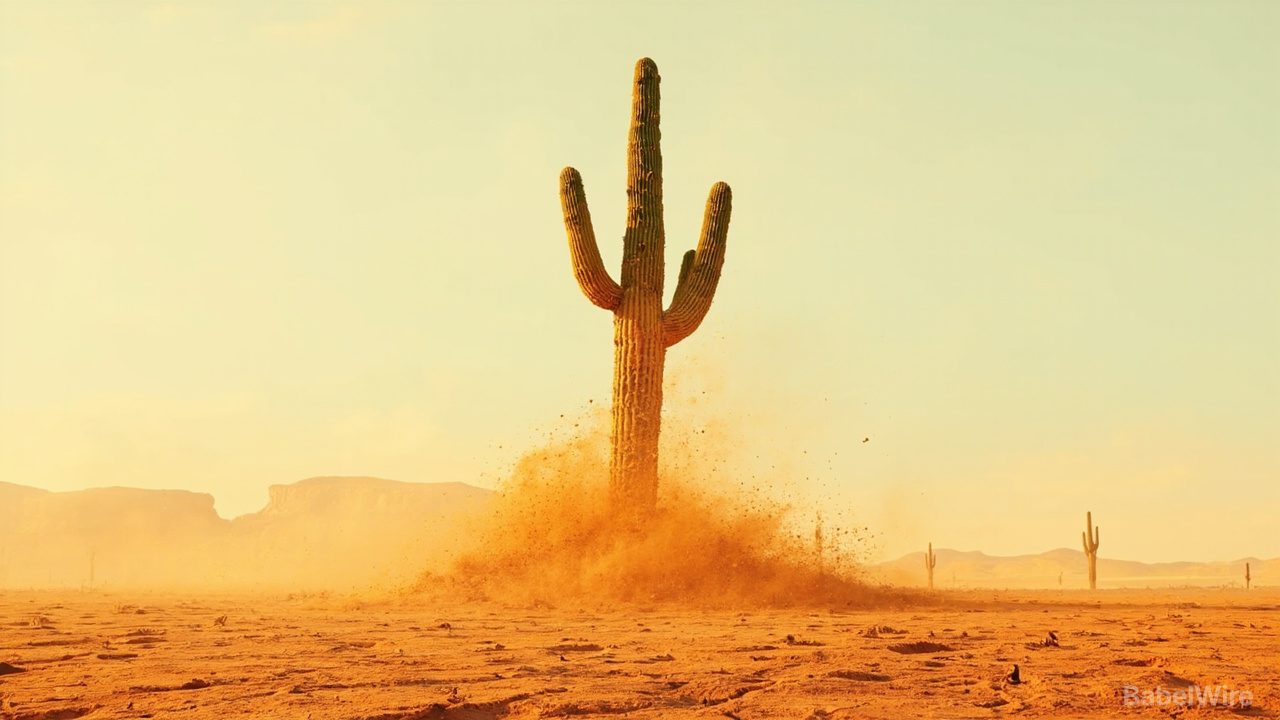
The damage is not always a simple matter of plants withering. Drought can have "sublethal" effects — failing to flower, reproducing less often — so populations quietly shrink even before individuals die. In the Sonoran Desert, the towering saguaro is already reproducing less during prolonged droughts. Desert ecosystems, the researchers note, are fragile precisely because they recover slowly: with so little water, decades can pass before a disturbed site recovers, if it recovers at all.
Drought is compounding other pressures: habitat loss, the poaching of rare species for private collections, and even, at the other extreme, rising seas — which drove the Key Largo tree cactus to local extinction in Florida. High nighttime temperatures are a further problem, because that is when many cacti open their pores to respire.
The study's practical purpose is to tell conservationists where to focus. They cannot stop drought, but they can evacuate species to botanical gardens and protect the lands most at risk. "Hopefully, it'll wake people up," said Rod Haenni of the Cactus and Succulent Society of America, who was not involved in the research.