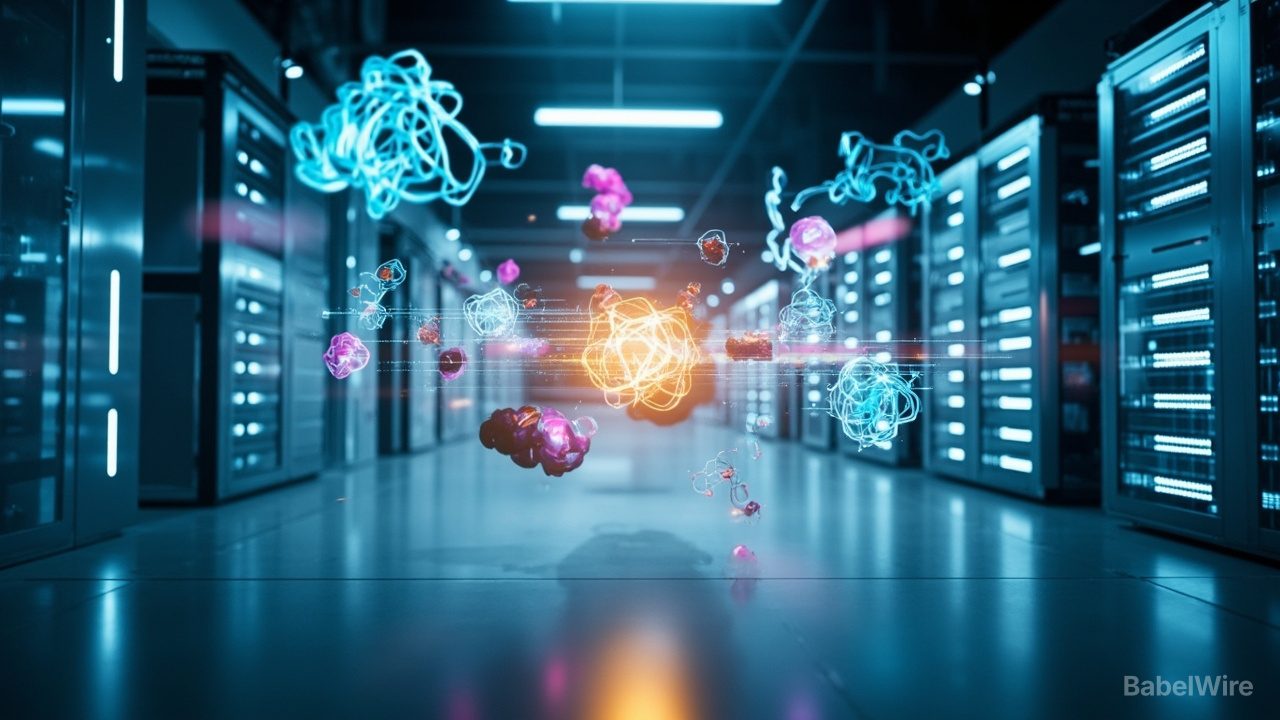
Bristol Myers Squibb Buys Nvidia's Cutting-Edge Vera Rubin AI System to Supercharge Drug Discovery
NEW YORK — Bristol Myers Squibb (BMS) has announced it will acquire an Nvidia DGX SuperPOD based on the chipmaker's next-generation Vera Rubin architecture, becoming the first life sciences company to deploy the cutting-edge AI computing system for drug discovery and development.
10x Performance Per Megawatt
The new cluster will comprise eight DGX Vera Rubin NVL72 systems, each combining Nvidia Vera central processing units with Rubin graphics processing units. BMS says the system will deliver up to 10 times the performance per megawatt compared to its existing infrastructure — a critical advantage as AI energy costs continue to climb.
"When you host these things, you have to pay an electric bill," said Greg Meyers, BMS's chief digital and technology officer. "Think of it as 10 times more compute capacity per watt spent. Electricity is not getting cheaper."
AI at the Heart of Drug Development
BMS says AI now informs the design of every small-molecule program and the majority of its large-molecule programs. The technology is applied across target identification, lead optimization, large-molecule predictions, and internal model development.
The company has already reduced the time required to produce medicines for clinical trials by 20–30%, with a target of 50% in the coming years. An experimental sickle cell disease treatment now in early clinical development "probably would not have been discovered without AI tools," according to Dr. Robert Plenge, BMS's chief research officer.
The system will support BMS's 'Predict First' approach, which uses AI-generated predictions to screen out molecules unlikely to succeed before they are synthesized in the lab. The result: fewer dead-end experiments and faster identification of promising drug candidates.
"Maybe before we could do 10 and now we can do dozens," Plenge said of candidate evaluation.
Connecting Research Across Continents
The Vera Rubin SuperPOD will operate alongside BMS's existing AI infrastructure in a unified computing environment accessible from research sites worldwide. This shared environment means data generated by a team in Lawrenceville, New Jersey, can be incorporated into models used by researchers in San Diego, ensuring institutional knowledge is preserved and accessible.
Researchers will be able to initiate some prediction requests using natural-language instructions, reducing the specialist knowledge required to run complex computing tasks.
BioNeMo for Protein Science
The system will provide access to Nvidia's BioNeMo Agent Toolkit, offering tools for protein-structure prediction, molecular generation, molecular docking, sequence analysis, and genomics. BMS has also used AI to expand its library of CELMoD compounds — engineered molecules designed to selectively degrade cancer-causing proteins.
Financial terms were not disclosed. BMS said its existing SuperPOD, now two to three generations behind Vera Rubin, has been operating at full capacity due to demand from large-scale predictions and internal foundation model development.
The announcement marks a significant milestone in the pharmaceutical industry's adoption of cutting-edge AI infrastructure, positioning BMS at the forefront of AI-driven drug discovery.