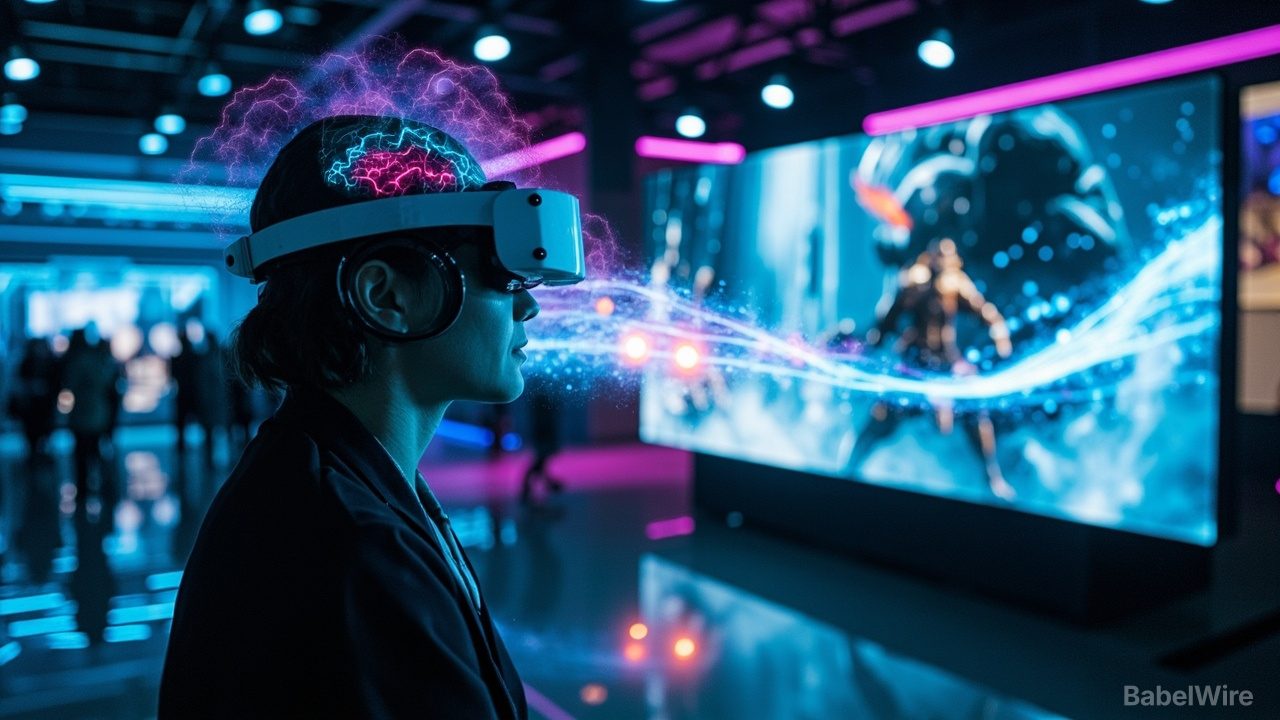
At the 2026 World Artificial Intelligence Conference in Shanghai, a demonstrator played the action game Black Myth: Wukong using nothing but brainwaves, controlled through a wearable EEG brain-computer interface headset. The demonstration drew significant attention from conference attendees and media.
The non-invasive BCI system, showcased at the Stonehill booth, translated the player neural signals captured by scalp electrodes into game inputs in real time. Remarkably, the calibration process reportedly took only about five minutes before the system could reliably decode the users intentions into game controls.
Black Myth: Wukong, developed by Chinese studio Game Science, is a demanding action RPG that requires fast reflexes and precise timing. Playing it through a brain-computer interface rather than a traditional controller represents a significant step in BCI gaming technology, as previous brain-controlled game demos have typically been limited to much simpler games.
The demonstration highlights the accelerating progress in non-invasive brain-computer interfaces, which have long lagged behind invasive systems in terms of signal resolution and speed. While invasive BCI systems implanted directly in the brain have shown impressive results in laboratory settings, non-invasive wearable devices like EEG headsets offer a more practical path to consumer applications.
The World AI Conference (WAIC) 2026, held in Shanghai, has become one of the premier showcases for artificial intelligence and emerging technology developments, particularly from Chinese companies and research institutions. Brain-computer interfaces have been a recurring theme at recent WAIC events, reflecting growing investment in the technology across both public and private sectors.