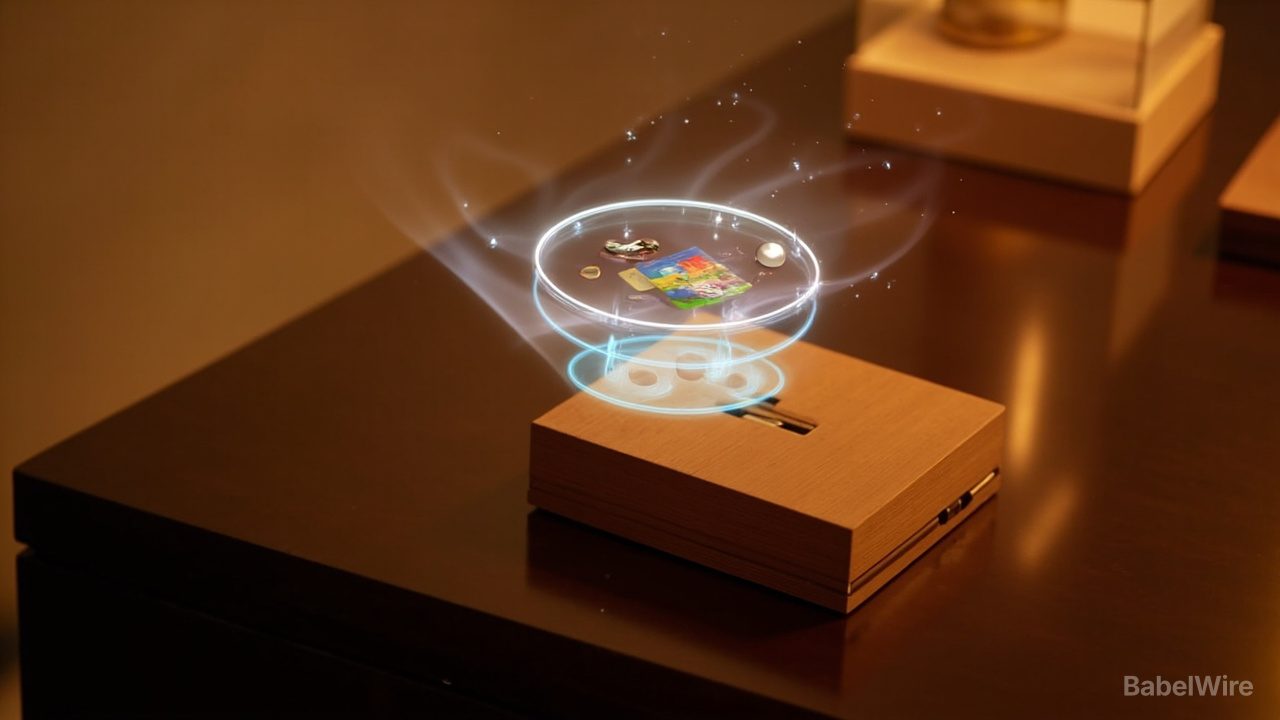
University of Chicago researchers have unveiled BloomBeacon, a novel device with spinning LED arms that creates a touch-interactive screen from a small box on demand — then vanishes when no longer needed.
The device consists of a small box with two arms atop it. One arm carries LEDs that light up as a display; the other is touch-sensitive. When activated, the two arms spin rapidly, creating an interactive screen where none previously existed. The arms are soft and designed to stop spinning if they encounter an obstacle.
The breakthrough comes from UChicago graduate student Willa Yang, supervised by Assistant Professor Ken Nakagaki in the AxLab. The group is known for blending technology seamlessly into everyday life.
"Screens are a powerful medium for displaying digital information and supporting interaction, but we either need to carry them, as with phones and tablets, or dedicate space for them in the environment, which creates visual clutter," Yang explained. "BloomBeacon blooms into a larger surface only when needed. This keeps our environments responsive without permanent screens or clutter."
Inspired by science fiction, the researchers imagine BloomBeacon turning paper maps into dynamic surfaces offering weather or heat map overlays, augmenting a speaker with album art and touch controls, or providing safety alerts — for instance, detecting when someone reaches for a chemical bottle without safety gloves and displaying a warning.
"People should be able to shape their environments instead of adapting themselves to fixed technologies," Yang said.
Presented at the ACM Designing Interactive Systems conference, the work points toward a future where screens are no longer permanent fixtures but transient tools.