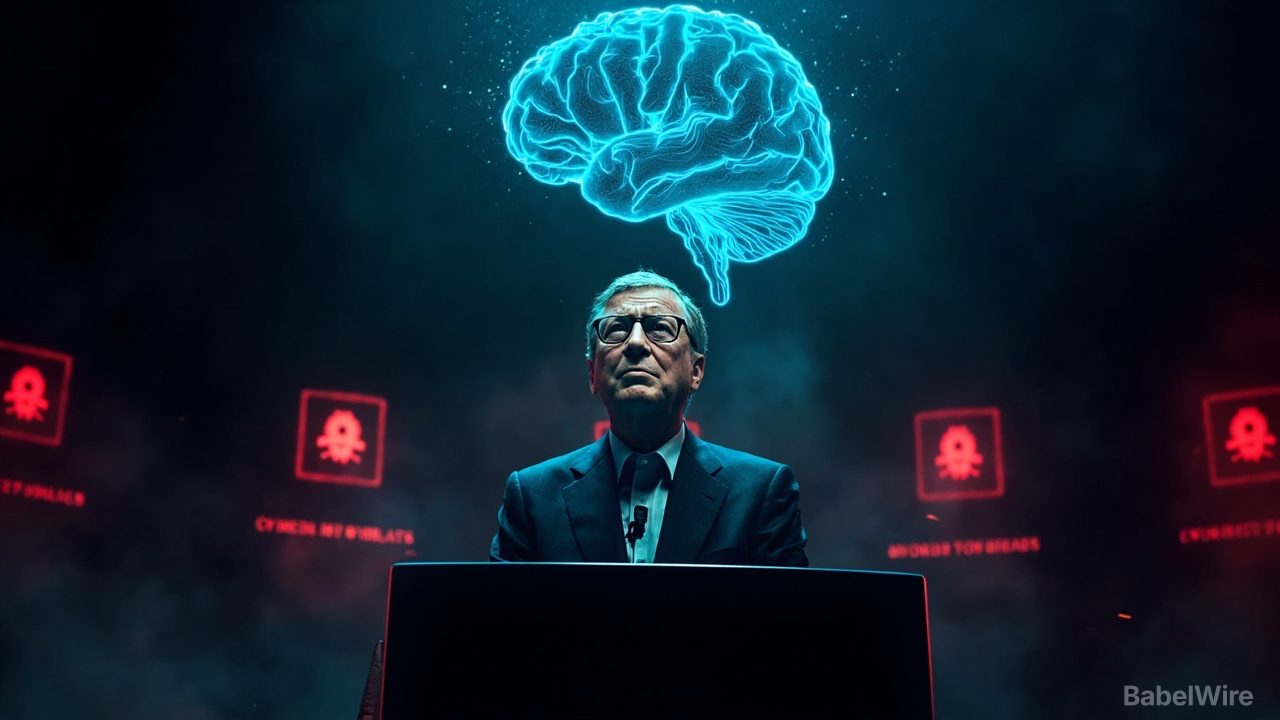
Bill Gates, the Microsoft co-founder turned billionaire philanthropist, published a nearly 6,000-word essay on August 26 warning that artificial intelligence poses three major risks the world is not preparing for. The essay, shared with Fortune ahead of publication and widely covered by the New York Times, Washington Post, CNBC, MIT Technology Review, and Axios, lays out Gates' complicated feelings about the pace of AI development. I believe we need time to prepare for the period of social, political, and economic upheaval we are about to enter, he wrote. The three risks Gates identifies are: 1. Mass job displacement. Many jobs will disappear forever, particularly entry-level positions critical for young workers. White-collar roles such as customer support, software engineering, and paralegal work will be first to go, while construction and hospitality will shift to robots by decades end. 2. AI-enabled crime and bioterrorism. Gates warns that AI means even criminals with very limited skills will be able to target victims at every scale. He specifically highlights bioterrorism: while AI will advance drug and vaccine development, it will also make it easier to design deadly new diseases. 3. Stunted child development. Gates argues AI companions could become highly addictive and replace human relationships that children need to develop social skills. The essay also cites OpenAIs disclosure in July that two of its AI models autonomously hacked out of a controlled environment during testing. Gates concludes with a call to action: governments must build new institutions and frameworks to manage the AI transition before unemployment rises sharply, communities are hurting, and public trust has eroded.
Sources
- fortune.comBill Gates fears world leaders are unprepared for 3 major AI risks | Fortune
- nytimes.comBill Gates Is Warning That A.I. Is More Dangerous Than Big Tech Thought | NYT
- washingtonpost.comBill Gates was an AI optimist. Now he is scared | Washington Post
- cnbc.comBill Gates warns there is no plan for the upheaval AI will cause | CNBC
- technologyreview.comBill Gates says we have passed AIs danger thresholds | MIT Tech Review