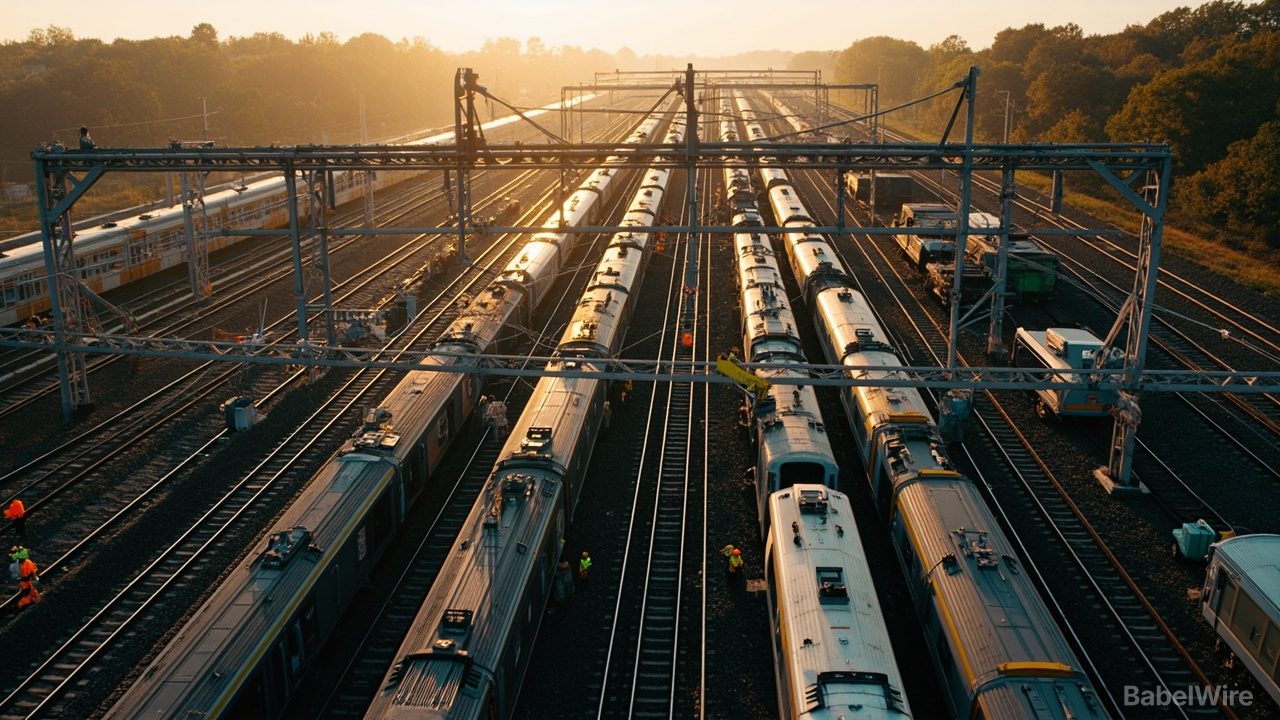
Deutsche Bahn is preparing for one of its most disruptive infrastructure projects yet: a complete closure of the Berlin-Hannover rail corridor starting October 2, 2026, lasting through December 11, 2027.
The renovation will replace over 175 switches, 260 kilometers of track, and 13 kilometers of sound-absorbing panels along the corridor. Twenty-five stations will also receive upgrades. The work is carried out in four main phases, beginning with the eastern section between October and December 2026.
For passengers, the impact is significant. Trains between Berlin and Hannover will take up to 80 minutes longer than the current ~90-minute journey. Berlin-Amsterdam services will be rerouted entirely. Replacement bus services will be established on some sections.
This corridor closure follows the recently completed Hamburg-Berlin line renovation, which itself faced work overruns and drew criticism for its corridor-blockade model. Deutsche Bahn InfraGO is now applying lessons learned, though the scale of disruption remains substantial.
The Berlin-Hannover project is part of Germany's broader plan to renovate 40 primary train routes by 2030. Deutsche Bahn plans to invest over EUR 23 billion in network modernization next year, acknowledging that the poor condition of its infrastructure has driven punctuality rates down.
By the end of 2027, Deutsche Bahn aims to have replaced all aging infrastructure on the corridor, with the goal of achieving a punctuality rate of 69-72% by 2030, rising to 80% by 2035.