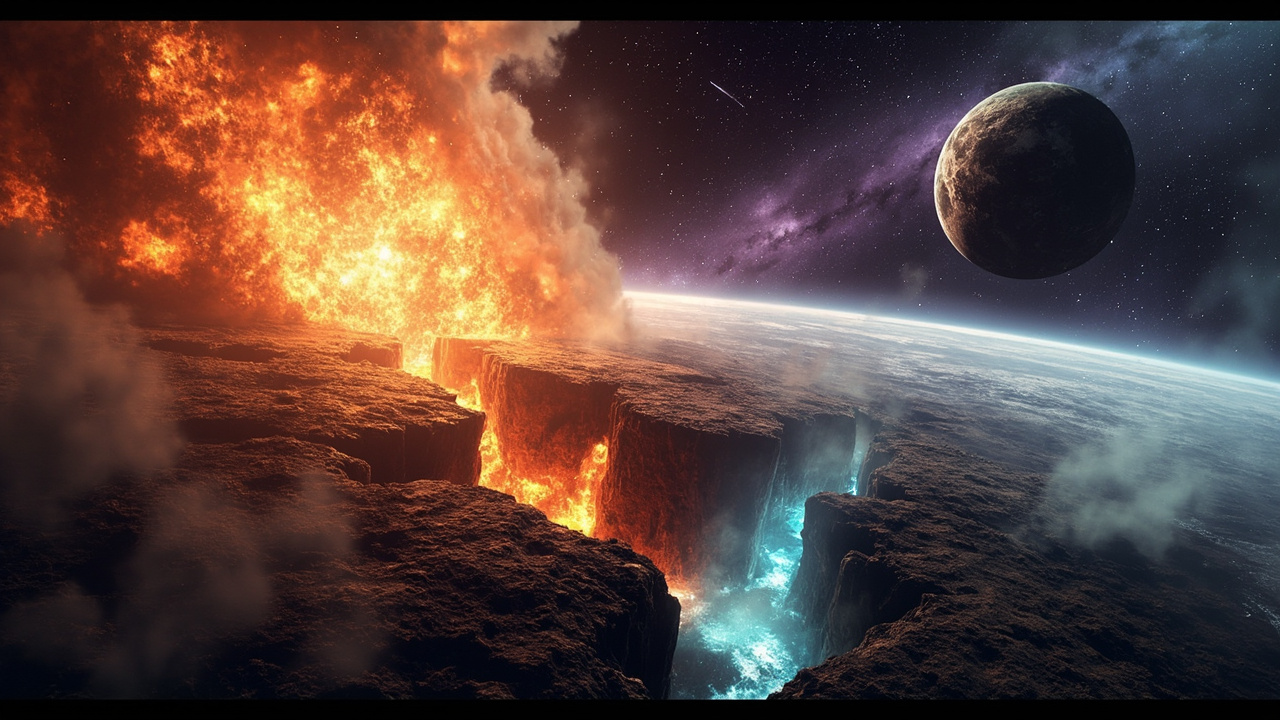
Scientists have long debated how life first emerged on Earth. A new study suggests the answer may lie not in some quiet, primordial soup — but in the violent chaos of asteroid impacts that pummeled the young planet.
Researchers at the Southwest Research Institute (SwRI) used sophisticated shock physics simulations to model how high-velocity asteroid impacts fractured Earth's early crust. Their findings, published in AGU Advances, show that these collisions created extensive underground hydrothermal systems — hot water environments that could have provided precisely the right conditions for the first building blocks of life.
"While often considered catastrophic in the context of dinosaur extinction, impact bombardment was also likely critical for creating environments for prebiotic chemistry," said SwRI's Amanda Alexander, lead author of the study.
100 Times Yellowstone
Earth formed about 4.5 billion years ago and soon entered an era of intense asteroid bombardment. The team simulated impacts of various sizes and speeds on different crustal compositions and temperatures. Their results were striking: a single large impact could have generated as much as 100 times the hydrothermal activity currently found across Yellowstone National Park.