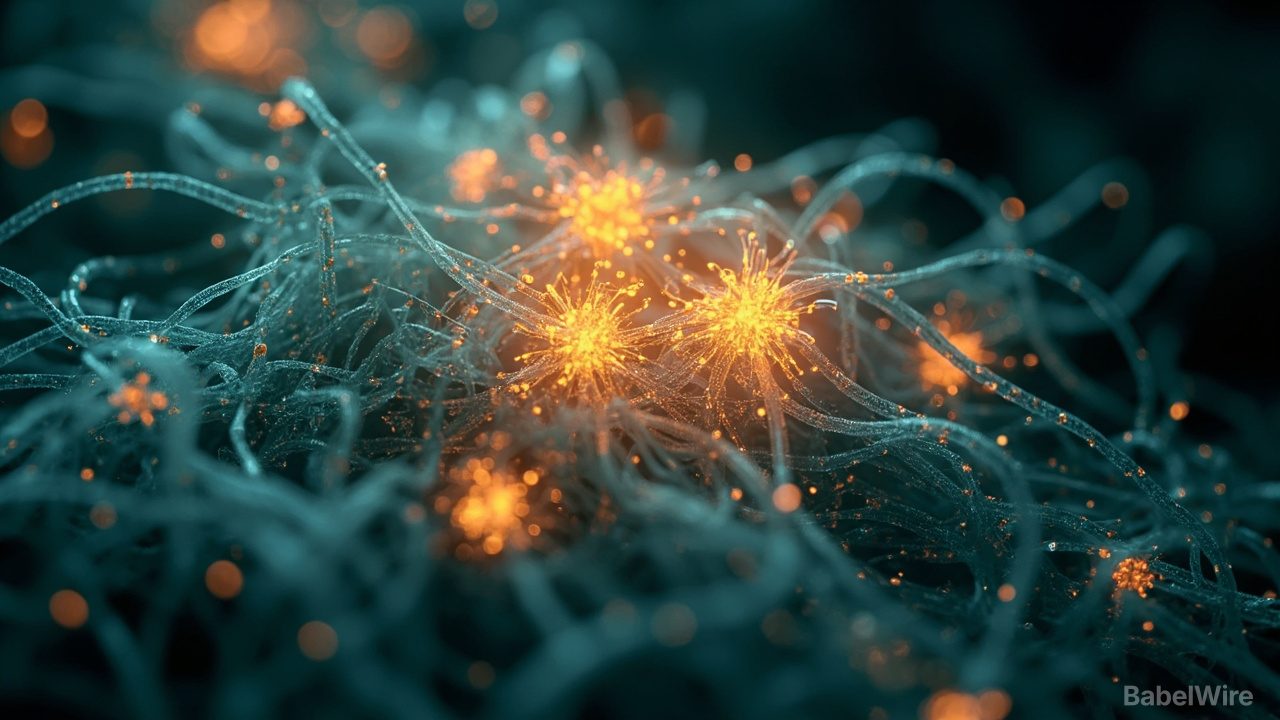
Memories can survive even when the brain temporarily loses more than half of its synaptic connections — a finding that challenges decades of assumptions about how long-term memory works.
The evidence comes from a study in mice published in Science by researchers at the Okinawa Institute of Science and Technology (OIST) and collaborators at the University of Tsukuba, the Exploratory Research Center on Life and Living Systems, and Japan's National Institutes of Physiological Sciences.
The team used an artificial hibernation technique first developed at Tsukuba in 2020, which lets researchers switch mice into a hibernation-like state on demand. Under that state, the animals' brain activity collapsed: neuronal firing in the hippocampus dropped by roughly 70 percent, and more than half of hippocampal synapses disappeared.
By imaging the brain before, during and after hibernation, the scientists watched this massive structural remodeling happen in real time. Under the traditional view, that should have destroyed the animals' memories — long-term recall was believed to depend on individual synapses that had been strengthened and enlarged during learning.
But when the mice were tested after coming out of hibernation, their memories were intact, and in some cases even improved.
"Logically, if all our engram synapses were essential in memory retention as traditionally thought, memory should have massively deteriorated," said first author Yu-Ju Lin.
Using correlative light and electron microscopy (CLEM) — a technically demanding method that combines fluorescent tagging with electron microscopy, and the first time it has been used to observe engrams directly — the team found that certain clusters of synapses were spared. Two structural motifs stood out: multi-synaptic boutons, where a single presynaptic terminal connects to multiple cells, and spatially clustered groups of engram synapses. Synapses were eliminated regardless of dendritic spine size, meaning "stronger" synapses were not inherently protected.
"Previously, synaptic strengthening was thought to be key to memory recall... Here, we show that not every synapse matters, and demonstrate instead the vital importance of engram architecture," said Kazumasa Tanaka, who leads OIST's Memory Research Unit and is the study's senior author.
The researchers caution that they have shown a correlation between these preserved clusters and memory retention, not yet a proven causal link. But the work suggests the brain stores long-term memory in resilient architectural patterns that can survive severe disruption — and, because the neural circuitry for hibernation is conserved across mammals, it may open new doors for studying memory and brain resilience in humans.
Sources
- oist.jpArtificial hibernation reveals secrets of long-term memory — OIST
- science.orgArtificial hibernation reveals synaptic engram architecture associated with memory retention — Science
- genengnews.comLong-Term Memory Loss Secrets Revealed with Artificial Hibernation — GEN
- news-medical.netMouse study reveals memories survive massive loss of brain synapses — News-Medical
- livescience.comMemory may not work how we thought, study of mice in artificial hibernation finds — Live Science