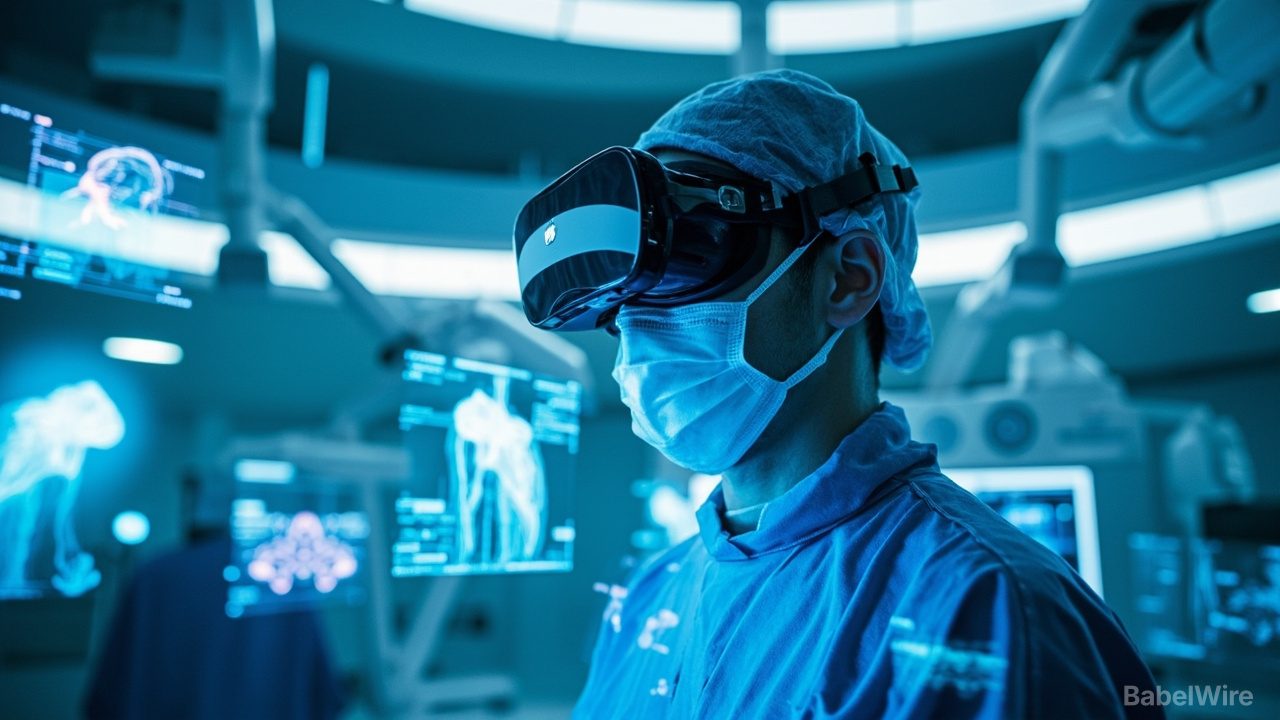
Apple's Vision Pro headset is proving itself in the operating room. A study published in the Journal AJO International by researchers at the University of California, San Diego found that surgeons using Vision Pro during tear-duct surgery (dacryocystorhinostomy) completed procedures up to 19% faster than those using conventional monitors.\n Perhaps more striking, complications during and after surgery were reduced by up to 100% — meaning no complications occurred in the Vision Pro group compared to the control group. The study, led by ophthalmologist Dr. Bobby Korn, examined 32 total procedures: 16 with Vision Pro and 16 without.
Beyond speed and safety, researchers found that the headset improved surgeon ergonomics and reduced cognitive load. Surgeons reported greater comfort despite the device's weight and pressure, because they could maintain better body positioning during the procedure.
On the cost front, analyst Horace Dediu, who participated in the study, found that the Vision Pro costs approximately 1% of conventional surgical visualization systems — turning what consumers see as a $3,499 luxury device into a potential bargain for hospitals. Major medical device company Stryker has already developed a visionOS application for hip arthroscopy.
The findings come amid growing clinical interest in spatial computing for medicine. A recent gathering in Leipzig focused specifically on Vision Pro's medical applications, and European regulators are watching closely. While operations using Vision Pro are permitted in the US, European medical authorities have not yet approved the device for use outside of studies or veterinary procedures.
The study adds to a growing body of evidence that augmented reality headsets could transform surgical practice — a vision that Apple has long highlighted but that clinical data is only now beginning to validate.