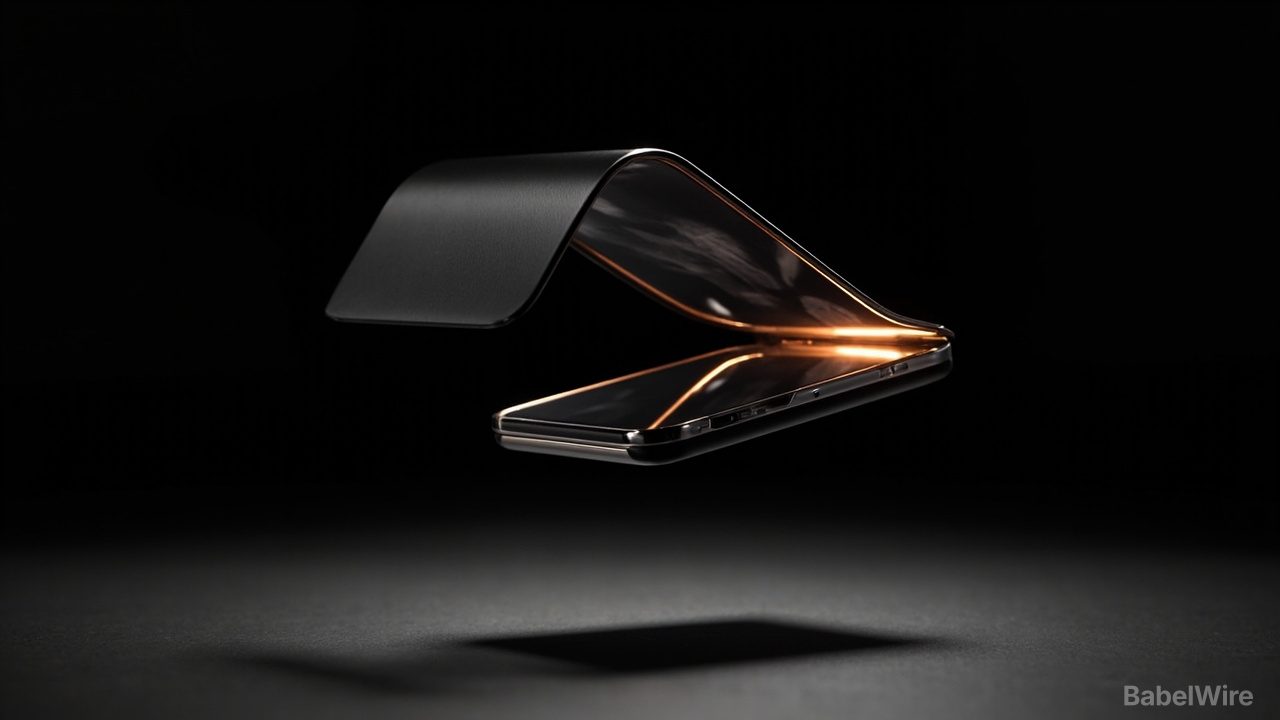
Apple used its “Surprise and Shine” event on Wednesday to unveil the iPhone Duo, its first foldable phone, starting at $1,999 in the US — and to quietly end an annual ritual the company has kept for years.
The Duo, shown off by new CEO John Ternus in his first launch event since taking over from Tim Cook on September 1, opens to a 7.6-inch inner display (with a 5.4-inch outer screen), uses Apple's A20 Pro chip — the company's first 2-nanometer iPhone silicon — and debuts the in-house C2 modem, cutting Apple's reliance on Qualcomm further. Apple says C2 is 50 percent faster than its predecessor while using 15 percent less energy. The company redesigned much of iOS to use both screens, letting users run two apps side by side and use the Apple Pencil. “For a device that plays such a central role in your life, a larger display would open up entirely new possibilities,” Ternus said. “We think the best way to achieve that is with a foldable design.”
Investors found the bigger story in what was missing: there was no plain iPhone 18. The least expensive new iPhone announced was the iPhone 18 Pro, from $1,199, a $100 increase. Analysts expect Apple to move its mainstream iPhone to a spring event, reserving the autumn showcase for premium models — a split-launch strategy the company has historically avoided.
The logic is revenue smoothing and supply. Apple's fiscal first quarter, which captures the holidays and the first full quarter of iPhone sales, has long dwarfed the quarters that follow. A big spring launch with a lower-priced device would fill that trough. Releasing two new models instead of four also simplifies a supply chain squeezed by high memory prices — the same pressure that pushed Apple to raise Mac and iPad prices in June, which Cook called “unsustainable.”
There are risks. Bank of America's Wamsi Mohan warned the split “creates some risk that price-sensitive consumers defer upgrades until the lower-priced models arrive.” And the shift cements a trend analysts have tracked for years: in the first half of 2026, the iPhone 17 Pro and Pro Max made up 54 percent of iPhone sales, while the standard iPhone 17 accounted for 26 percent. As IDC's Francisco Jeronimo put it, concentrating everything in one quarter generates strong revenue but leaves Apple “missing” in slower months — something the new cadence is meant to fix.