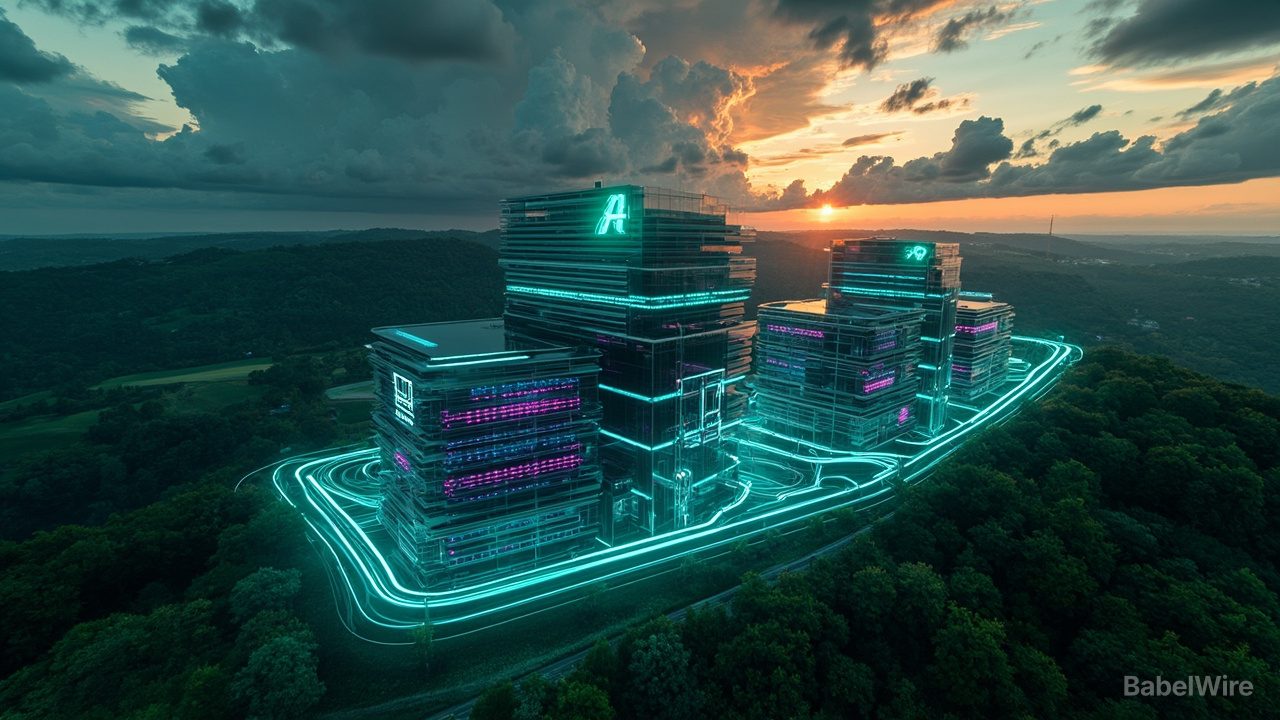
Anthropic, the AI company behind the Claude model family, has signed a landmark 20-year lease with infrastructure provider TeraWulf for a massive AI data center campus in Kentucky, in a deal expected to generate approximately $19 billion in contracted revenue over its term.
The agreement secures 401 megawatts (MW) of capacity at TeraWulf's Kentucky campus — enough to power hundreds of thousands of homes — and represents one of the largest compute infrastructure commitments ever made by an AI company.
From crypto mining to AI infrastructure
The deal marks a dramatic pivot for TeraWulf, which began as a cryptocurrency mining operation and has transformed into a major AI infrastructure provider. The company's stock surged on the news as investors recognized the shift from the volatile crypto market to the booming AI data center economy.
Anthropic will occupy the vast majority of the campus's capacity, using it to train and run inference for its next-generation AI models, including its recently unveiled Mythos and Fable systems.
The infrastructure arms race
The Kentucky lease is the latest in a series of massive infrastructure investments by leading AI companies. As AI models grow larger and more capable, the compute required to train and operate them has skyrocketed. Anthropic's commitment follows similar moves by rivals, with the entire industry scrambling to secure power, land, and cooling capacity.
Analysts estimate that global AI data center capital expenditure could exceed $500 billion by 2027, with companies like Anthropic, OpenAI, and Google racing to secure long-term capacity in an increasingly constrained market.
Community and regulatory impact
The project is expected to bring thousands of construction jobs and hundreds of permanent positions to Kentucky. However, the massive power requirements — potentially exceeding 400 MW — have also raised questions about grid capacity and energy sourcing. TeraWulf has indicated plans to explore renewable energy options to power the campus.
Anthropic confidentially filed for a U.S. initial public offering earlier this year, and this deal signals the scale of capital investment needed to compete at the frontier of AI development.
Sources
- reuters.comTeraWulf jumps on $19 billion data center lease deal with Anthropic - Reuters
- qz.comAnthropic signs 20-year lease at TeraWulf Kentucky data center - Quartz
- courier-journal.comAnthropic signs $19 billion lease for Kentucky data center - Courier Journal
- theverge.comAnthropic signs 20-year lease agreement for an AI data center in Kentucky - The Verge