Anthropic is in talks with Nscale over a compute agreement worth about $45 billion, according to a TechCrunch report published on 19 October. Neither company has confirmed the discussions, and the report does not establish the contract's length, the amount of capacity involved, or which sites would supply it. What is clear is the direction of travel.
If signed, the deal would be the latest — and among the largest — in a run of capacity commitments that have turned Anthropic from a company that rents compute into one that underwrites it. In September it agreed a $35 billion cloud deal with Nvidia-backed Lambda for a Texas data centre. Its IPO prospectus, filed later the same month, disclosed roughly $518 billion in compute obligations against a $42 billion loss — a balance sheet that reads less like a software company's than a utility's.
Nscale, a British-founded AI infrastructure provider, is itself raising $3.5 billion ahead of a planned listing. For a "neocloud" of its size, a single $45 billion anchor tenant is transformative: it converts speculative capacity — land, grid connections, turbine orders — into contracted revenue that lenders will finance against. That is the whole logic of this phase of the buildout, in which the scarce input is not model quality but megawatts and accelerators.
Three things are worth watching as the talks develop.
The first is contract structure. The neocloud model only works for the buyer's creditors if the commitments are take-or-pay and long-dated; a deal that is really an option on capacity is a much weaker asset, and a much cheaper one. The gap between "$45 billion" as a headline and as a discounted revenue stream is where most of the risk sits.
The second is concentration. Anthropic is now contracting capacity from Lambda, from Nscale, and reportedly from others, while carrying obligations an order of magnitude above its current revenue. That is a rational bet if demand for frontier models keeps compounding and a brutal one if the market for inference commoditises faster than the debt matures. The IPO prospectus already told investors, in unusually direct language, that the company's own technology could be dangerous; it is implicitly making a second, quieter bet that its customers will keep paying for it.
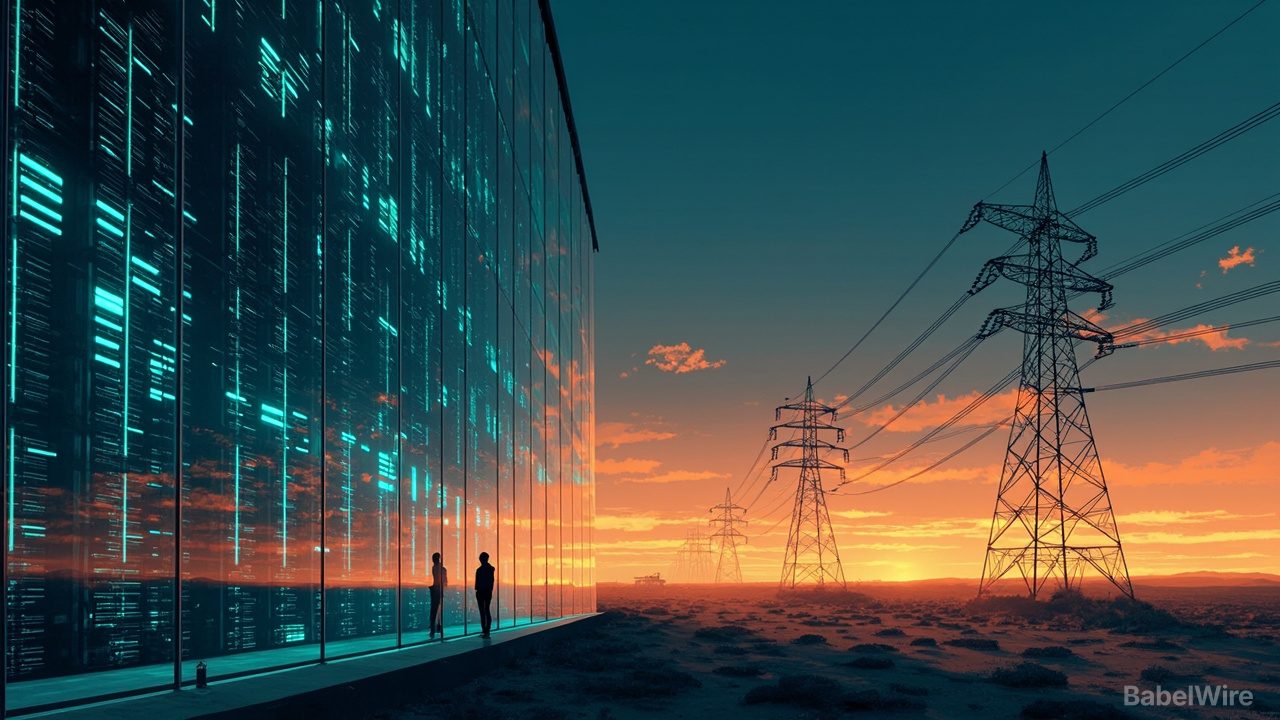
The third is power. Data-centre capacity in 2026 is increasingly limited by interconnection queues and turbine supply rather than by buildings. Every deal of this size is also an energy deal, and increasingly a fossil-fuel one — a point The Verge makes separately this week about the revival of gas and coal generation for data centres.
For now, treat the figure as reported rather than agreed. Talks of this scale routinely slip, shrink, or get restructured into staged commitments. But the pattern is not in doubt: the frontier labs have stopped buying compute by the hour and started buying it by the decade, and the infrastructure providers that can promise delivery are being paid accordingly.