The Farnborough Debut
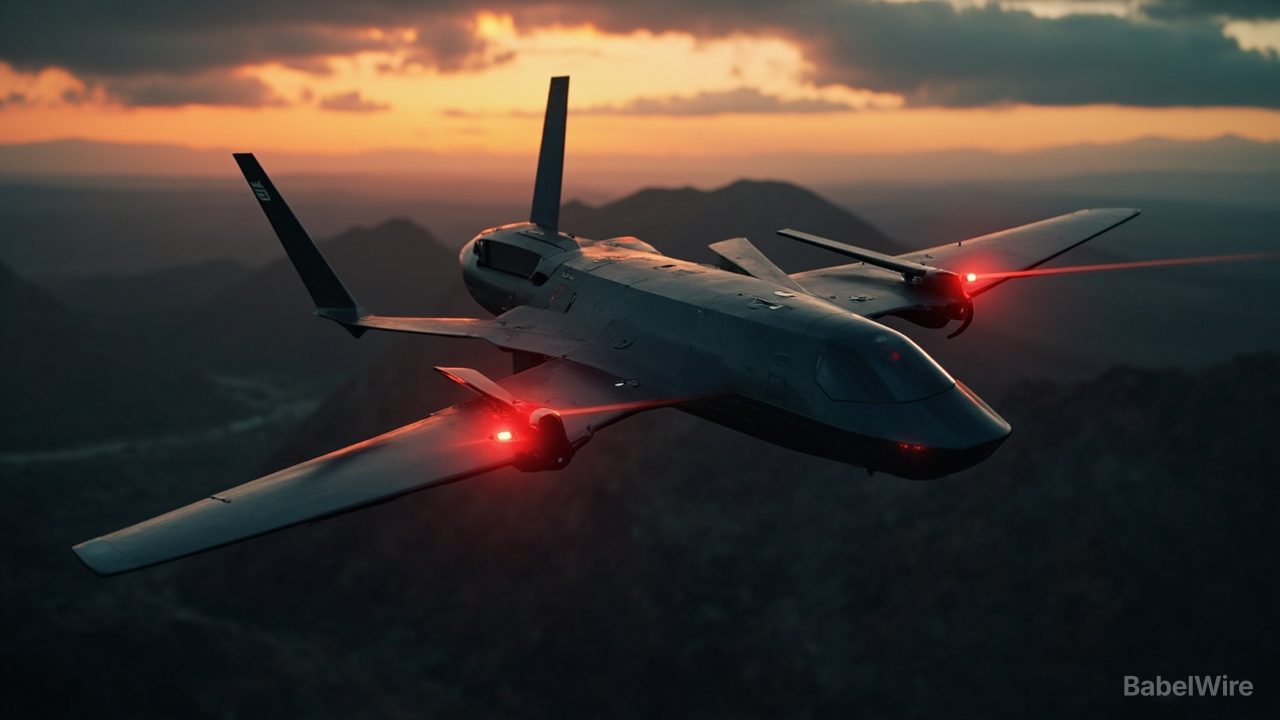
Anduril Industries and Archer Aviation unveiled a jointly-developed autonomous VTOL platform on Monday at the Farnborough Airshow, one of the world's premier aerospace events. The defense variant, called Thunder, is a Group 5 autonomous attack rotorcraft — the largest category of unmanned aircraft — designed to fly alongside current and next-generation crewed attack and assault aircraft.
Dual-Use by Design
The platform is built on a hybrid-electric tiltrotor architecture, combining the vertical takeoff and landing capability of a helicopter with the speed and range of a fixed-wing aircraft. It uses a series hybrid-electric powertrain with tilt rotors that vary rotor speed across flight conditions. Modular payload bays allow it to carry missiles, drones, and sensors in configurations tailored to specific missions.
"Anduril has done a very good job of identifying needs and then building ahead of those needs before programs ever get announced," Archer CEO Adam Goldstein told Reuters. "They identified a need, and we built a very specific aircraft for that need."
Thunder is aimed at "anyone who operates Apache, anyone who operates armed reconnaissance helicopters," said Shane Arnott, Anduril's senior vice president of programs & engineering.
The Strategic Logic
The dual-use structure addresses a fundamental problem in advanced aviation: electric vertical-takeoff aircraft have struggled to reach commercial viability on passenger economics alone, while defense budgets can fund development at a scale civilian markets cannot. Building one platform that serves both lets each side subsidize the other. Archer plans to unveil its commercial variant and announce first commercial customers later this week.
For Archer, best known for developing electric air taxis, the partnership offers a path into defense and heavier-duty commercial markets while the outlook for the air-taxi market remains clouded by certification delays and infrastructure hurdles. For Anduril, it adds an aviation manufacturing capability to its existing autonomy and defense systems expertise.
What Comes Next
The companies have completed multiple test flights using full-scale surrogate aircraft, validating key systems. Thunder's first flight of the production design is planned for 2027. The unveiling comes at a moment when defense AI funding is surging — Shield AI's $1.5 billion raise, Helsing's €1.8 billion round, and now the Anduril-Archer partnership collectively represent well over $3 billion in defense AI commitments in July alone.
The Governance Gap
The Thunder launch raises questions that extend beyond engineering. Autonomous attack aircraft capable of carrying missiles and making targeting decisions represent a significant leap in how quickly lethal force can be delegated to software. The White House framework for frontier AI models (covered separately today) includes a 30-day national security review window — but autonomous weapons systems, which raise more immediate life-and-death questions, operate under a separate and considerably slower international governance process. The money, as this week's announcements make clear, is moving faster than the rules.