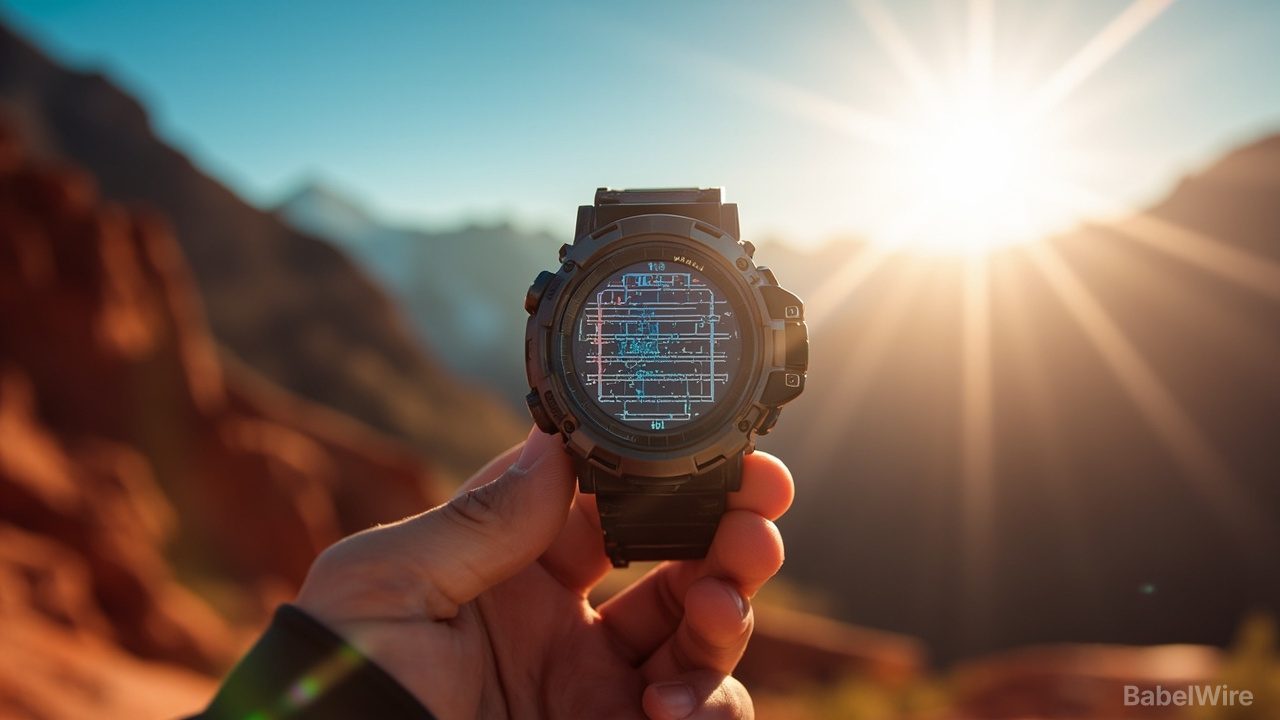
Solar charging has been a fixture of outdoor watches for years, usually as a thin ring around the display that tops up the battery when the sun is out. Amazfit's new T-Rex Dual Solar does something less usual with the idea: according to Golem, it adds solar panels to the back of the watch as well, giving the case two light-harvesting surfaces instead of one.
The caseback is a strange place to put a solar cell. A watch worn on a wrist spends most of its life with that surface pressed against skin or a sleeve, so whatever the rear panel collects will be a trickle — enough, perhaps, to slow the drain of the always-on display, not to replace a charger. Amazfit's T-Rex family is built for hiking, trail running and other long days outdoors, which is exactly the setting where slow accumulation is worth something, and the pairing of an AMOLED screen with solar is itself a compromise: bright, power-hungry panels and light-harvesting bezels pull against each other.
The more interesting story is how battery life is being marketed across the wearable market. Multi-day and multi-week claims have become the main differentiator now that sensors, GPS and displays have converged, and solar is one of the few ways left to extend those numbers without adding a bigger battery — even when the gain is small and heavily dependent on how much sun the wearer actually sees. Gadget specifications are typically quoted under ideal illumination; real-world charging is far less generous.
Price and availability were not part of the report, so the manufacturer's battery figures will need to be tested against a wrist rather than a lab.