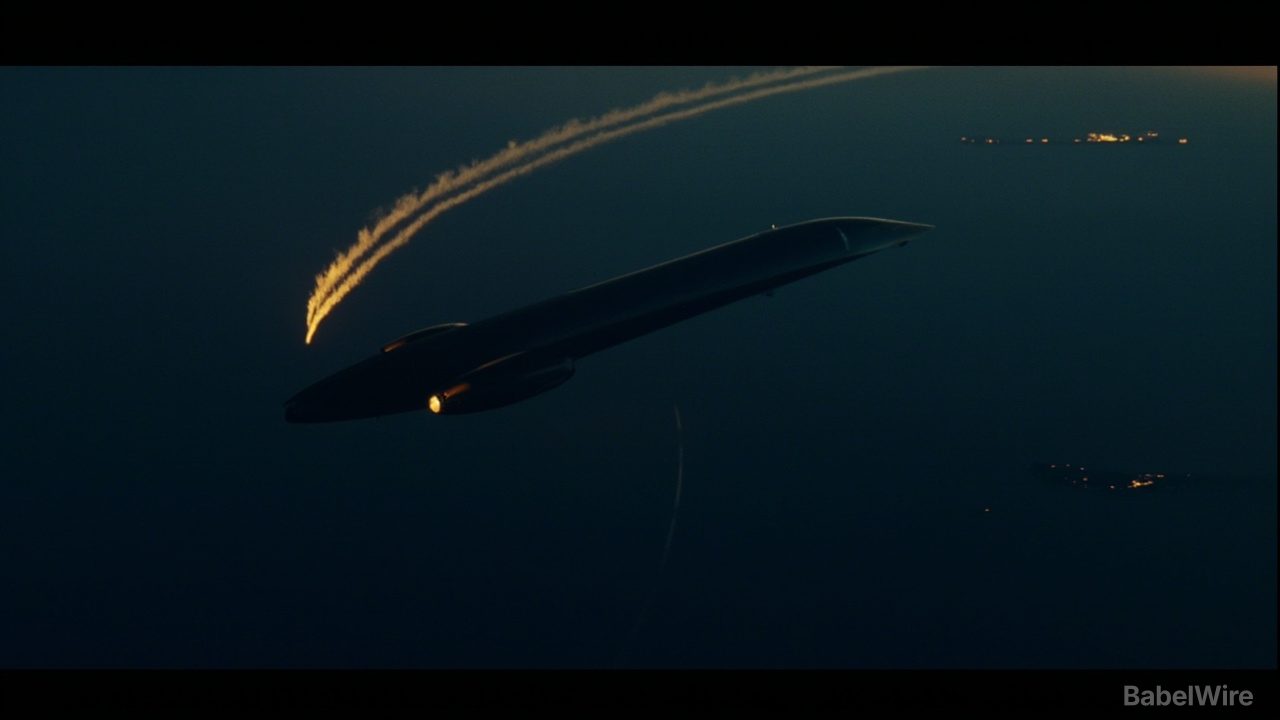
Nine months of speculation ended on 9 November with a certificate: Guinness World Records has recognised Airbus's A350-1000ULR for the longest flight by distance by a commercial airliner. The numbers are 12,503 nautical miles — 23,155 kilometres — and 24 hours and 24 minutes in the air, flown from Melbourne to Toulouse on 27–28 July.
The aircraft was not carrying passengers. It flew as AIB35LR on the test registration F-WULR, and the 24-hour leg was part of the certification campaign for the version Qantas will operate on Project Sunrise, its plan to fly nonstop from Australia's east coast to London and New York.
The routing was drawn to make a point. It passed over Sydney, crossed the Pacific and then the Atlantic, overflew Rolls-Royce's Derby facility where its Trent XWB-97 engines are assembled, and tracked over London Heathrow before landing in Toulouse. Airbus and Qantas have never pretended this was anything other than an engineering milestone with a marketing department attached.
The public followed in numbers that surprised even the tracking sites. Flightradar24 logged 3,652,947 people watching the flight live — the second most-tracked flight in the service's history, behind only the final journey of Queen Elizabeth II's aircraft. Its ADS-B data, independently checked alongside the International Aeronautical Federation, was submitted as part of the evidence behind the record.
What physically buys the distance is unglamorous: an additional rear centre fuel tank, which Airbus says adds about 1,000 nautical miles of range to the standard -1000. Everything else — the wing, the engines, the crew endurance — is the aircraft that will enter service.
The commercial timetable is now fixed. Qantas has 12 on order, with the first delivery scheduled for April 2027. Nonstop Sydney–London service is expected to launch as QF1 and QF2 in October 2027, and tickets go on sale in February.
One caveat belongs next to the certificate. A record flight is not a scheduled one: this aircraft carried test instrumentation rather than a full passenger cabin, and was dispatched under rules that let engineers pick the day, the route and the fuel load. Whether a 24-hour sector with 300-odd people, their baggage and an unlucky weather system is a good product is a question the record does not answer. It will be answered in economy class, in October 2027.



