This summer's wildfires in southern France, Spain and Portugal have forced hundreds of thousands of people from their homes — and killed four firefighters in France alone. But a quieter revolution is unfolding in the watchtowers: AI-assisted cameras are now spotting fires before anyone calls for help.
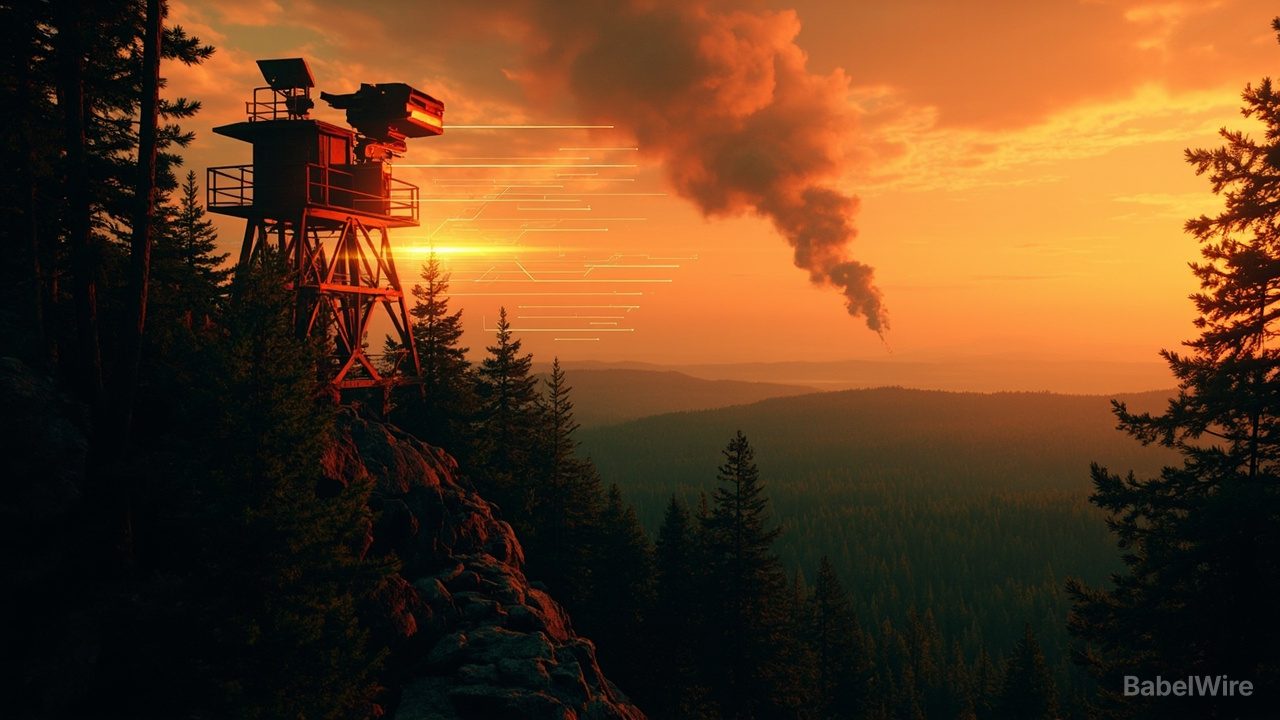
In the Gironde region, France's worst-hit department, cameras have replaced the human lookouts who used to staff watchtowers through the summer months. Chief sergeant Guillaume Millet, a 24-year firefighting veteran, says the AI-assisted cameras can distinguish smoke from tractor dust 'with almost total certainty' and detect fires up to 20 km (12 miles) away.
The technology comes from French startups such as FireTracking, whose cameras survey about a million hectares, mainly in France. When the system detects a fire, an alert appears on firefighters' phones with a live 40x-zoom view, a map showing the exact location and nearby homes, and a simulation of how the fire is expected to spread given the weather and humidity.
FireTracking's CEO Jean-Simon Chaudier says the system detected seven fires 15 minutes before the first phone call in one recent ten-day stretch. 'If you can help a firefighter save 15 minutes, it's the difference between a catastrophe and a fire which can be limited to two or three hectares.'
Costs are modest: covering all 6,000 square kilometres of the Indre-et-Loire department cost €1.2 million for 11 detection sites. New efforts go further — France's Condor programme is testing solar-powered patrol drones, Spain's SenForFire measures gases released before flames appear, and startups are working on autonomous drone firefighting.
Still, firefighters caution that technology detects fires but does not put them out. 'It's always the firefighters on the ground, pulling the hoses, who extinguish the fires,' Millet says. 'It can help us with detection, but it's not technology that puts out fires.'