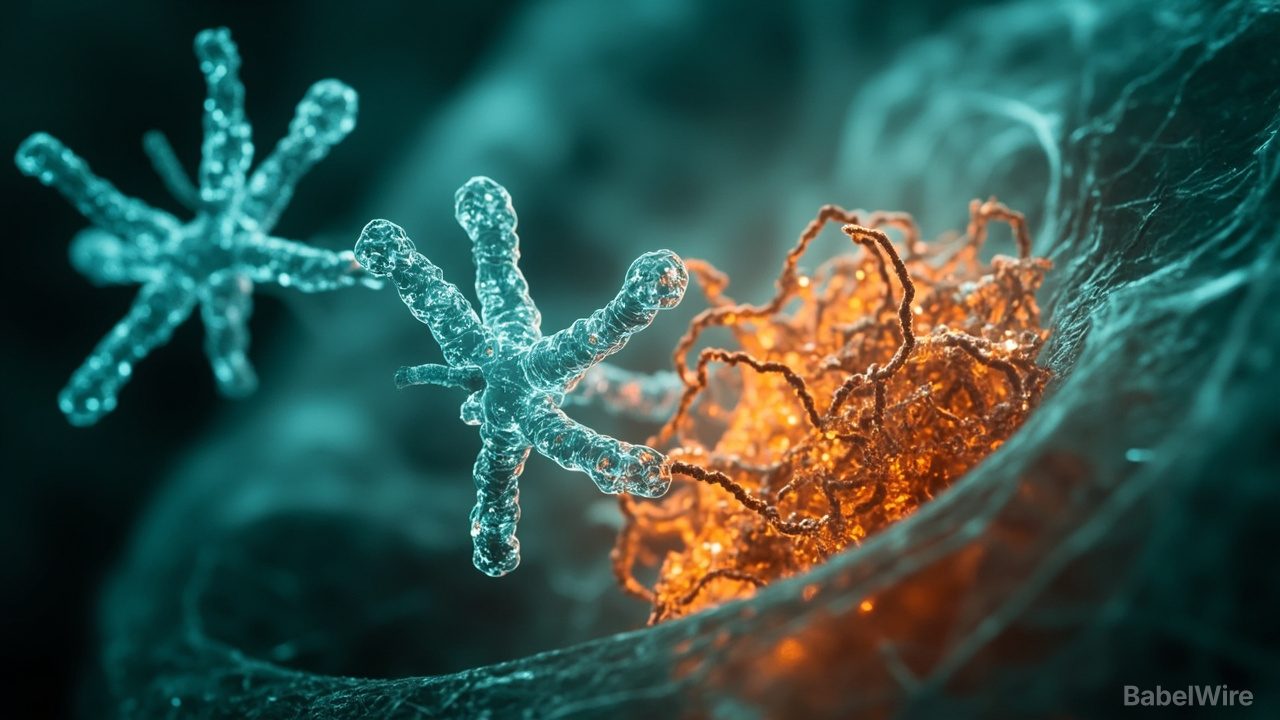
A significant breakthrough in the fight against neurodegenerative diseases has emerged from the University of Essex, where researchers have used artificial intelligence to create microscopic medicines that could treat some of humanity's most devastating brain diseases.
The team developed 'intrabodies' - extremely small antibody fragments that can be produced directly inside human cells and attach to proteins associated with disease. This addresses a fundamental challenge in treating conditions like Alzheimer's, Parkinson's, and motor neurone disease (MND).
Ordinary antibodies generally function outside cells, but many of the biological processes involved in neurodegenerative diseases begin inside cells. The newly redesigned fragments overcome this barrier by remaining stable and functional within the cellular environment.
Dr. Caitlin O'Shea and Dr. Gareth Wright from the School of Life Sciences led the research, which was funded by the MND Association. Their key discovery was that electrical charge is the critical factor determining whether antibody fragments can survive inside cells.
'We looked at the properties of millions of antibodies and compared them with human proteins found inside the cell,' explained Dr. O'Shea. 'From this we figured out that antibodies usually have the wrong charge to exist inside cells without sticking together. We used software developed by Nobel Prize winner David Baker and his group to redesign our antibody fragments, so they had the right charge and are super stable.'
Using this insight combined with AI-powered protein redesign, the researchers converted 672 different antibodies into intrabodies capable of targeting important disease-related proteins. The study was published in Nature Communications, and the redesigned molecules will be made freely available to other scientists.
Dr. Wright emphasized the significance of the advance: 'We've made intracellular antibodies that stick to proteins that cause neurodegenerative diseases such as Alzheimer's, Parkinson's, Huntington's and motor neurone disease. These diseases can lead to cognitive impairment, forgetfulness, loss of muscle control and death. They affect over one million people in the UK alone.'
The MND Association's Chief Scientist, Dr. Brian Dickie, welcomed the findings: 'Dr. Wright and his colleagues have made a significant advance in overcoming one of the key challenges that has impeded the development of antibodies as treatments for neurodegenerative diseases.'
The research could allow scientists to repurpose millions of existing antibodies developed during decades of biomedical research, rather than starting entirely from scratch. This could accelerate the development of new treatments for diseases affecting tens of millions of people worldwide.