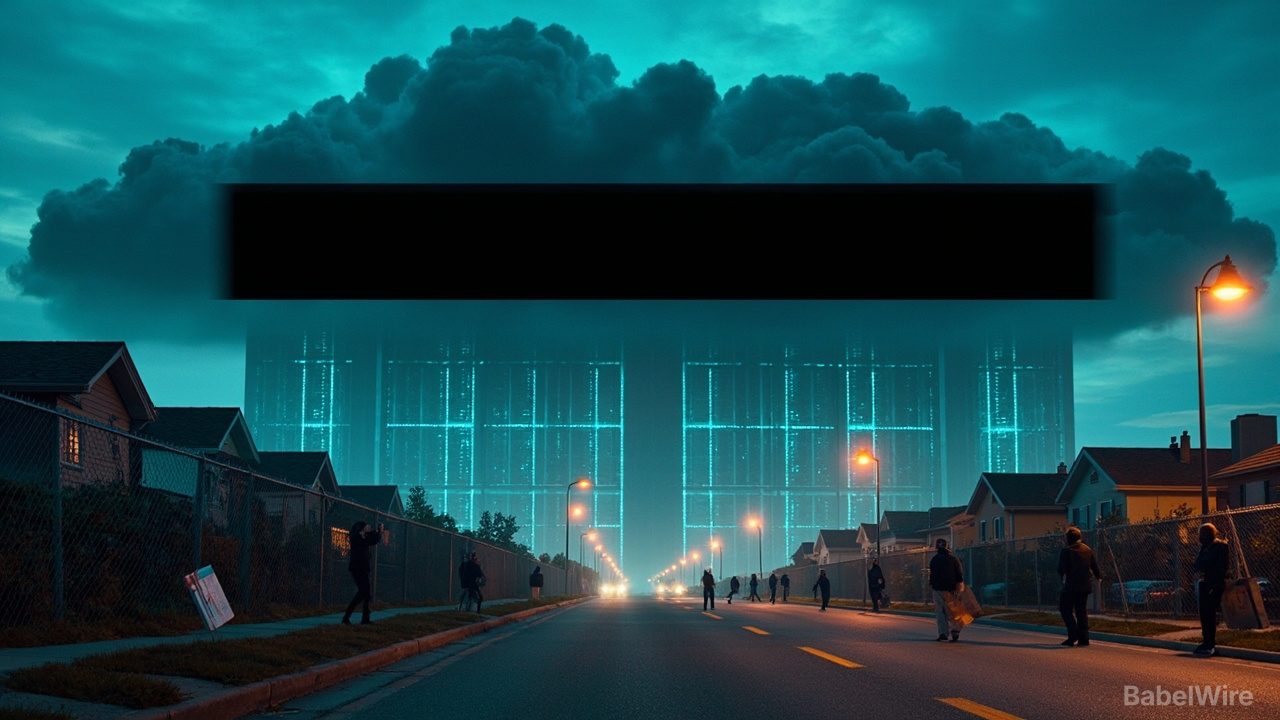
For the past two years, the hardest part of building an AI data center has not been the chips or the cooling. It has been the neighbours.
Local opposition has slowed or stopped projects across the United States and Europe, driven by concerns about electricity prices, water consumption, land use, and the noise of cooling systems running around the clock. In many of those fights, one detail has become a flashpoint: the nondisclosure agreements that developers ask residents, local officials and sometimes entire town councils to sign before they will disclose what a project actually involves.
Those NDAs, critics argue, keep the numbers that matter — megawatts of demand, millions of gallons of water, decades of tax abatements — off the public record until after the approvals are already in hand. Communities that signed them have described learning the scale of a project only after construction began. Opponents have used the secrecy itself as an argument: if the terms were favourable, why hide them?
TechCrunch reports that parts of the industry are now testing the opposite strategy, asking whether giving up the NDAs and publishing the details could rebuild enough trust to get projects approved.
The bet is straightforward. Secrecy has become the organising grievance for the opposition, and it is a grievance that is cheap to fix. Releasing projected power demand and water use before a vote does not make a data center popular, but it removes the accusation that the community was kept in the dark — and it forces the debate onto terms the developer can at least argue about, such as jobs, tax revenue and grid upgrades, rather than onto process.
Whether it works is another matter. Transparency arrives at the same moment as the numbers, and those numbers are often large: a single hyperscale campus can draw as much power as a mid-sized city, and the Senate has already questioned how many permanent jobs such a facility really brings. Developers who enforced NDAs for years have trained communities to expect concealment; a sudden openness may read as a public-relations manoeuvre rather than a change of practice.
For the AI industry, the stakes are structural. Compute buildouts are the constraint on nearly everything the labs want to do, and each blocked project pushes capacity — and its power demand — somewhere else. If dropping the NDAs can convert even a fraction of the opposition into negotiation, the industry has an incentive to try it. If the numbers make the case worse, the experiment will be quietly retired.