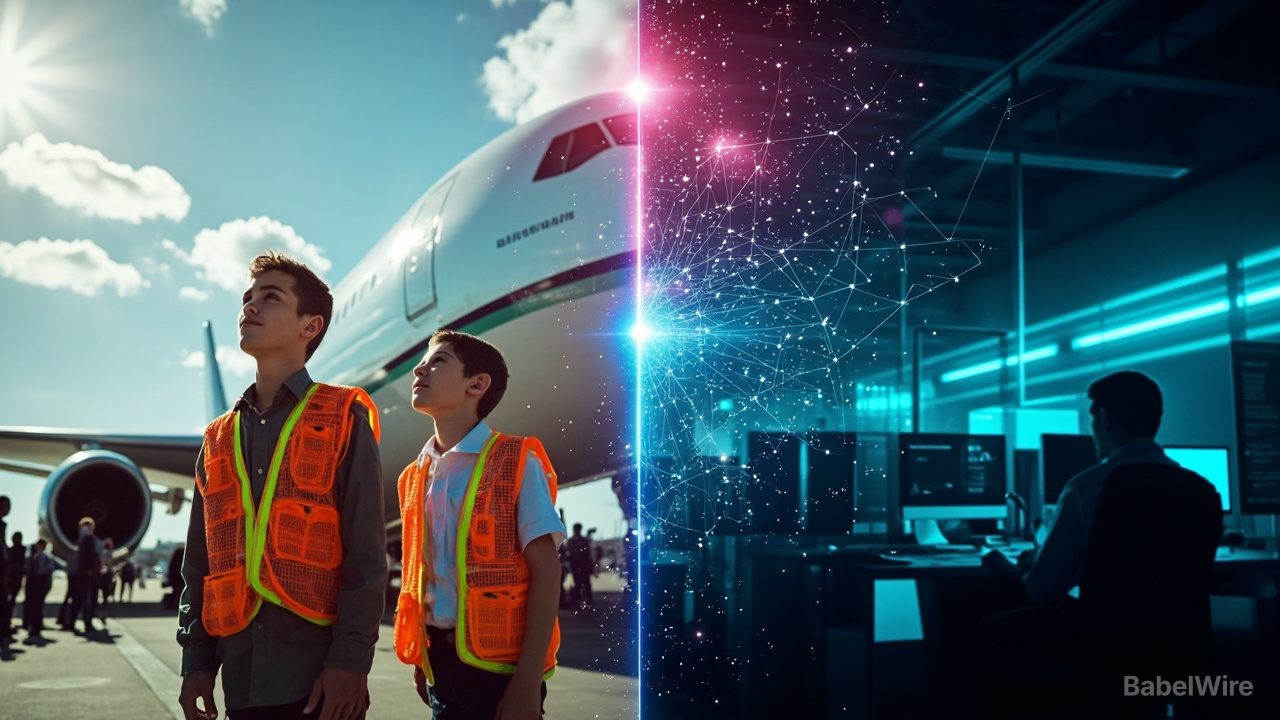
The roar of fighter jets at the Farnborough International Airshow this week masked an uncomfortable truth for the aerospace industry: the sector is losing the war for young engineering talent to AI.
The UK aerospace and defence sector faces a shortage of around 10,000 specialized engineers per year — with AI and other emerging technologies siphoning away graduates who once would have designed wings and engines.
More than 50% of licensed aerospace engineers in Britain are over 50; fewer than 10% are under 30, according to a March report by the Royal Aeronautical Society. The sector has grown 31% in the last decade, but the talent pipeline has not kept pace.
"If you're an engineer coming out of Purdue or MIT or any other premier aerospace engineering program, you might say maybe I'll go to Anthropic or OpenAI as opposed to Boeing or Airbus," said Jerrold Lundquist, managing director of advisory firm The Lundquist Group.
Aerospace giants Boeing and Airbus are working to crank out record order backlogs while watching their expert engineers inch toward retirement. Many companies scrapped apprenticeship programmes in cost-saving measures years ago, and the replacement graduate schemes have not filled the gap.
At the airshow, recruitment campaigns, engine-building exercises, and Top Gun-style flying displays were all deployed to attract young talent. Seventeen-year-old volunteer Hassan Butt said his dream was to pursue aerospace engineering focused on missiles. But industry bodies said there were not enough like him.
"We in the aerospace industry have been experiencing a shortage of skilled workers for some time despite the industry growing year on year for the past 10 years," said Kevin Craven, CEO of trade group ADS.
The UK government hopes renewed investment in defence — tied to the war in Ukraine — and the development of unmanned drones can boost the sector's appeal. Innovations in flying taxis and sustainable aviation may also help attract younger engineers.
But the competition is fierce. AI companies offer higher salaries, a lower barrier to entry, and the cultural cachet of working at the cutting edge of technology. As one industry consultant put it: aerospace is selling the romance of flight; AI is selling the future.
Molly Haydon, another 17-year-old at the event, said more needed to be done outside of airshows to attract students, especially young women. "I think they need to educate more young people and get them more knowledge that there are still jobs available in the sector for everyone," she said.