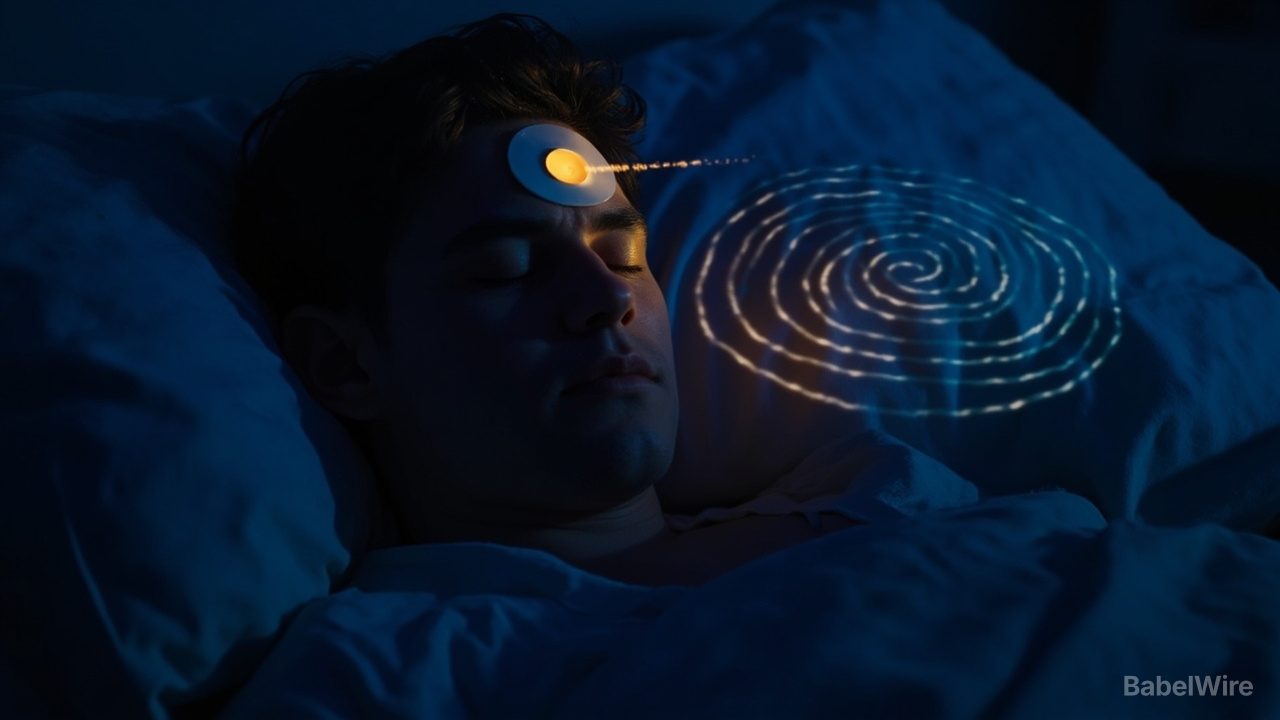
A team of researchers at the University of Texas at Austin has developed a wearable patch that can enhance REM sleep using gentle ultrasound stimulation — without drugs, surgery, or invasive procedures. The technology, called NEUSLeeP, represents a breakthrough in noninvasive sleep modulation with potential applications for PTSD, depression, and chronic insomnia.
Published in Nature Communications, the study of 28 participants showed that the soft, skin-attached patch helped users reach REM sleep an average of 43 minutes faster and stay in REM about 16 minutes longer compared to control conditions. The effects held for both healthy sleepers and those with mild sleep difficulties.
How It Works
NEUSLeeP — which stands for "Noninvasive Electrical and Ultrasound Sleep-enhancing Patch" — combines two technologies: - Gentle ultrasound waves that penetrate the skull to stimulate deep brain regions involved in REM sleep regulation - Electrodes that monitor brain activity in real time, creating a closed-loop system
The patch is soft, flexible, and designed for comfortable overnight wear. Participants reported it was comfortable and safe, with minimal adverse effects.
"This is the first time we've been able to noninvasively target deep brain regions involved in REM sleep, while simultaneously monitoring brain activity," said Kai Wing "Kevin" Tang, a recent UT biomedical engineering Ph.D. graduate who led the research.
Beyond Better Dreams
REM sleep is not just about dreaming — it's critical for emotional regulation, memory consolidation, and stress adaptation. Disrupted REM is linked to depression, anxiety, PTSD, and chronic insomnia.
The study also found that NEUSLeeP's stimulation improved heart rate variability — a marker of healthy stress response — in healthy participants. Brain scans showed changes in emotional brain circuits, suggesting potential mental health benefits.
"Our vision is a future where patients with mental health disorders can optimize their sleep with a noninvasive and safe treatment," said Vincent Mysliwiec, a professor at UT Health San Antonio and sleep disorders expert who co-led the project.
Next Steps
The researchers are planning larger trials to confirm their findings and explore NEUSLeeP's potential for PTSD, depression, and chronic insomnia. They are working with UT's commercialization unit, Discovery to Impact, to bring the product to market and have filed a patent application for the technology.
The team envisions the patch being used for at-home sleep monitoring, brain research, and even personalized sleep therapies in the future.