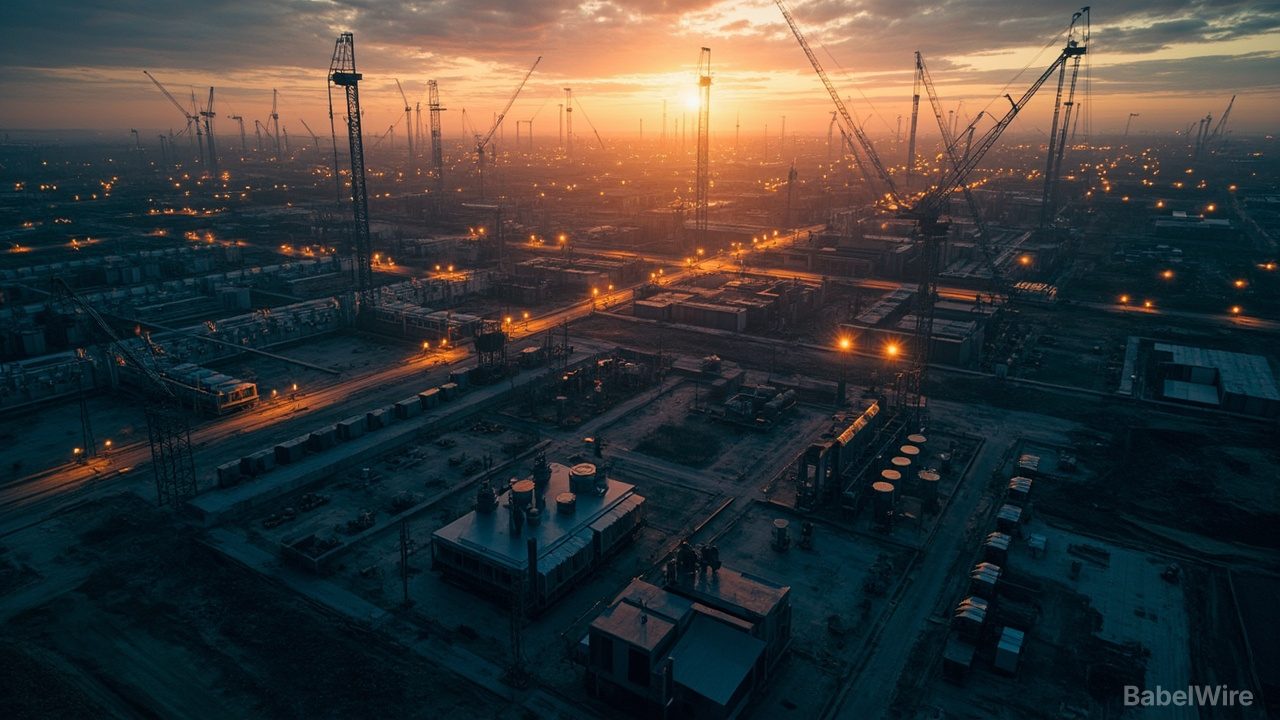
The buildout of AI infrastructure in the United States will absorb spending equivalent to 3.6 percent of the country's gross domestic product spread across the coming years, according to an analysis reported by heise online — a figure that makes the scale of the current boom concrete.
For comparison: American railroad construction in the late 19th century reached levels that some estimates put above 6 percent of economic output at the time, while the fibre and telecom wave around 2000 stayed well under 2 percent. That a single technology class now claims a share comparable to the railways is the actual finding here.
The volume is driven by a handful of hyperscalers whose 2026 capital plans are being discussed in the $600 billion range and above, plus a second wave of specialist data-centre operators. A growing share of that is no longer funded from cash flow but from debt — bonds, securitisations and infrastructure funds. That shift is what makes economists nervous: capex financed on credit is sensitive to interest rates and to any disappointment in revenue.
At the same time, the macroeconomic contribution is real. Data-centre construction, grid upgrades and the resulting demand for transformers, cooling systems and construction labour have measurably supported US growth. The open question is not whether the spending happens but whether it pays for itself. So far there is little publicly verifiable evidence that the added model capability generates returns on the same order of magnitude.
Physical limits then bite: permitting, available grid connection capacity and a shortage of electricians and refrigeration engineers hold projects back more than capital does. Part of the announced pipeline is therefore unlikely to ever operate.
Read this way, 3.6 percent is less a forecast than a risk metric — it quantifies how much of the American economy is now tied to a bet on future returns whose outcome is still undecided.