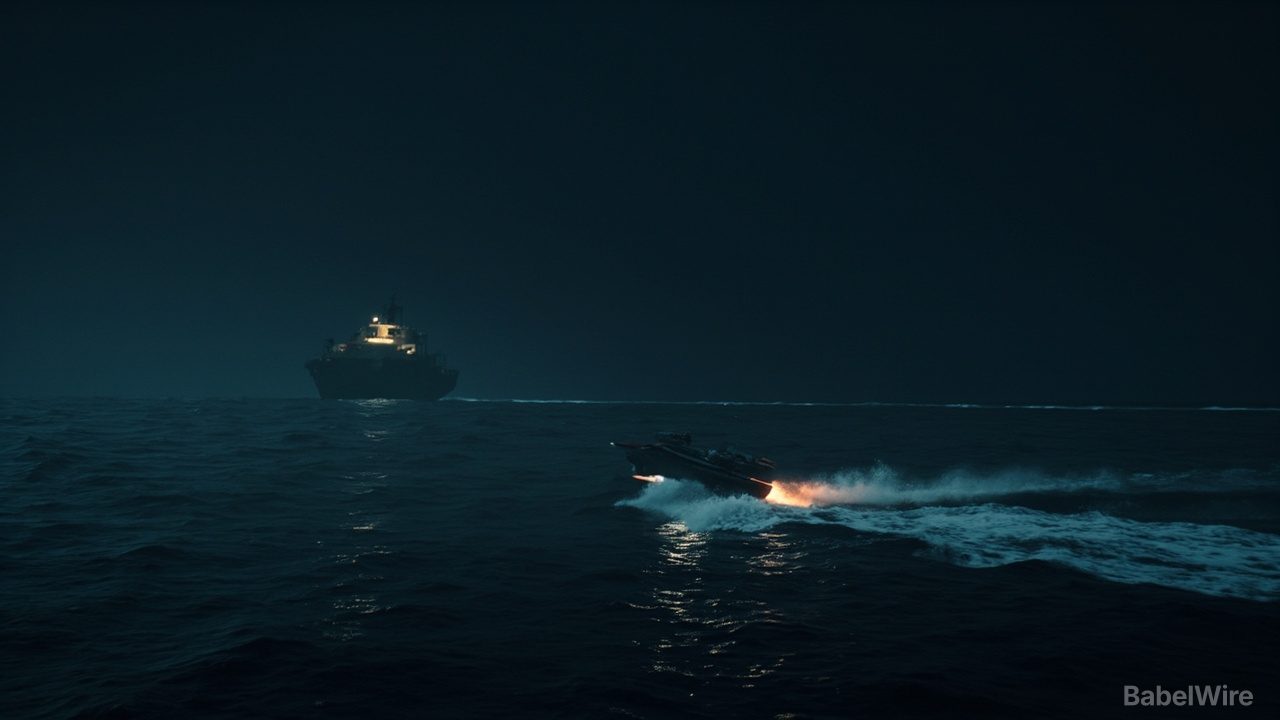
Ars Technica reports that Ukrainian sea drones destroyed a Russian warship as part of an operation carried out at Benghazi, on the Libyan coast, and then went on to strike commercial shipping across a far wider area than the Black Sea war has so far involved — reaching vessels in the Mediterranean and in the Baltic.
Two things make the account notable.
The first is geography. Ukraine's uncrewed naval campaign was built in the Black Sea, where sea drones have repeatedly struck Russian warships, naval infrastructure and, later, commercial vessels transiting to and from Russian ports. A successful strike on a Russian warship at Benghazi puts the same class of weapon in a theatre thousands of kilometres from that original operating area, on a coast where Ukraine has no conventional naval presence at all.
The second is the spread of the shipping strikes. Strikes that run "from the Mediterranean to the Baltic" describe not a single front but two separate bodies of water, with commercial shipping targeted across both. That matters commercially as much as militarily: hull insurers and charterers now have to treat a much larger map as the relevant risk area, and the Baltic — where NATO naval activity has itself increased — is not a theatre anyone had factored into this war's shipping risk a year ago.
For Russia, the loss is another entry in a column that has been running badly since 2022. Surface warships sunk or damaged by drones rather than by conventional naval gunfire or submarines have already cost it a large share of its Black Sea capability, and the Black Sea Fleet has been pushed east and then effectively sidelined. Losing a warship to drones in a third country's waters extends that pattern well past the Black Sea.
Ukraine, for its part, is demonstrating something that matters well beyond this conflict: that relatively cheap, uncrewed surface vessels can destroy a commissioned warship and reach commercial targets across multiple seas. That lesson is already being read by navies in Asia, in the Gulf and across Europe.
Ars Technica's account is the source for the reporting above; details on the specific vessel, the date of the operation and any casualties were not independently confirmed here.


