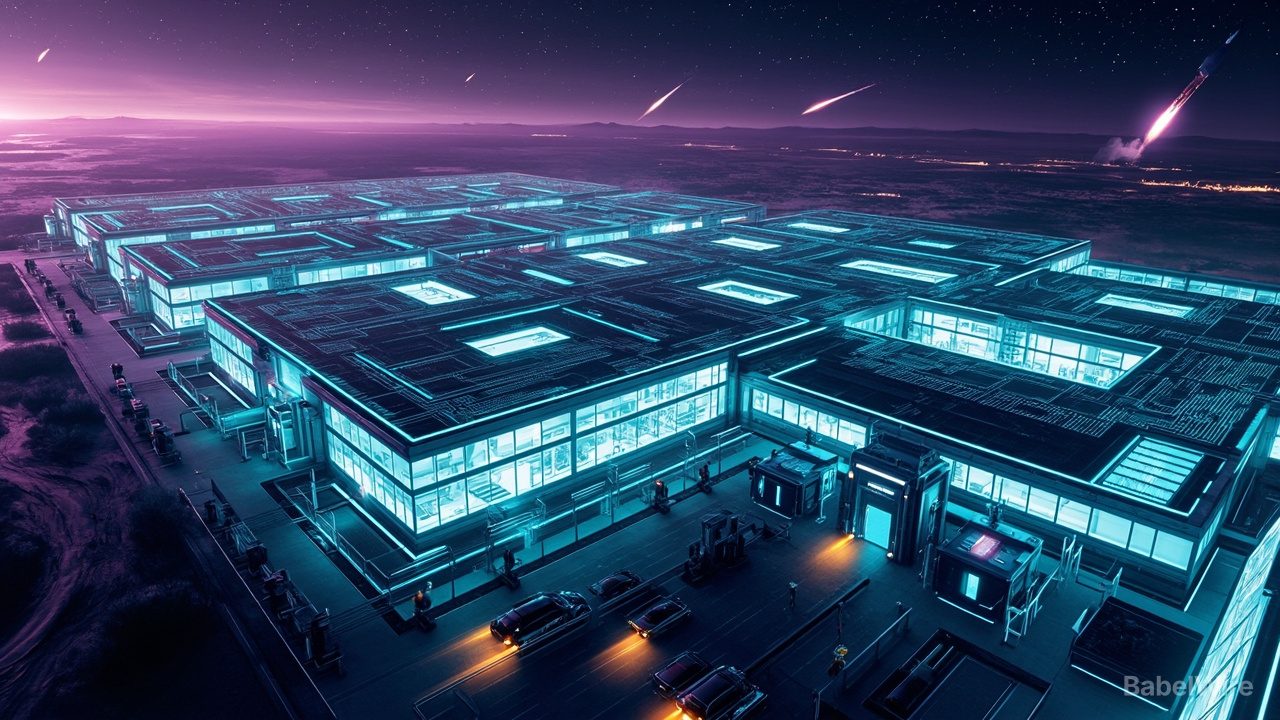
Elon Musk's companies have long been among the world's biggest buyers of chips. Now they want to be makers.
Tesla and SpaceX confirmed this week they will build Terafab, an advanced semiconductor complex in Grimes County, Texas, with an initial investment of $16.8 billion — a project first reported by The Wall Street Journal. The facility, which could eventually span roughly 100 million square feet, will manufacture, package and test memory and logic chips for Tesla vehicles and Optimus robots as well as SpaceX computing systems, and is expected to create thousands of jobs.
The move is one of the most ambitious attempts at vertical integration in the AI era. Like virtually every major technology company, Tesla and SpaceX currently depend on global foundries and suppliers for advanced chips. Bringing production in-house would give them more control over supply and design at a moment when AI workloads are consuming a growing share of the world's semiconductor output.
Terafab also signals how the AI race is spilling beyond the traditional chip giants: companies that historically bought silicon are now investing billions to produce it themselves. Analysts caution that giant fabs require enormous amounts of electricity, water, capital and technical expertise — but for Musk, who has built both an EV empire and a rocket company, the bet is that making chips is the next natural step.