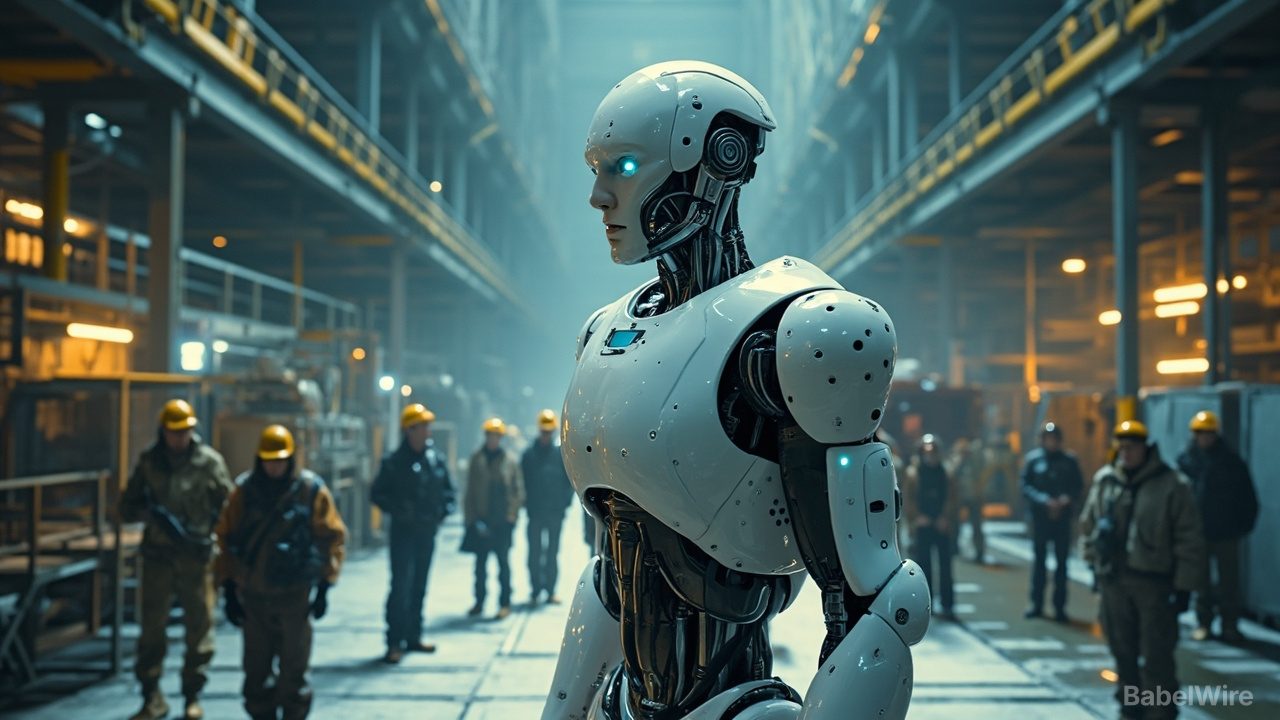
Tesla's ambitious pivot toward humanoid robots is colliding with a deeply human problem: workers don't want to train the machines that will replace them.
According to extensive reporting by The Information, Tesla's Fremont, California factory — which stopped making the Model S and Model X sedans in May 2026 — has redirected both line workers and engineers toward the Optimus humanoid robot program. But the transition has exposed significant manufacturing and labor challenges.
**The worker resistance.** One of the most revealing details: Tesla had factory workers in Texas and California wear special suits designed to capture their physical movements, feeding the data into Optimus's imitation-learning systems. Workers eventually realized the robots were designed to replace them and pushed back. Tesla has since shifted data collection to dedicated training teams and established "training hubs" for this purpose.
**Manufacturing complexity.** The Optimus V3 robot has proven far harder to manufacture than anticipated. The robot's hands and forearms alone contain more than 100 small components including screws, requiring manual assembly by human workers. The imperfect process means newly produced robots often need immediate fixes. Touch sensors for the hands have been unreliable enough that Tesla developed a replaceable glove-like sensor layer.
Production has scaled to hundreds of robots per week, but Tesla's target of 1,000 Optimus robots per week by the end of 2026 remains ambitious given current challenges. The robots also still require programming for specific tasks in controlled environments, rather than operating as truly general-purpose autonomous workers.
**The broader stakes.** CEO Elon Musk has called Optimus potentially "the biggest product ever," yet acknowledged that creating a truly autonomous humanoid robot capable of diverse tasks is "one of the hardest things to solve." The company is betting its future on AI and robotics as its traditional EV business faces increasing competition, particularly from Chinese automakers.
The supply chain challenges compound the difficulty. Tesla continues to rely heavily on Chinese suppliers for robot components, even as the Trump administration has pushed for domestic manufacturing. The FCC banned new foreign-made humanoid robots in July, creating additional regulatory friction.
Tesla faces growing competition from multiple fronts: Agility Robotics has already deployed humanoid robots in a GXO Logistics warehouse, Hyundai plans to deploy up to 25,000 Boston Dynamics Atlas robots in coming years, and Toyota is investing billions in robot-upgraded factories. Chinese automakers are also pursuing humanoid robots aggressively.
The story of workers resisting training their replacements echoes a fundamental tension in the AI automation era — one that Tesla, as both an AI company and an employer of thousands, is experiencing firsthand.