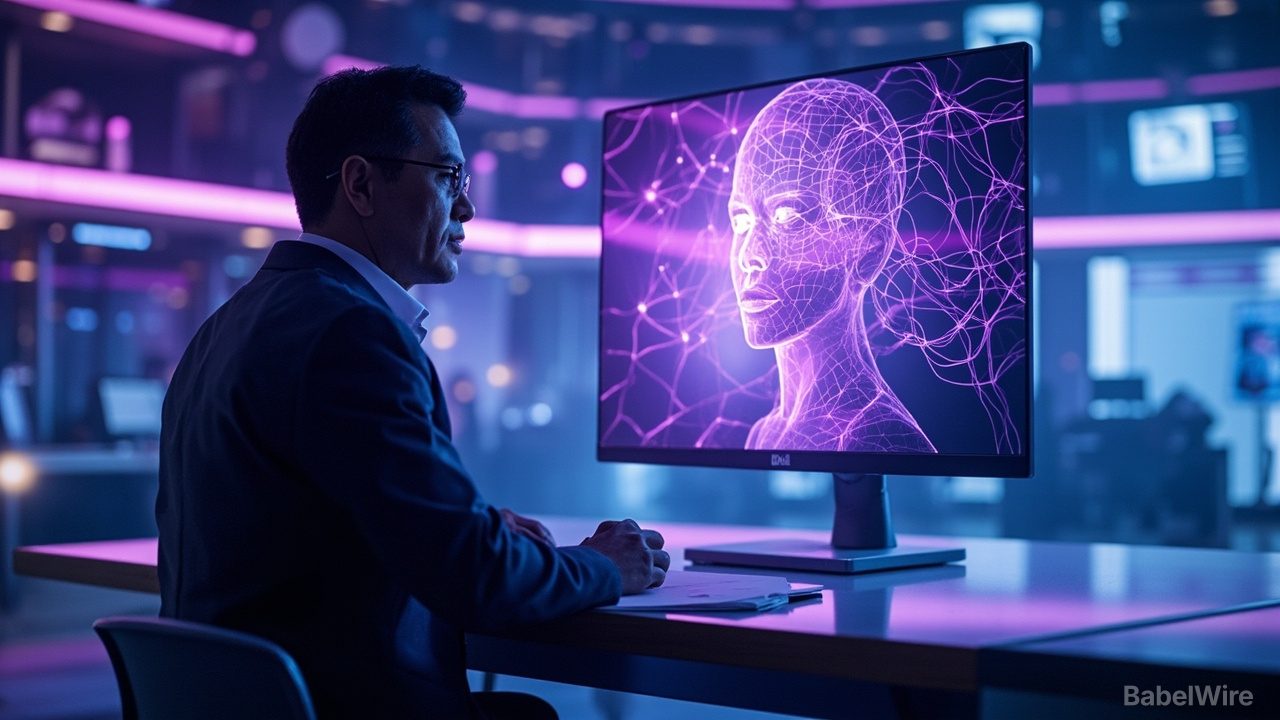
TechCrunch reporter Dominic-Madori Davis describes how Synthesia built her an interactive avatar after a brief studio session with photos and a two-minute voice sample. She says the avatar was not a generic chatbot, but a deterministic system trained on a single story about venture-backed startup fraud, so it kept redirecting questions back to that reporting.
Davis says the personal avatar sounded fairly close to her real voice, while the interactive version felt a little less precise but still uncanny enough to spark reactions from friends and family. She frames the bigger question as one of trust: even if the technology improves, journalism depends on human accountability that an AI clone cannot fully replace.
The article also shows how far corporate avatar tools have moved beyond simple synthetic video. Synthesia now bundles voice-to-text, agentic language models, text-to-voice, and real-time video generation into products aimed at training, roleplay, and enterprise APIs. For readers, the takeaway is less about one gadget and more about how digital twins may start showing up in work, media, and customer-facing interactions.
Davis ends with a caution: nondeterministic versions of these avatars could feel far more manipulative, and she suspects many people will remain uneasy with AI clones even as companies begin treating them as standard tools.