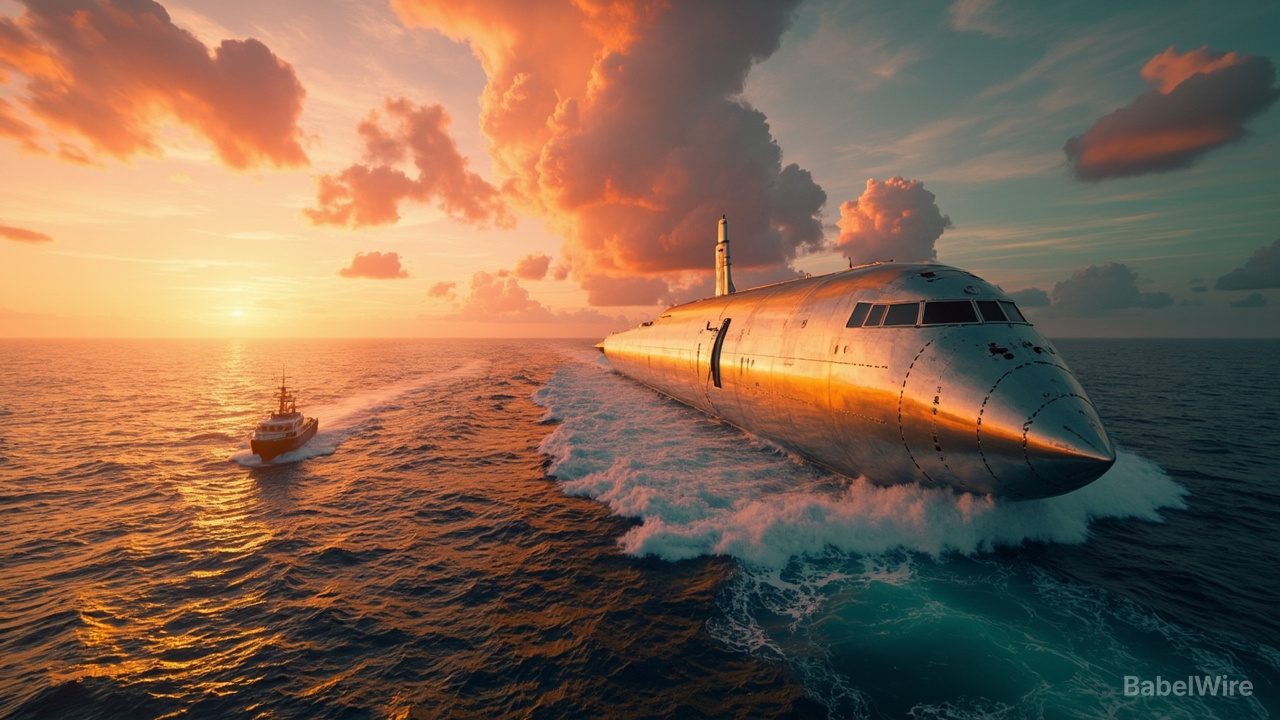
SpaceX achieved a historic first on July 24, 2026, when the upper stage of its Starship rocket survived a landing intact — a milestone that has the company now racing to recover the 171-foot vehicle from the Indian Ocean.
Lifting off from SpaceX's Starbase facility in South Texas at 5:51 p.m. EDT, the 407-foot-tall Super Heavy-Starship — the most powerful rocket ever built — thundered skyward on its 13th integrated flight test. For the first time, both the booster and the ship demonstrated significant strides toward reusability.
The Super Heavy booster executed a flip maneuver and tail-first descent, making a hard but targeted splashdown in the Gulf of Mexico. But it was the Starship upper stage that stole the show: after deploying 20 third-generation Starlink satellites, surviving reentry, and executing a controlled landing burn, the vehicle settled upright into the Indian Ocean — and stayed intact.
"This is the first time we've put an intact Starship in the water," SpaceX spokesman Dan Huot said during the livestream. "This is a dream scenario."
Five days later, as of July 29, the spacecraft is still floating. Drone footage shows the stainless steel vehicle bobbing upright, residual propellant burning off, with many onboard cameras still transmitting. Elon Musk confirmed on X that a recovery team is working to retrieve it. SpaceX VP Kiko Dontchev teased "deadliest catch meets Apollo 13 content coming soon."
The achievement is a critical stepping stone for NASA's Artemis program, which depends on a Starship variant as the Human Landing System to ferry astronauts to the lunar surface. NASA has also contracted Blue Origin for a backup lander. The Government Accountability Office recently flagged SpaceX's fuel transfer technologies and engine reliability as top risks for the program's 2028 lunar landing target.
For now, recovery specialists and meteorologists are collaborating on a plan to haul the 171-foot vehicle to the nearest landmass — likely Australia — for inspection. Whether the saltwater-exposed rocket can ever fly again remains an open question, but the symbolic weight of the moment is unmistakable: Starship has proven it can come home in one piece.