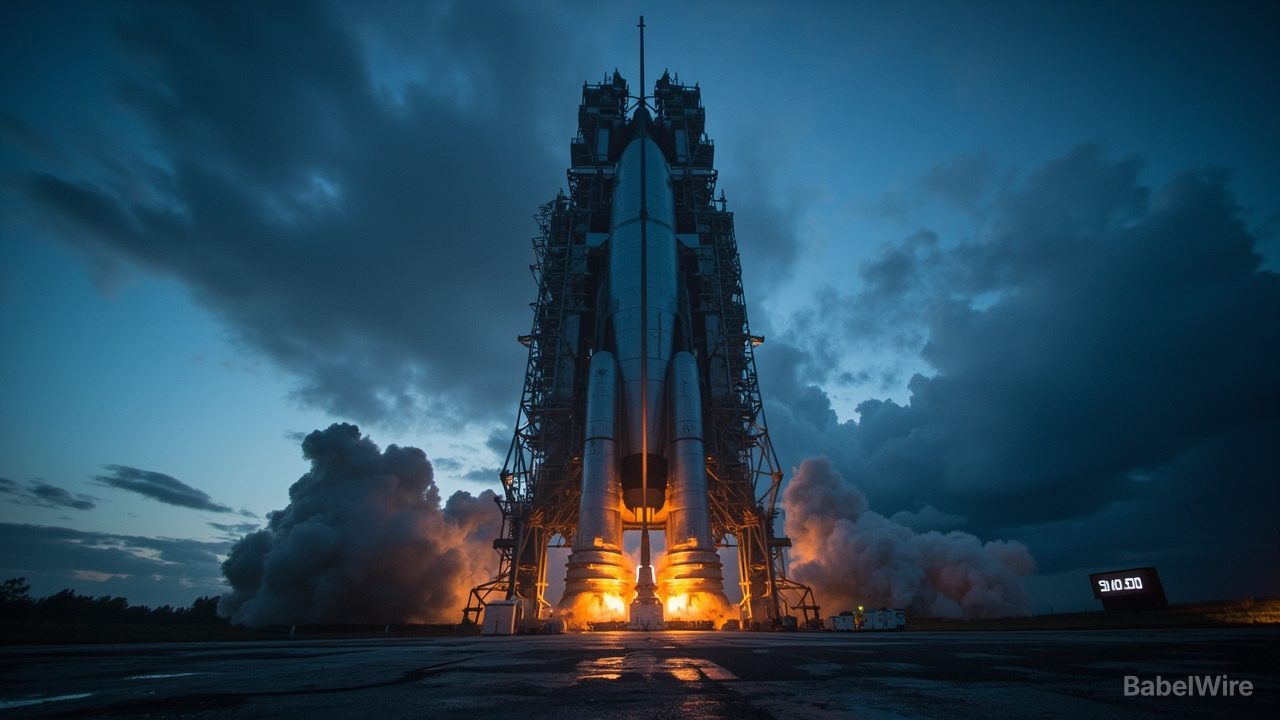
SpaceX's 13th test flight of its Starship megarocket — the most powerful launch vehicle ever built — was aborted at the last moment on Thursday evening, July 16, 2026, when multiple engines failed to ignite during the final seconds of the countdown.
What Happened
The launch was scheduled for 6:45 p.m. EDT (2245 GMT) from SpaceX's Starbase facility in Boca Chica, Texas, with a launch window extending to 8:15 p.m. EDT. As the countdown reached its final moments, several of the rocket's 33 Raptor engines failed to start, triggering an automatic abort.
CEO Elon Musk confirmed the issue shortly after the scrub, stating "some of the engines didn't start" and that the company would "attempt again hopefully in a few days."
A Setback for the Most Powerful Rocket Ever Built
Starship Flight 13 was expected to be a significant milestone. The rocket was carrying what SpaceX described as its newest and most advanced batch of Starlink satellites — marking the first time Starship would deploy payloads rather than simply performing a test flight.
Standing 121 meters (397 feet) tall, Starship is both the tallest and most powerful rocket ever constructed. Its Super Heavy booster is powered by 33 Raptor engines generating approximately 16.7 million pounds of thrust at liftoff — more than double the power of NASA's Saturn V that took astronauts to the Moon.
Engine Issues Have Been a Recurring Challenge
Engine reliability has been one of the primary technical challenges SpaceX has faced during Starship's development program. Previous test flights have experienced engine failures during ascent, though the vehicle has often been able to compensate with its remaining engines.
Thursday's scrub was particularly dramatic because it occurred on the pad, with the rocket fully fueled and ready to fly — a situation that requires careful safing procedures before the vehicle can be accessed again.
NASA Watching Closely
The scrub comes at a particularly sensitive time for SpaceX. NASA is counting on a modified version of Starship to serve as the Human Landing System for the Artemis program, which aims to return astronauts to the lunar surface. Delays in Starship's development schedule have ripple effects across NASA's entire Moon program.
SpaceX has not yet announced a new target date for Flight 13, but Musk's "hopefully a few days" comment suggests the company believes the issue can be resolved relatively quickly rather than requiring major hardware changes.
Meanwhile, the flight's Starlink payload — described as the most advanced satellites SpaceX has built to date — remains safely integrated with the rocket, awaiting the next launch attempt.