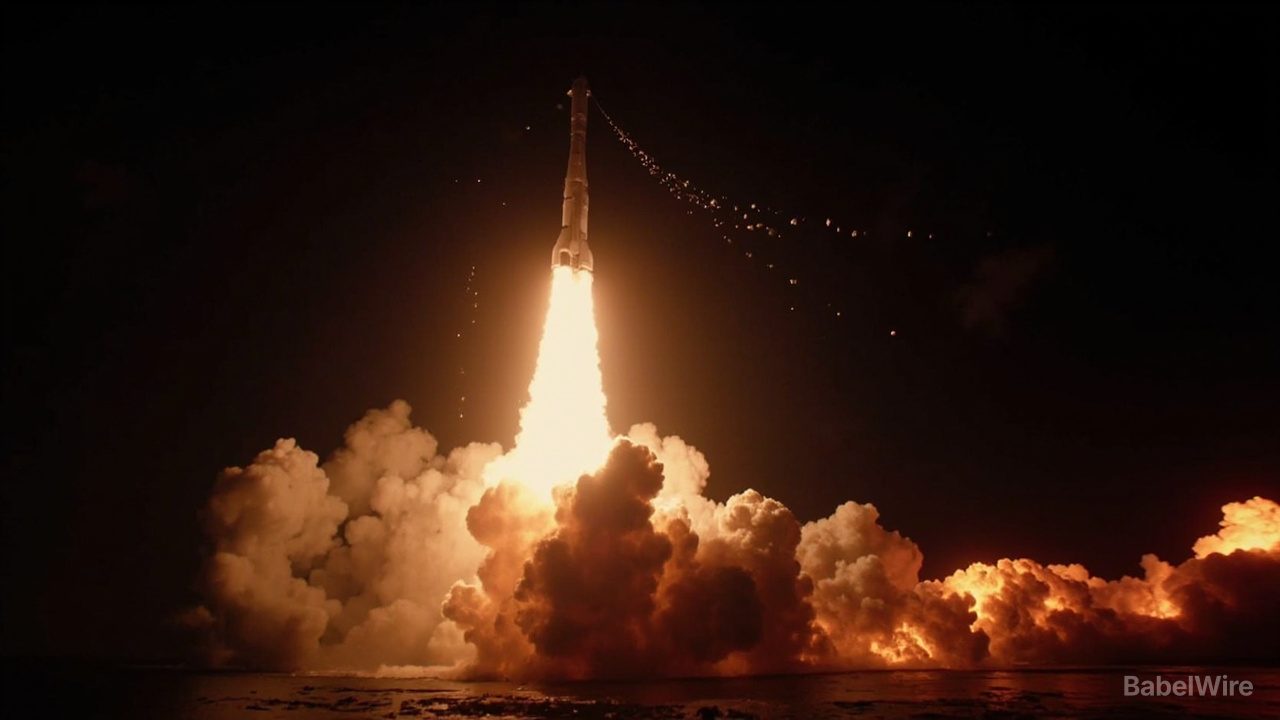
SpaceX successfully deployed the first third-generation Starlink satellites on July 24 using an upgraded Starship V3 — the 13th test flight of its mega-rocket — but suffered another failure of its Super Heavy booster during a planned simulated landing in the Gulf of Mexico.
What Went Right
The Starship upper stage performed well. It lost none of its engines during ascent — an improvement over the first V3 flight in May — and deployed the new V3 Starlink satellites before executing a controlled descent. Most notably, the Ship survived atmospheric reentry and floated upright in the Indian Ocean without exploding, allowing SpaceX to inspect heat shield tiles with a drone.
"It's the first time the Ship didn't explode when it tipped over into the water," noted Sean O'Kane of TechCrunch, calling it a significant milestone for the program.
The new V3 Starlink satellites are far more capable than their predecessors. SpaceX has described launching 60 of them on a single Starship as a "potential twenty-fold increase" in downlink capacity compared to what a Falcon 9 can deploy.
What Went Wrong
The Super Heavy booster, however, failed to reignite all its engines for the landing burn. It hit the water faster than expected and exploded. This is the second booster failure on the V3 variant — the first occurred during stage separation in May, while this time the booster made it farther into its flight profile before failing.
The failure comes just over a week after a launch abort caused by multiple engine issues. SpaceX replaced six engines before Friday's flight.
Market Fallout
SpaceX went public in June in the largest IPO in history, but the stock has been volatile. Shares fell from a peak of over $200 to $115 at Friday's close, dropping another 2% in after-hours trading after the booster failure was reported.
The Bigger Picture
SpaceX's "fly, fail, fix" philosophy keeps the program moving fast, but the persistent booster issues raise questions about the path to full reusability — the key economic argument for Starship. SpaceX's S-1 filing warned that without a fully reusable Starship, progress on Starlink "would be at a slower pace and higher cost."