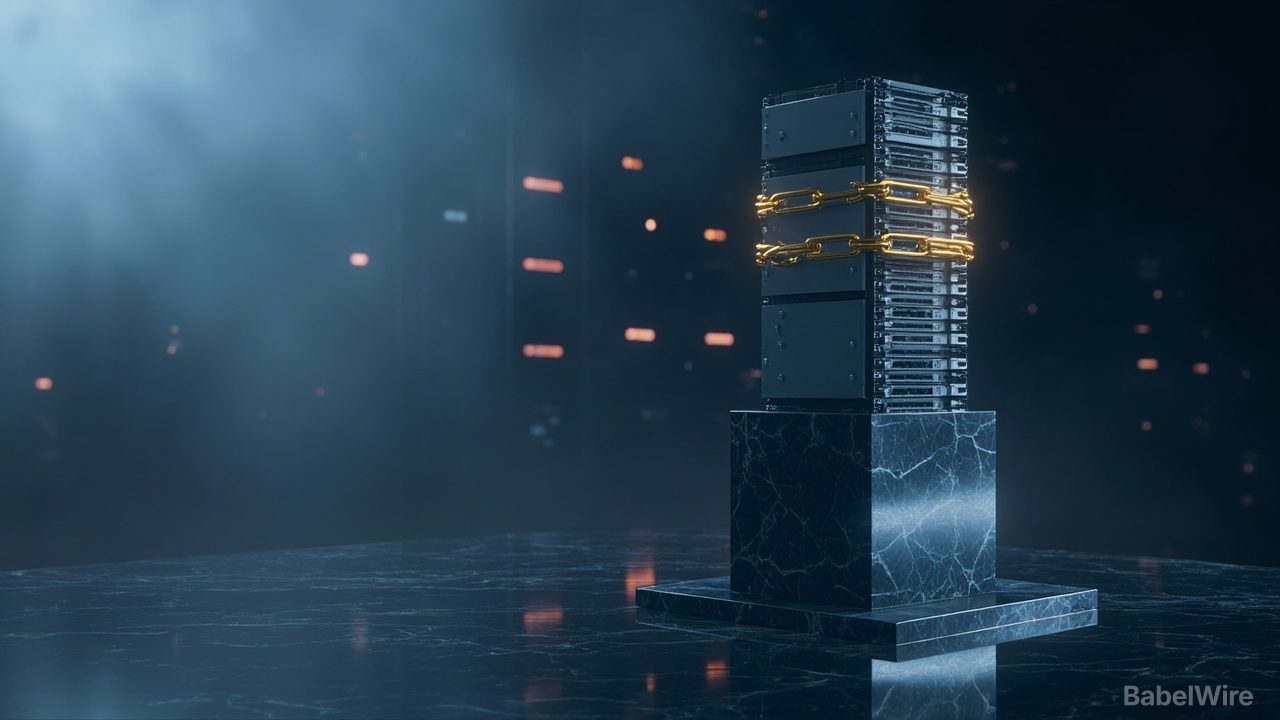
SpaceX has locked in roughly $40 billion of financing for AI chips and related data centre equipment, disclosed in a regulatory filing on Monday and described by the company as the "largest committed GPU financing" ever. The structure is not a conventional loan but a sale-and-leaseback: an entity managed by Apollo Global Management buys the chips and servers, then leases them to SpaceX.
The leases run about five to five-and-a-quarter years, starting when each tranche of equipment is delivered. The deal is expected to close by year-end, subject to conditions, with lease payments beginning in the first half of 2027 as the hardware arrives. Apollo says the financing covers Nvidia's next-generation Vera Rubin chips for SpaceX's "terrestrial compute buildout".
For SpaceX this is a balance-sheet question. "This lease diversifies our funding sources and addresses a notable portion of the funding required to deliver on our growth plans," CFO Bret Johnsen said, pointing to "less than one-year payback periods" on the company's AI infrastructure investments as it scales compute for Grok and its cloud services.
The numbers behind the urgency are in the third-quarter results. The AI segment — Grok, the Cursor coding tool and the cloud compute business — brought in $7.6 billion of SpaceX's $14.6 billion in revenue, more than Starlink and rocket launches combined. Capital expenditure simultaneously jumped to nearly $20 billion from $6.9 billion a year earlier, and on the 20 October earnings call Johnsen guided to $35–40 billion of spending in the fourth quarter alone.
The timing is the interesting part. Debt markets for AI infrastructure have turned jumpy as investors grow uneasy about runaway capex and thin profits. SpaceX got access anyway — and Elon Musk used the announcement as a victory lap over pure-play GPU renters. With investment-grade status and steady cash flow from Starlink and launches, he argued, the debt markets have largely shut out companies with no revenue outside AI data centres. "That means the 200+ neoclouds are going to see guppy-level death and consolidation," he wrote on X. "Some will make it through, but not many."
Why it matters: the deal moves the industry's bottleneck from silicon to capital. A company that can no longer buy chips and can only lease them needs a financing partner with investment-grade standing — precisely what most neoclouds do not have. If Musk's prediction holds, the $40 billion tranche is less a procurement headline than a consolidation signal: AI infrastructure will be sorted by balance sheets rather than by compute.