Scientists have finally cracked one of the most stubborn problems holding back solid-state batteries: how soft lithium dendrites manage to fracture the hard ceramic electrolyte inside them, causing short circuits.
In a study published today in Nature, researchers at the Max Planck Institute for Sustainable Materials (MPI-SusMat) used advanced cryogenic microscopy and phase-field simulations to settle a long-standing debate. Two competing hypotheses existed: either internal stress builds up inside the dendrites and mechanically fractures the ceramic, or electrons leak along grain boundaries to form new lithium nuclei that later interconnect.
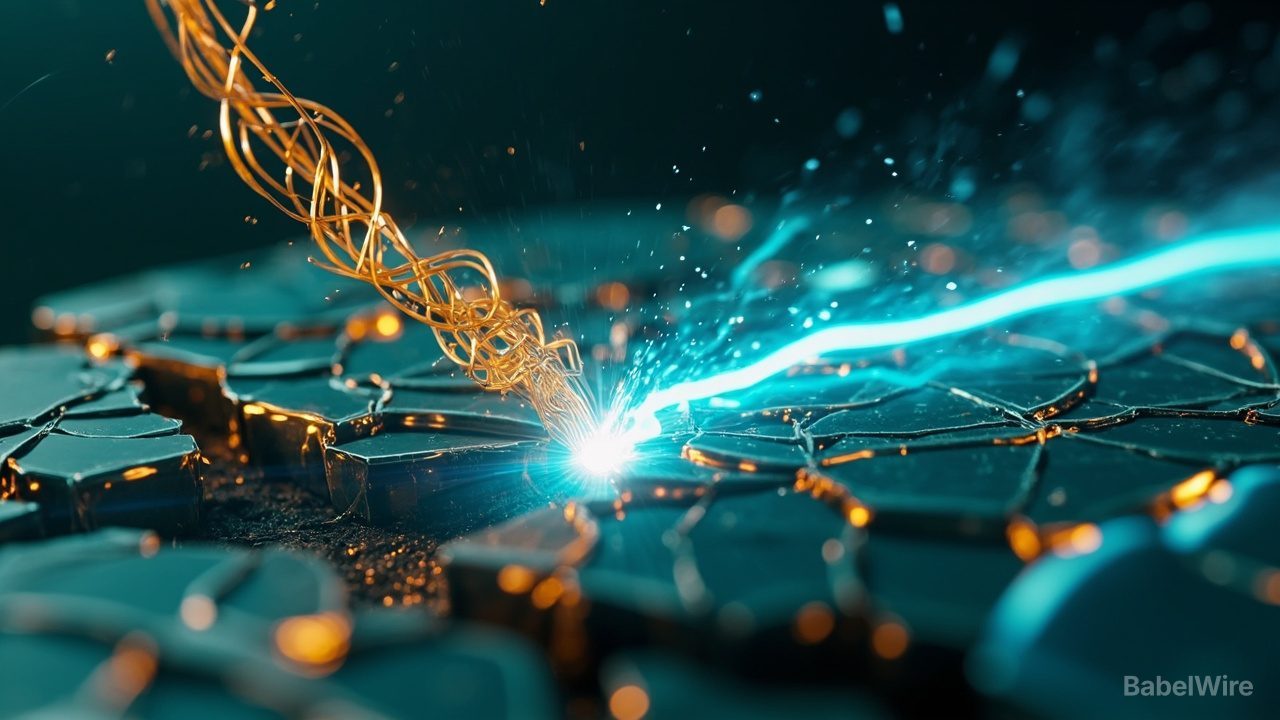
The team found clear evidence for the first mechanism. "The soft lithium metal is able to penetrate the stiff ceramic electrolyte, like a continuous waterjet that penetrates a rock," said Dr. Yuwei Zhang, the study's first author. Hydrostatic stress in the dendrite leads to brittle fracture of the solid electrolyte.
Solid-state batteries replace the liquid electrolyte in conventional lithium-ion batteries with a solid ceramic, offering higher energy density, improved safety, and longer life. In theory they could allow smartphones to run for days on a single charge and give EVs up to three times the range of current models.
With the root cause now understood, the team is exploring solutions: making the electrolyte tougher, introducing microscopic voids to redirect dendrite growth, and adding protective coatings to lithium electrodes. The work represents a major step toward commercializing what many consider the next generation of battery technology.