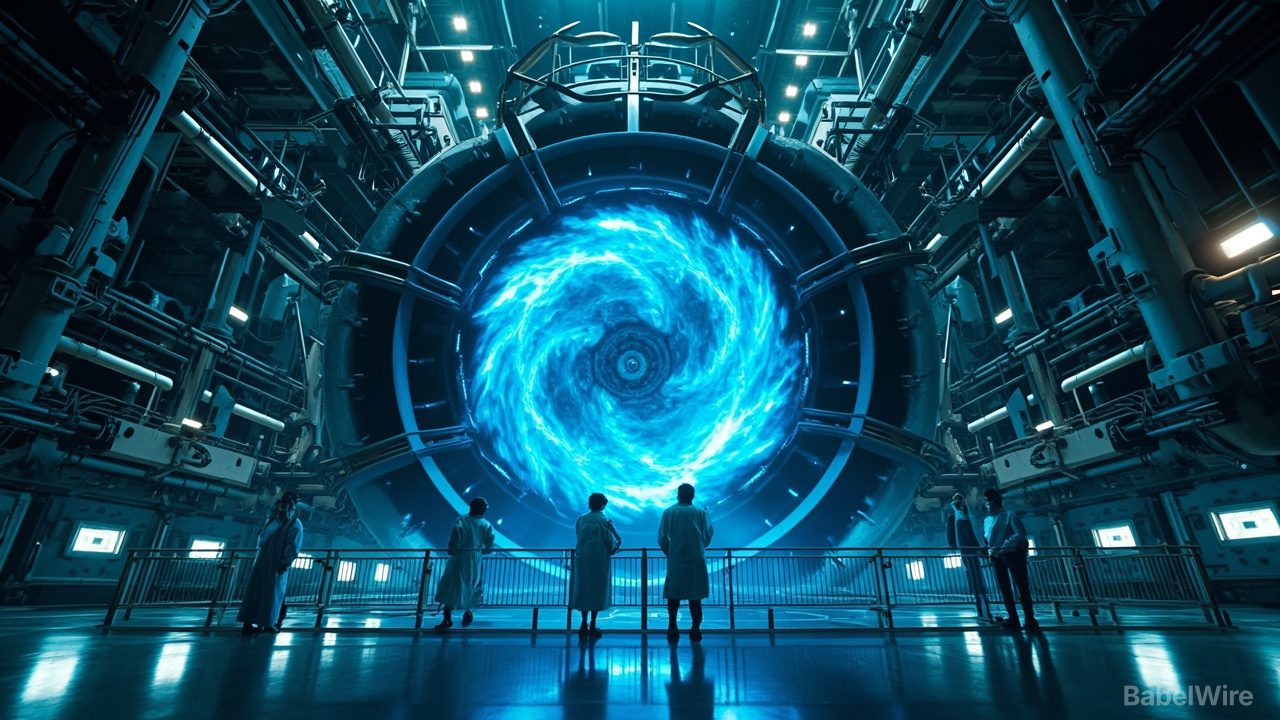
Pacific Fusion, a California-based startup that has raised more than $1 billion in funding, has built a massive inertial confinement fusion machine that produced 59 megajoules of energy over five seconds — and the company says it is on track to shatter fusion energy records.
The machine, described in a Nature report published August 24, 2026, is part of Pacific Fusion's ambitious plan to demonstrate net energy gain from fusion and eventually commercialize fusion power. The company was founded by former Lawrence Livermore National Laboratory scientists who previously worked on the National Ignition Facility (NIF), which achieved historic fusion ignition in December 2022.
Unlike NIF, which uses massive laser arrays to compress fuel pellets, Pacific Fusion's approach is designed to be cheaper, faster, and more scalable. The company has not disclosed all details of its machine's architecture, but the energy output of 59 megajoules over five seconds represents a significant milestone in the quest to make fusion energy practical.
The project also has a dual-use dimension. The Nature report noted that the machine can study conditions relevant to nuclear weapons physics — specifically, how materials behave under extreme temperature and pressure conditions similar to those found in thermonuclear weapons. This capability makes the facility relevant to the U.S. government's nuclear weapons stockpile stewardship program, which needs to maintain nuclear arsenals without conducting live tests.
The intersection of commercial fusion research and nuclear weapons science is not new — NIF itself was partly justified on stockpile stewardship grounds. But Pacific Fusion's machine represents a privately funded facility with both capabilities, raising questions about how the dual-use nature of the technology will be regulated.
Fusion energy, which powers the sun and stars, has been called the holy grail of clean energy because it promises virtually unlimited power with minimal radioactive waste. However, no fusion experiment has yet achieved the sustained, net-positive energy output needed for a commercial power plant. Pacific Fusion's ambitious timeline aims to change that, though specific dates have not been publicly disclosed.