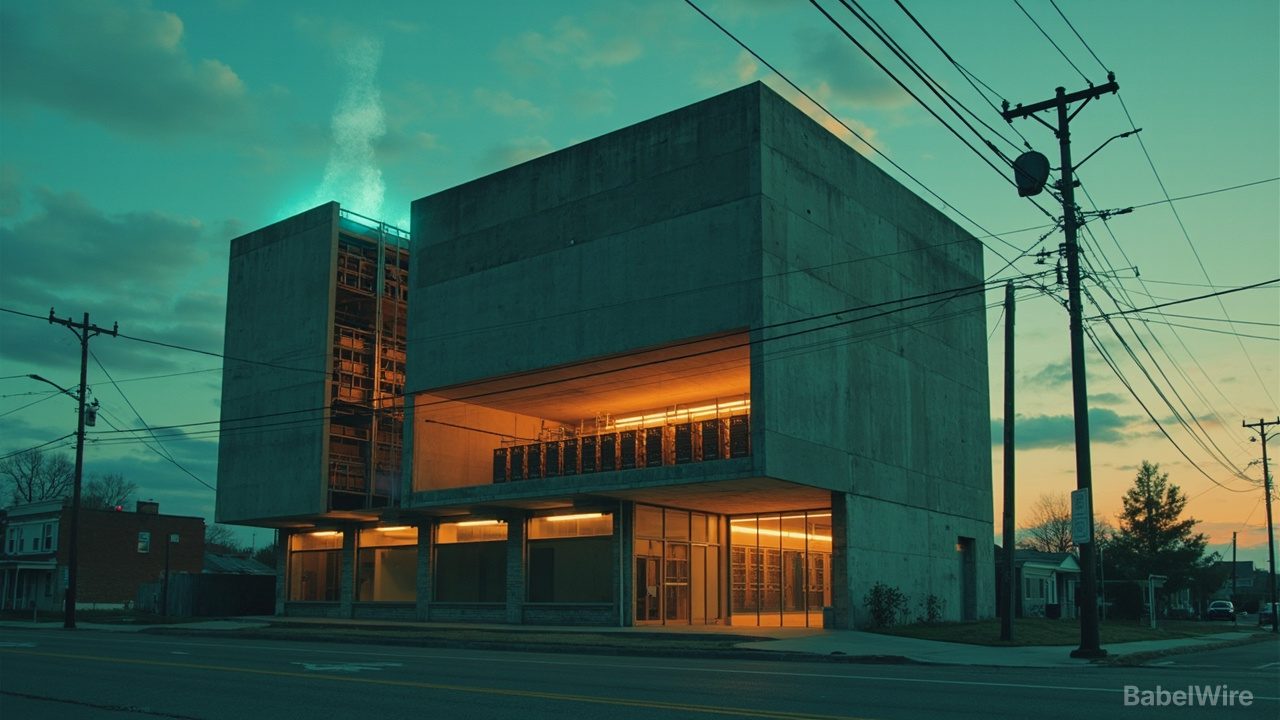
Nvidia has a workaround for the data-center backlash, and it is built out of old telephone buildings.
The chipmaker has approached private-equity firm Apollo Global Management about turning more than 130 Brightspeed facilities — exchanges originally built for voice and internet traffic — into small AI data centers spread across as many as 20 U.S. states, according to a report Thursday from The Information. Nvidia submitted a written proposal to Brightspeed on Wednesday and has asked for additional data and site visits.
The portfolio is the point. Those buildings already carry roughly 1 gigawatt of available electrical capacity, Nvidia estimates — enough, in the company's telling, to run tens of billions of dollars' worth of its upcoming Vera Rubin systems. Staff have discussed starting retrofits with Vera Rubin racks as early as the first quarter of 2027, and the plan could fold in technology from Groq, the AI chip startup whose technology Nvidia licensed last year.
Nvidia describes the sites as an "inference network": capacity to run already-trained models rather than the giant training clusters that have defined the buildout so far. That framing matters, because inference is far less power-hungry per rack than training and tolerates sites that would never host a hyperscale campus.
The timing is not accidental. The report landed two days after midterm elections in which Democratic candidates, including in Texas, campaigned on moratoriums for new data centers. Retrofitting existing structures still requires local permits — notably for specialized cooling — but far fewer approvals than ground-up construction.
What remains unsettled is who pays and who uses it. The Information reported it is unclear how many Brightspeed buildings Nvidia wants, and unclear who would ultimately buy or lease the chips. Apollo separately agreed to buy tens of billions of dollars of Vera Rubin chips to lease to SpaceX, making it one of the largest buyers of AI servers. Potential users of a retrofit network could include cloud providers and AI developers such as SpaceX, Anthropic and OpenAI, all of which face server shortages and power constraints — though the report said it is not clear whether Nvidia or Apollo has engaged those companies on this specific proposal.
There is a cost side too. Zac Smith, CEO of AI networking firm Datum, told The Information that older telecom buildings can unlock underutilized power but are sometimes more expensive to run because of aging equipment. He noted recent interest from cloud and AI firms, including Anthropic, in smaller pockets of capacity inside existing structures.
Brightspeed is Apollo-backed and reportedly nearing bankruptcy — which explains why its real estate is on the table at all. A bankrupt broadband provider's exchange buildings are, to a chipmaker, a pre-permitted power portfolio with roofs.
The market backdrop is hostile. Nvidia shares fell 9% on Thursday, their worst day since January 2025, in a broad chip selloff driven by regulatory fears around data-center construction. The Kobeissi Letter noted the stock now trades at roughly 13 times forward earnings, below the S&P 500's average of about 20 — a strange place for the company at the center of the AI buildout.
None of this is a signed deal. It is a written proposal, a request for data and a set of site visits: the earliest possible stage of a plan that would take years to convert into racks and revenue.