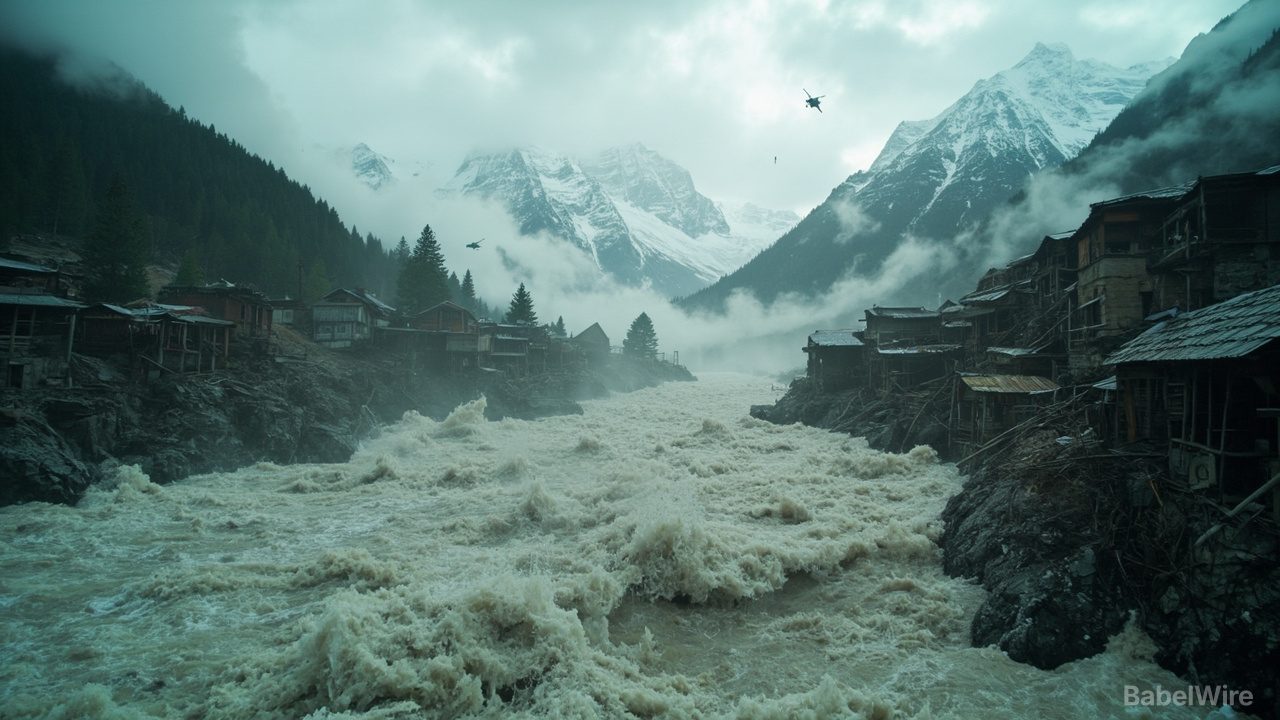
A catastrophic glacier collapse in Nepal's Langtang region triggered devastating flash floods along the Nepal-Tibet border on August 26, killing at least 360 people and leaving nearly 1,500 missing — in what officials are calling one of the deadliest natural disasters in the Himalayan region in decades.
The floods were triggered when a massive section of glacier broke away in the early morning hours, sending a wall of water, mud, and debris roaring down the Trishuli River valley. The floodwaters swept through dozens of settlements along a 45-mile stretch, destroying villages, bridges, roads, and power plants.
Among the missing are more than 700 foreign nationals from over two dozen countries, including the United States, according to CNN. Many of the foreigners were trekkers and tourists visiting the popular Langtang Valley, a well-known hiking destination that draws thousands of visitors each year.
The US Geological Survey confirmed that a glacial collapse triggered the wall of water. Experts said a natural dam created by snow and rock debris had been building for some time before failing catastrophically, releasing the stored water in a devastating surge.
The flood destroyed critical infrastructure across the region. Multiple bridges along the Trishuli River were swept away, cutting off road access to affected communities. Several hydroelectric power plants were damaged or destroyed, causing widespread power outages.
Rescue operations have been severely hampered by the destruction of transportation infrastructure. Helicopters have been deployed to evacuate survivors and deliver emergency supplies, but the scale of the devastation has overwhelmed initial response efforts.
A secondary disaster threat looms as a natural lake formed by the debris dam continues to grow. Officials warned that if this dam fails, it could trigger another devastating flood wave affecting communities downstream. Evacuations are underway in areas considered at risk.
Climate scientists have pointed to the incident as a stark example of the dangers posed by glacial retreat in the Himalayas. Rising temperatures have been accelerating the melting of Himalayan glaciers, which store vast amounts of water in frozen form. As these glaciers destabilize, the risk of catastrophic outburst floods increases.
The disaster has prompted an international response, with aid organizations and governments from multiple countries mobilizing to assist with rescue and relief operations. Nepal's government has declared a state of emergency in the affected regions.
The death toll is expected to rise as rescue teams gain access to more remote areas. Search and rescue operations are expected to continue for several days as teams work through debris and challenging terrain to reach affected communities.