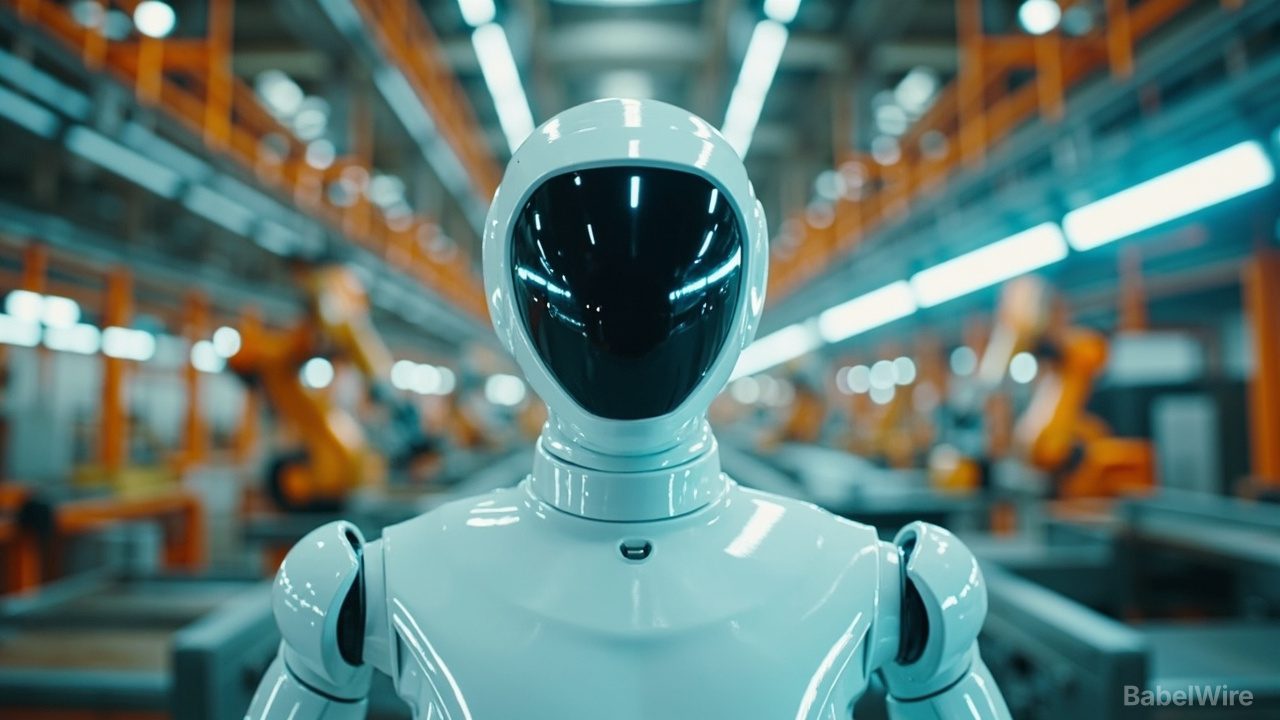
Meta has built a humanoid robot prototype — and the speed is the story. The model, internally named "Max," was built with Chinese startup Fourier in roughly three months, according to a report from The Information that Reuters picked up on Saturday. It weighs about 106 pounds (48 kg), stands around 1.5 metres tall, runs on Nvidia's Jetson Thor chip, and carries a display capable of mimicking facial expressions, built-in speakers and five-fingered hands designed to handle small objects.
A second prototype, "Max 2," is already underway, with development starting in September. It is expected to feature a redesigned torso, improved hands, a projector and additional sensors to help it navigate stairs.
The effort is in the trip
How Meta did it matters more than what it built. The robotics team travelled to China, and Li-Chen Miller, Meta's vice president of product for robotics, spent almost two months at Fourier's Shanghai factory. Max was demonstrated to employees at an internal robotics summit in late August.
This is not a research project that fell out of a lab window. It is a deliberate purchase of manufacturing competence that is not available at that speed in the United States. If you want a humanoid in three months, you go where enclosures, joints, hands and actuators already exist in volume.
The thesis: the agent gets a body
Meta sees humanoid robots as a potential physical extension of its Muse AI agent, with a long-term ambition of machines that help with household tasks. In May it acquired Assured Robot Intelligence, a startup building models that help robots understand and adapt to human behaviour.
The strategic point is simple. Language models have spent two years learning to make plans. What they lack is a body to execute them — and the data that execution generates. Anyone who wants the household as a market needs both halves.
What Meta explicitly does not say
Meta told The Information that its work with Fourier is focused on internal research and experimentation, and that it has no plans to sell the units. Reuters said it could not immediately verify the report.
That restraint is plausible and still revealing. A prototype with no sales plan is a data collector and a proof that the company can ship when the market matures. It is also a cheap way to stay in the conversation while its data-centre spending is under scrutiny.
Why this is more than a robot rumour
Three things stand out. First, the pace: three months from start to demo unit. Second, the division of labour: American software and agent architecture, Chinese hardware and manufacturing. Third, the direction: the humanoid is not a standalone product but an appendage to an agent — which means model progress pays directly into the hardware.
For European and American builders, the second observation is the uncomfortable one. Anyone building humanoids without access to the Chinese supply chain is competing not just for engineers but for lead times — and lead times are becoming the advantage.
What to watch
- Whether Max 2 is shown publicly or stays internal. A demo would signal Meta thinks the timeline is real. - Whether Meta buys more robotics companies. Assured Robot Intelligence was the first step. - Whether Jetson Thor becomes the de facto standard for humanoid control. Nvidia would gain more from that than from any single robot maker. - Whether "Muse in the home" is a product commitment or a research agenda. That difference decides whether a device ships in 2028 or a paper does.