Children's media has a supply problem. The volume of video aimed at young viewers keeps growing, but much of the newest output is machine-generated — cheap, endless and engineered for the recommendation algorithm rather than for the child watching it. Wired reports that a new streaming platform, Maka, wants to sell parents the opposite: a smaller, curated, human-made catalogue.
The diagnosis is not new. Researchers and parents have documented for years how autoplay and personalised feeds push toddlers from harmless cartoons into bizarre, mildly disturbing content; generative tools have since made that content far cheaper to mass-produce, at a scale no manual review can match. On the big open platforms, moderation is a race that is being lost.
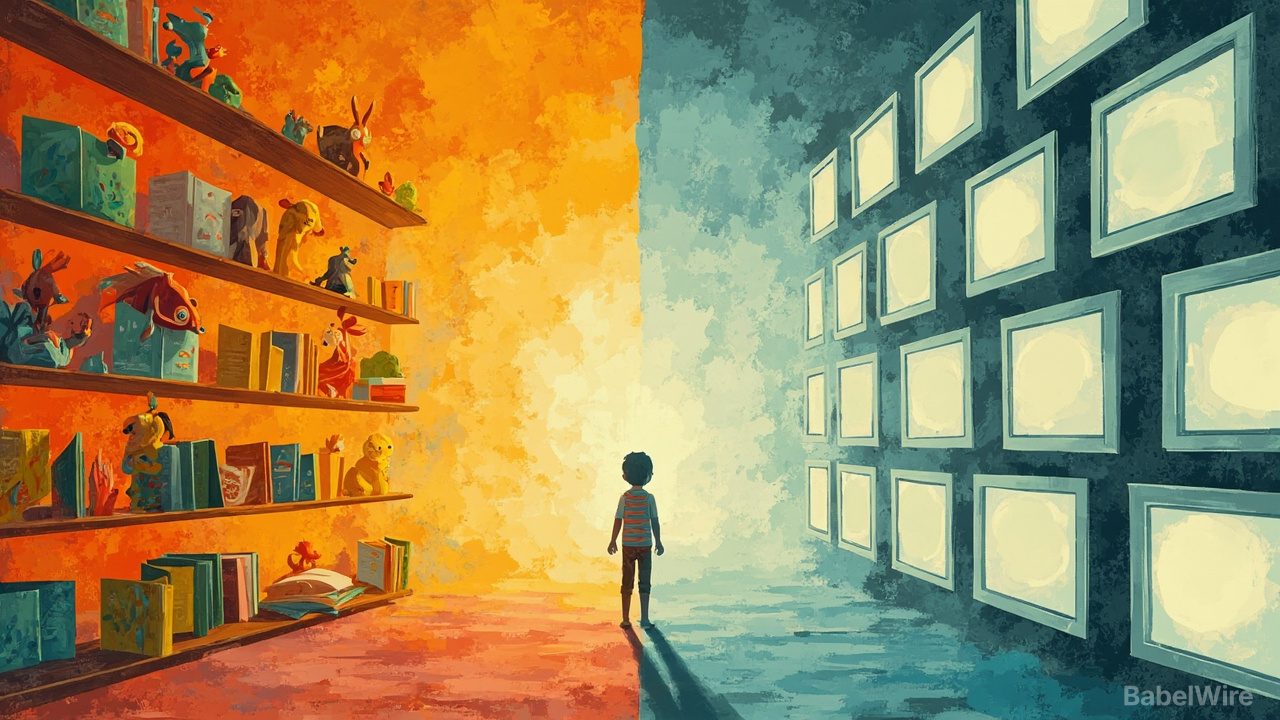
Maka's bet is editorial rather than algorithmic. Instead of an infinite feed optimised for watch time, it offers a deliberately finite library, selected and vetted by people, without the autoplay rabbit holes that turn a five-minute video into a two-hour session. That is essentially the argument public broadcasters and premium children's brands have made for decades, wrapped in a modern subscription product.
The hard part is economics. Curation costs money and scales badly, while the AI-generated alternative is free, infinite and only a tap away in the same living room. Discovery is the other obstacle: a new service has to convince parents not only that its content is better but that it is findable — and that a subscription is worth paying when YouTube is already on the tablet.
The broader question Maka raises is who bears the cost of protecting young viewers. Platforms argue for parental controls; regulators are moving toward age-appropriate design requirements; and a service like Maka is effectively testing whether enough parents will simply buy their way out of the problem.