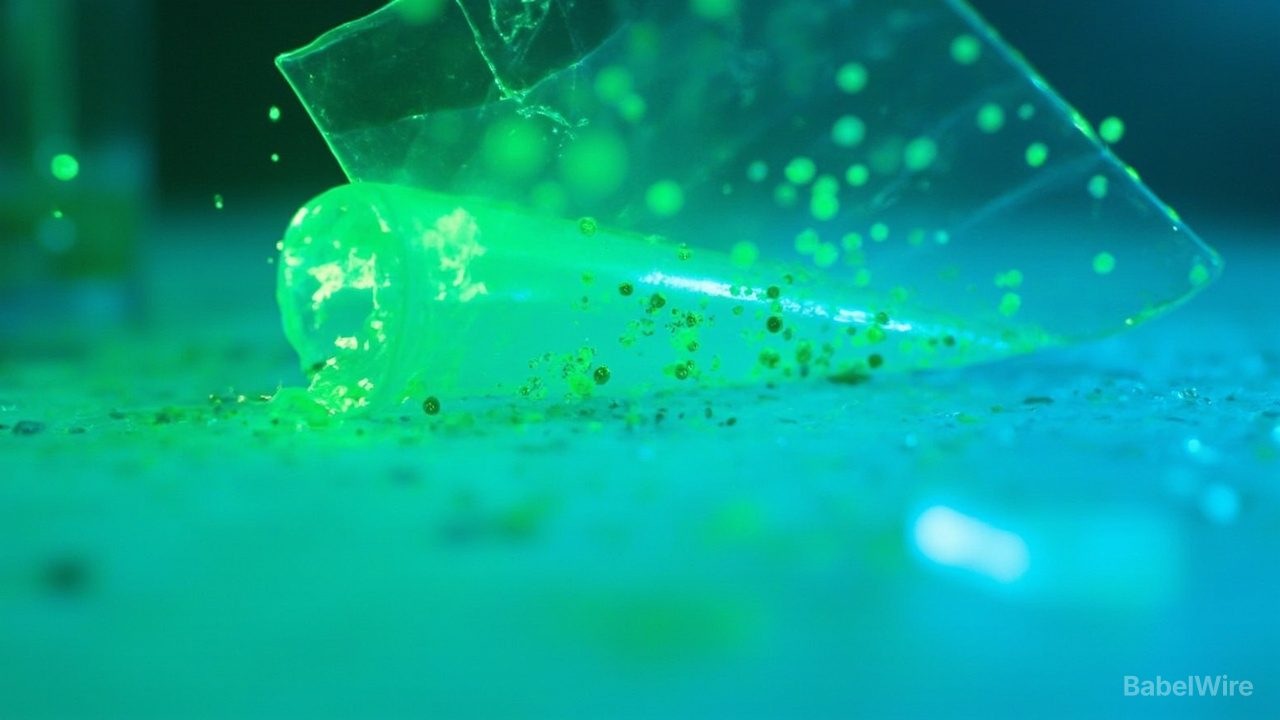
Scientists have created a "living plastic" that can self-destruct in days, leaving no microplastics behind — a breakthrough that could transform how society thinks about disposable materials.
The research, published in ACS Applied Polymer Materials by a team including Zhuojun Dai, describes a material embedded with dormant Bacillus subtilis bacteria engineered to produce two polymer-degrading enzymes that work together.
"The realization that traditional plastics persist for centuries, while many applications, like packaging, are short-lived, led us to ask: Could we build degradation directly into the material's life cycle?" said Dai.
The researchers combined dormant bacterial spores with polycaprolactone — a polymer used in 3D printing and surgical sutures. The finished plastic demonstrated mechanical properties similar to ordinary polycaprolactone films.
To activate the bacteria, the team added nutrient broth heated to 50°C. The spores became active and produced two complementary enzymes: the first cuts polymer chains at random points, breaking them into shorter sections, while the second works from the ends of those fragments, reducing them to individual monomer building blocks.
Within six days, the plastic had been completely reduced to its basic chemical building blocks with no microplastics formed.
To demonstrate real-world use, the researchers made a wearable plastic electrode that functioned as intended and then fully degraded within two weeks after activation.
The team now hopes to develop a method that activates the spores in water, where most plastic pollution accumulates.