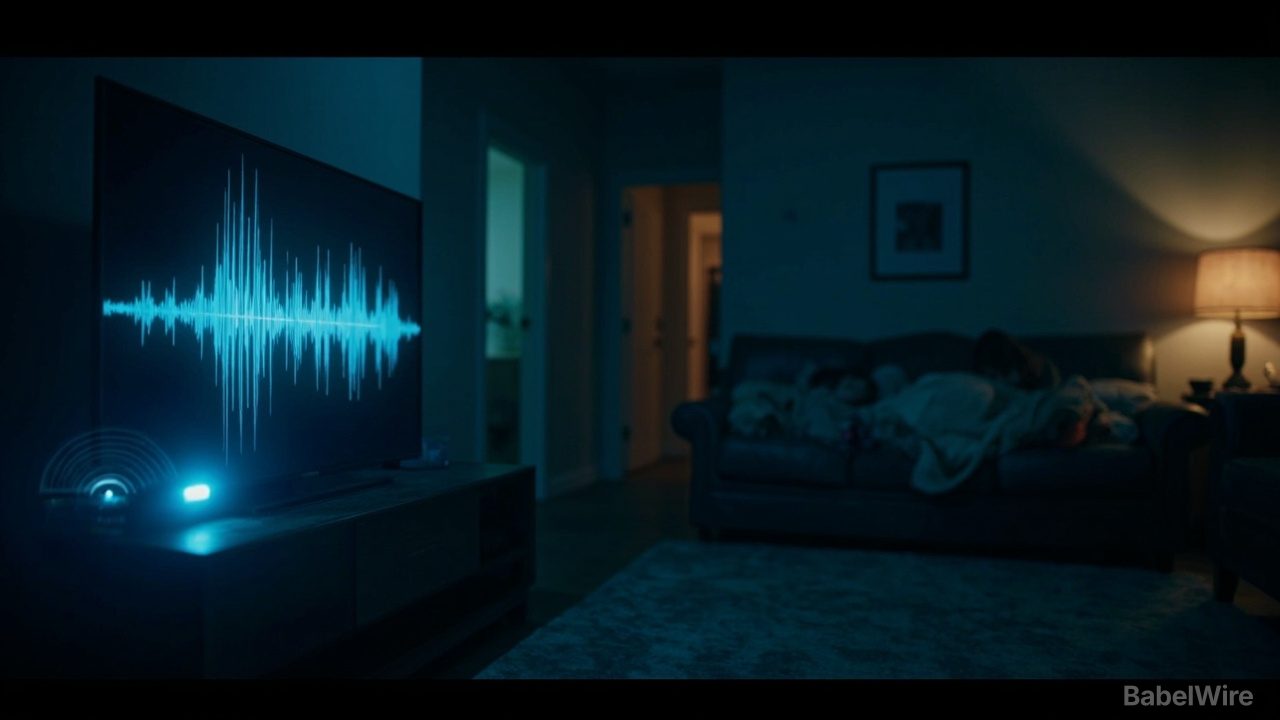
LG smart TVs have been caught collecting data and potentially recording conversations even when the screen is off, according to security researchers who tested the devices in multiple states — powered on, in standby, and completely disconnected from the internet.
What researchers found
Testing by cybersecurity researchers, amplified by a detailed investigation from Gamers Nexus, revealed that LG OLED and LCD TVs continue to operate a persistent data-collection subsystem even when the user believes the device is "off."
Key findings:
- Network scanning: LG TVs scan the local Wi‑Fi network, enumerating device names, MAC addresses, and nearby access points — even when the TV is in standby or appears disconnected. - Audio logging: Voice prompts and ambient audio can be captured and logged through built-in microphones, with researchers documenting active audio processing during standby states. - ACR tracking: The Live Plus feature (Automatic Content Recognition) continues to fingerprint on-screen content, building viewing profiles even during passive use. - Offline behavior: Some collection persists even without internet access, with the TV buffering data locally until a connection is restored.
The findings affect an estimated 200+ million LG TVs in use worldwide, spanning models from the past several years.
Why it matters
Smart TVs have become the most privacy-invasive devices in the average home. Unlike phones and laptops, TVs lack granular permission controls and are rarely scrutinized by the users who buy them. The LG case is particularly alarming because:
1. **Standby ≠ off.** TVs marketed as "off" are still running active subsystems. 2. **No consent path.** Users are not clearly informed that audio capture and network scanning occur during standby. 3. **Scale.** LG is one of the world's largest TV manufacturers, making this one of the largest consumer privacy exposures in recent memory.
Security researchers are now recommending that smart TVs never be connected directly to home Wi‑Fi networks. Instead, they suggest routing TV traffic through a separate VLAN or using a dedicated streaming device that can be physically disconnected when not in use.
What LG says
LG has not yet issued a detailed public response to the findings. The company's privacy policy discloses data collection for "service improvement" and "personalized advertising," but does not specifically address standby-mode audio recording or network scanning.
The broader picture
The discovery reignites debate over "always-on" surveillance in consumer electronics. Regulators in the EU and US have increasingly scrutinized smart device data practices, but enforcement has lagged behind the pace of deployment. With TVs now serving as the primary screen in most households, the gap between manufacturer claims and actual data behavior has become a critical consumer rights issue.
Sources
- theverge.comThe Verge: LG TVs caught spying even when offline or on standby
- malwarebytes.comMalwarebytes: LG TV flaws could let attackers listen in
- cybersecuritynews.comCybersecurity News: LG Smart TVs caught scanning networks
- makeuseof.comMakeUseOf: 200+ million LG TVs keep collecting data when turned off
- allaboutcookies.orgAllAboutCookies: LG Smart TVs caught listening with screen off