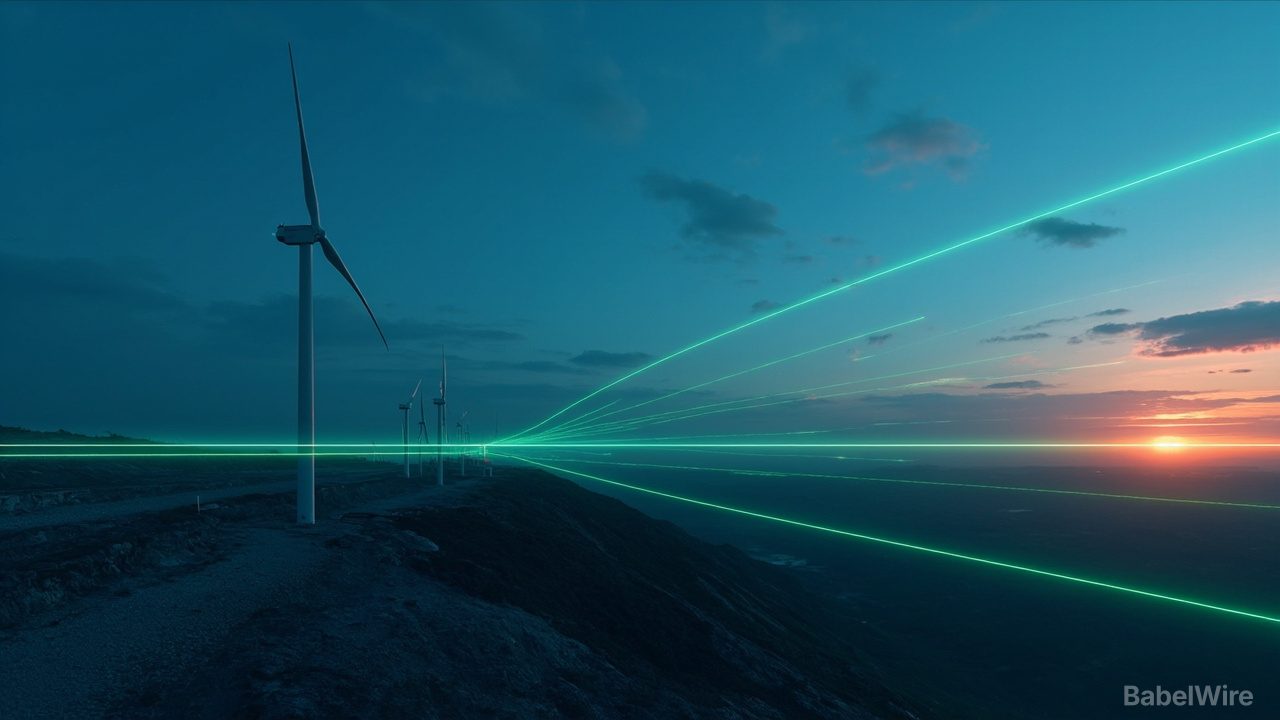
Most of the world's wind turbines are already standing. Getting more electricity out of them without erecting anything new is therefore one of the cheapest decarbonisation levers available — and that is what a laser-measurement approach reported by Golem is aimed at.
The problem it addresses is old. A turbine's control system mostly learns about the wind from instruments mounted on the nacelle, behind the rotor, so it is measuring air the blades have already disturbed and reacting late. Laser-based measurement — the lidar family — looks ahead of the rotor instead: it profiles the incoming wind field in front of the machine, giving the controller time to pitch the blades and turn the nacelle into the flow before a gust actually arrives.
Smoothing those reactions cuts structural load and matches the rotor better to the wind that is really there, which is where the extra yield comes from.
The appeal is the size of the prize. The installed fleet runs to hundreds of thousands of turbines worldwide, and a retrofit that adds yield across all of them is worth a great deal — and unlike a new project it works on machines that already have permits, grid connections and land.
What cannot be settled from outside is how large the measured gain actually is and what the retrofit costs per turbine. Both belong to the original article; the source page was unreachable during this run, so they should be read there before the numbers are quoted.


