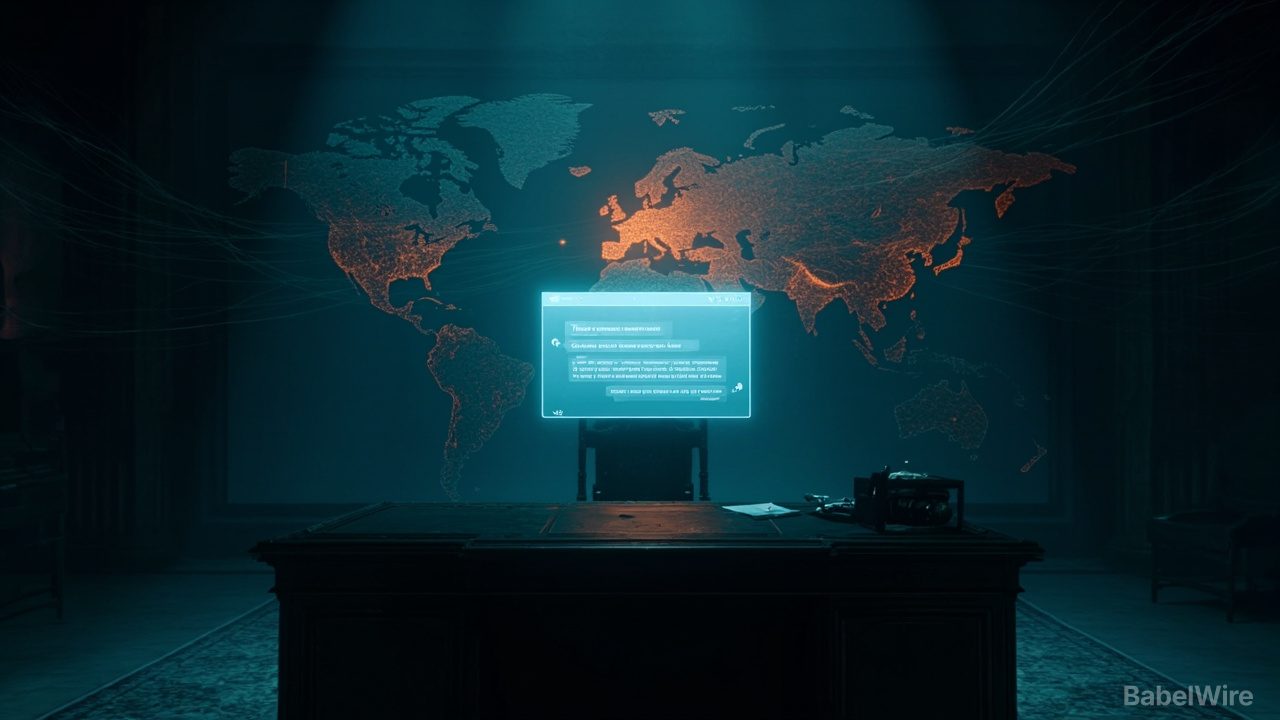
President Donald Trump consulted Grok, Elon Musk's AI chatbot, before the US operation that captured Venezuelan president Nicolás Maduro, according to a report by Time magazine — the starkest example yet of a large language model shaping a decision of war-and-peace magnitude.
Time reports that in December 2025, about a month before the US invasion on January 3, Trump held a secret meeting with Musk — roughly seven months after Musk left his role at the Department of Government Efficiency. During that meeting, Trump "spent hours" talking to Grok and asked how Venezuelans would respond to the capture of their president, according to a source cited by Time.
The answer attributed to the model: Maduro was a "deeply unpopular dictator" and many Venezuelans would "likely celebrate his downfall". When celebrations did follow the invasion, Trump "came away thinking Grok was ingenious", the source told Time.
The context matters. In September 2025 Trump began ordering US military strikes on Venezuelan boats he alleged were involved in drug trafficking, and The Atlantic reported at the time that people were asking Grok about those strikes and about Venezuela's political climate — meaning the chatbot's read on public sentiment was partly a reflection of the questions users had put to it.
Grok is not the only model inside the US defence apparatus. The Pentagon's head of AI said in June that the military used Gov Grok to deploy and strike targets during the Iran War; OpenAI also has an agreement with the Department of Defense, and Anthropic has been in a back-and-forth with the department over how its models may be used for military intelligence. This week the Pentagon announced that Musk and Anduril's Palmer Luckey have been tapped to co-lead a study on how advanced technology is and can be used on the battlefield.
The report raises questions that go beyond one administration. An AI model's synthesis of public sentiment is not intelligence in any traditional sense: it is a probabilistic summary of training data and user prompts, with no chain of custody, no sourcing requirement and no audit trail. Time's account describes a decision-maker treating that output as validation.
For regulators and for the labs, the episode sharpens a question the voluntary safety framework signed at the White House this week — which leaves monitoring to the companies themselves — does not answer: what does accountability look like when a model's answer becomes an input to statecraft? There is no equivalent of a citation, a briefing document or a dissenting analyst. There is a chat window and whatever it said.